


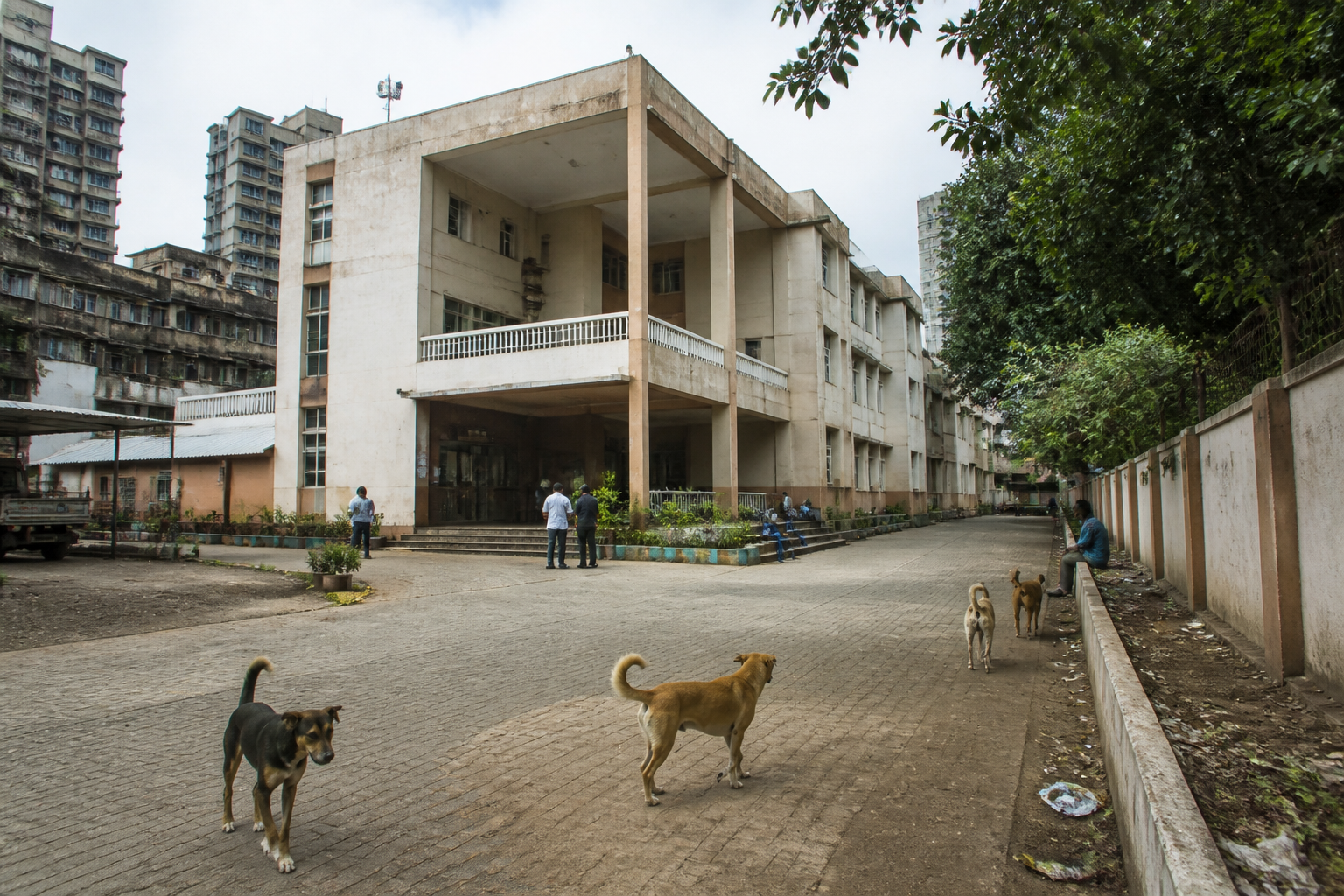
Navi Mumbai’s ₹5 crore veterinary hospital in Juinagar is facing allegations of inadequate facilities, prompting demands from citizens and elected representatives for immediate corrective action by the Navi Mumbai Municipal Corporation (NMMC).
The hospital was constructed on a plot beside the Juinagar crematorium to provide healthcare for animals across the municipal area. However, representatives have alleged that the facility is functioning largely in name only because essential services and equipment are not available in sufficient quantity.
The concerns were raised in connection with the hospital’s operations and the municipal corporation’s responsibility to provide timely treatment for animals. According to the report, citizens have demanded that all necessary facilities be made available immediately so that animals in the city can receive proper care.
The issue was also raised by the Maharashtra Navnirman Sena and Shiv Sena. The chairperson of the municipal health committee issued directions for immediate measures, according to the report. The specific timeline for completing the measures and the full list of facilities currently unavailable were not detailed in the supplied report.
The hospital was built after the municipal corporation decided to create dedicated infrastructure for animal healthcare in Navi Mumbai. The facility was intended to support the treatment and upkeep of animals in the city, but the reported shortage of services has raised questions about whether the investment is delivering its intended public purpose.
The municipal corporation has previously conducted programmes linked to animal health and food safety. These included workshops on infectious diseases affecting animals and awareness activities for meat sellers. One such workshop was organised at the knowledge centre in the NMMC headquarters in collaboration with Mumbai Veterinary College, Parel.
The workshop focused on technology for producing clean and safe poultry, goat and sheep meat for public consumption. Meat sellers operating within the municipal area were given information about the technology, with the stated objective of protecting citizens’ health.
The contrast between these awareness initiatives and the reported shortage of facilities at the Juinagar veterinary hospital has intensified public dissatisfaction. A functional municipal veterinary service has implications beyond animal treatment, since timely care and disease management are also connected to public health administration and the regulation of animal-related activities in cities.
The report did not provide a response from NMMC officials addressing the specific allegations, nor did it state the operational capacity of the hospital, the number of staff deployed or the equipment required. The municipal corporation’s next steps, including the provision of missing facilities, remain the immediate focus of the demand raised by citizens and representatives.
