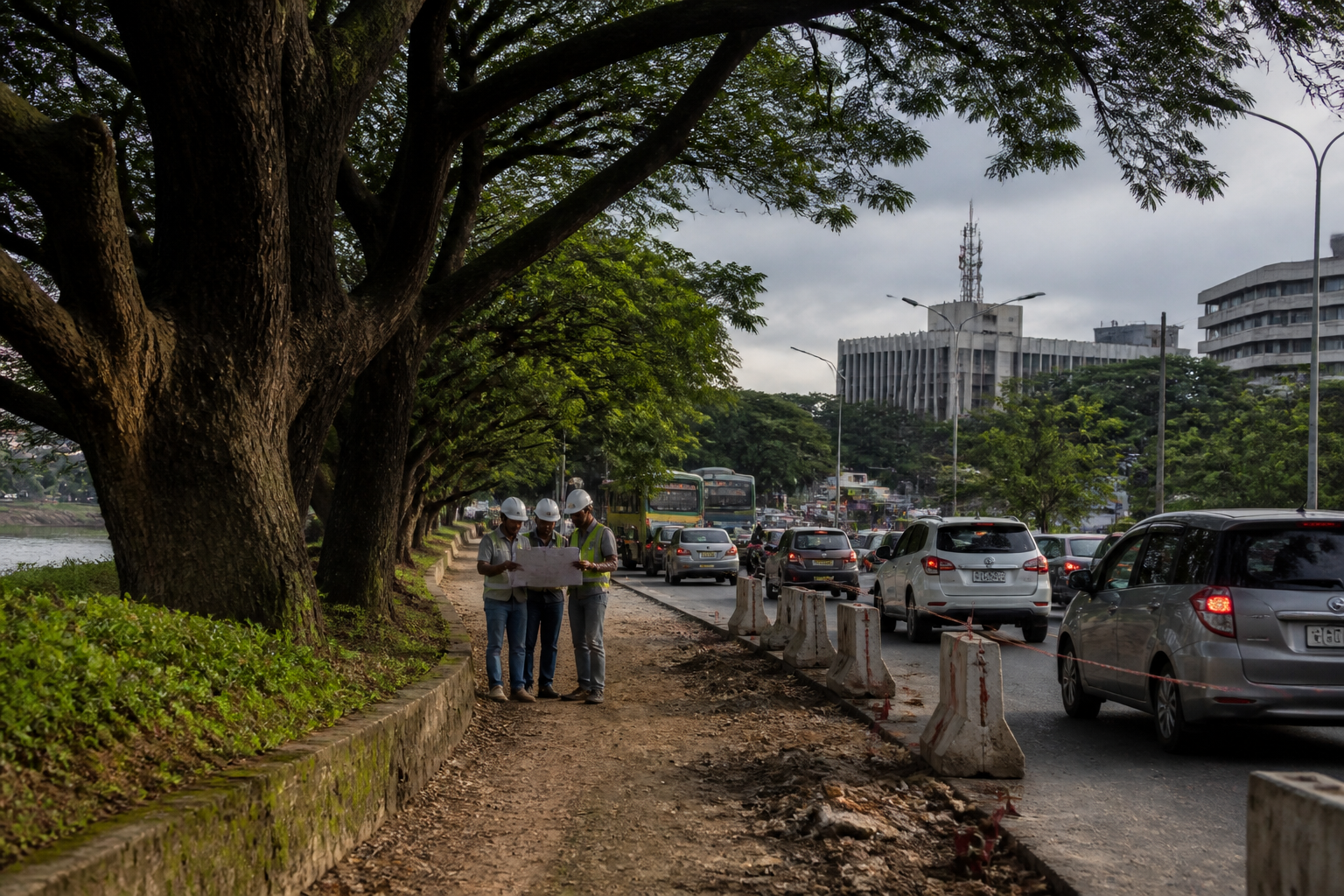
Bengaluru’s proposed Hebbal short tunnel has moved into a new environmental flashpoint, with 1,128 trees identified for removal along the 2.2-km corridor. The tree inventory covers more than 70 species, raising concerns that a transport project designed to ease one of the city’s busiest bottlenecks could also remove an established green corridor around Hebbal Lake and institutional campuses.
The three-lane, bi-directional underpass is planned between Hebbal Junction and the University of Agricultural Sciences staff quarters, passing through the Karnataka Veterinary, Animal and Fisheries Sciences University campus. The project is being taken up by the Bengaluru Development Authority and is intended to provide an underground alternative through a heavily congested section of north Bengaluru. The scale of the proposed removal is significant. The identified trees include species such as Indian kino, big-leaf mahogany, beleric myrobalan, Indian jujube, maple-leafed bayur and yellow tabebuia. The diversity matters because an established urban tree corridor provides more than canopy cover: different species support different insects, birds and other forms of urban biodiversity while contributing to local shade and temperature regulation. The project also sits within a sensitive landscape. The proposed alignment has previously faced questions over its potential effect on Hebbal Lake and associated water flows. In August, the Karnataka High Court sought clarification on whether scientific or hydrological studies had assessed possible impacts on the lake’s inflow, outflow and underground water movement.
For Bengaluru Hebbal Tunnel planning, that makes the tree inventory more than a standalone environmental issue. The corridor links road infrastructure with green space and a major urban water body, meaning construction decisions can have cumulative effects across drainage, biodiversity, heat management and public space. The Greater Bengaluru Authority has now opened a public-objection process on the proposed tree removal, giving citizens a formal opportunity to examine the proposal and submit comments. The process is particularly important because the publicly available tree information is expected to determine how specific objections can be made about individual trees and their locations. The immediate planning question is therefore not simply how many replacement saplings can be planted. Compensatory planting can rebuild canopy over time, but it cannot immediately reproduce the ecological functions of mature trees. Project planning should therefore prioritise avoiding or reducing tree loss wherever technically possible, while making survival and monitoring of replacement plantations measurable.
For Bengaluru Hebbal Tunnel, the broader lesson is that congestion relief and environmental resilience need to be assessed together. A transparent comparison of alternative alignments, construction methods, tree-retention options and water-management safeguards would help determine whether the mobility gains can be achieved with a lower ecological cost.