


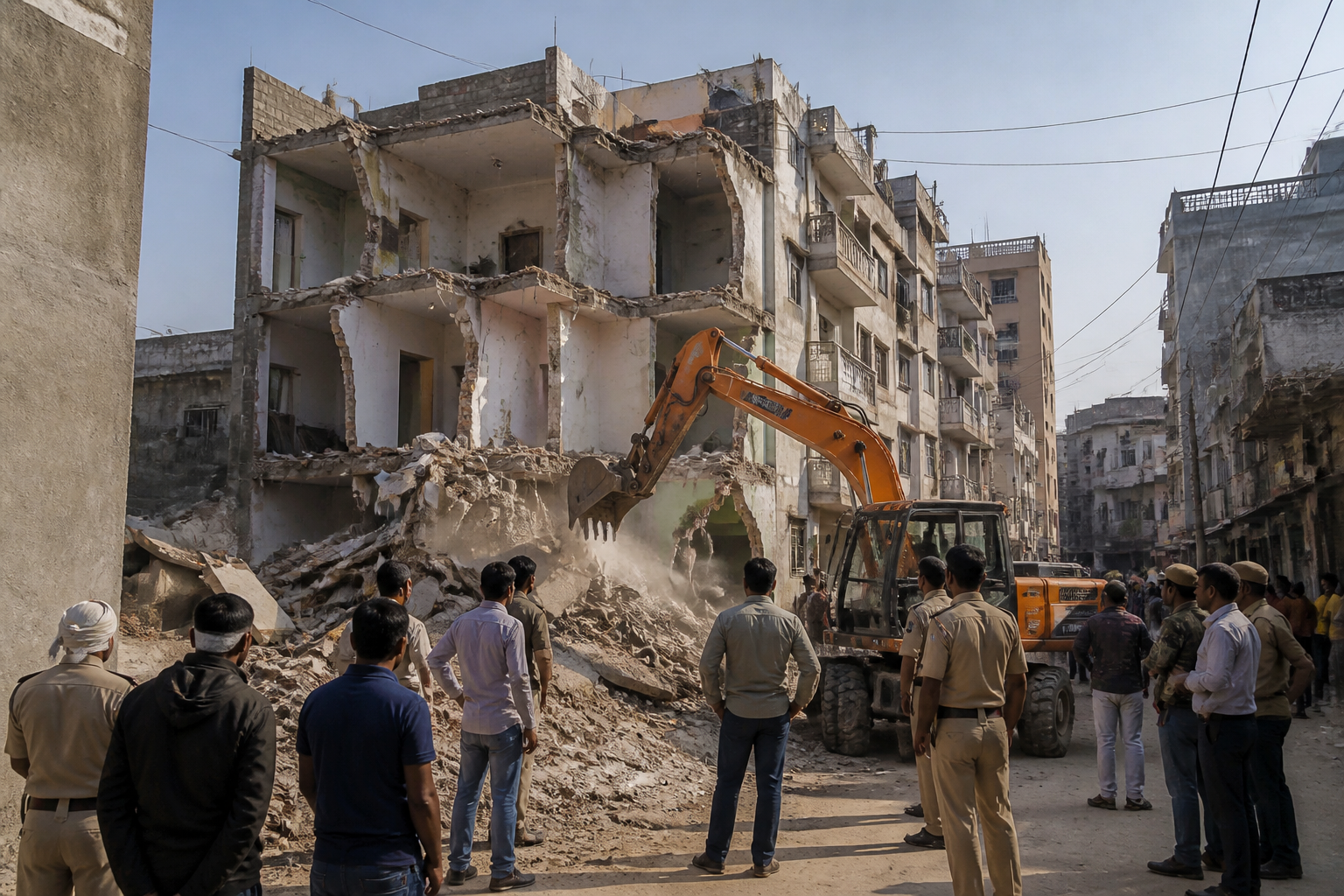
The Municipal Corporation of Delhi carried out 42 demolition actions across all 12 zones on Tuesday as part of an enforcement drive against unauthorised construction, dangerous buildings and violations of the Master Plan of Delhi and building bye-laws.
The civic body also sealed seven properties and issued three demolition orders during the exercise, according to the MCD. The actions were presented as part of an effort to enforce building regulations and address violations that could pose risks to public safety.
The operation covered locations in several parts of Delhi, including Sant Nagar, New Ashok Nagar, Laxmi Nagar, Teliwara, Shahdara, Geeta Colony, Ram Nagar, Jayapur, Sonia Vihar and Dilshad Garden. The locations indicate that the enforcement activity was spread across different parts of the city rather than being confined to a single ward or neighbourhood.
The MCD said the drive targeted three broad categories of violations: unauthorised constructions, buildings considered dangerous and breaches of the Master Plan of Delhi and building bye-laws. These rules govern the permissible use, construction and safety conditions of buildings and properties within the capital’s urban areas.
Demolition, sealing and the issuance of demolition orders represent separate enforcement actions in the reported exercise. The 42 demolition actions involved physical removal activity, while the seven sealing actions restricted access or use of properties identified by the civic body. The three demolition orders mark cases in which the corporation directed that properties be removed under its enforcement process.
The scale of the operation, covering all 12 MCD zones in a single day’s exercise, places the drive within the corporation’s ongoing citywide enforcement effort. However, the report does not provide details of the individual properties, the nature or extent of each violation, whether occupants were present, or whether any appeals or notices preceded the action.
The MCD’s stated rationale is compliance with building regulations and the prevention of risks associated with unsafe or unauthorised structures. The latest exercise therefore links routine building-code enforcement with the civic body’s public-safety responsibilities, particularly in areas where construction or land use may not conform to approved rules.
The civic body has not provided, in the information available, a zone-wise breakdown of the 42 demolition actions, the names of the property owners or developers involved, or a timeline for action on the three demolition orders. Further details on those cases and the next enforcement steps remain to be established through the corporation’s official records and subsequent updates.
