


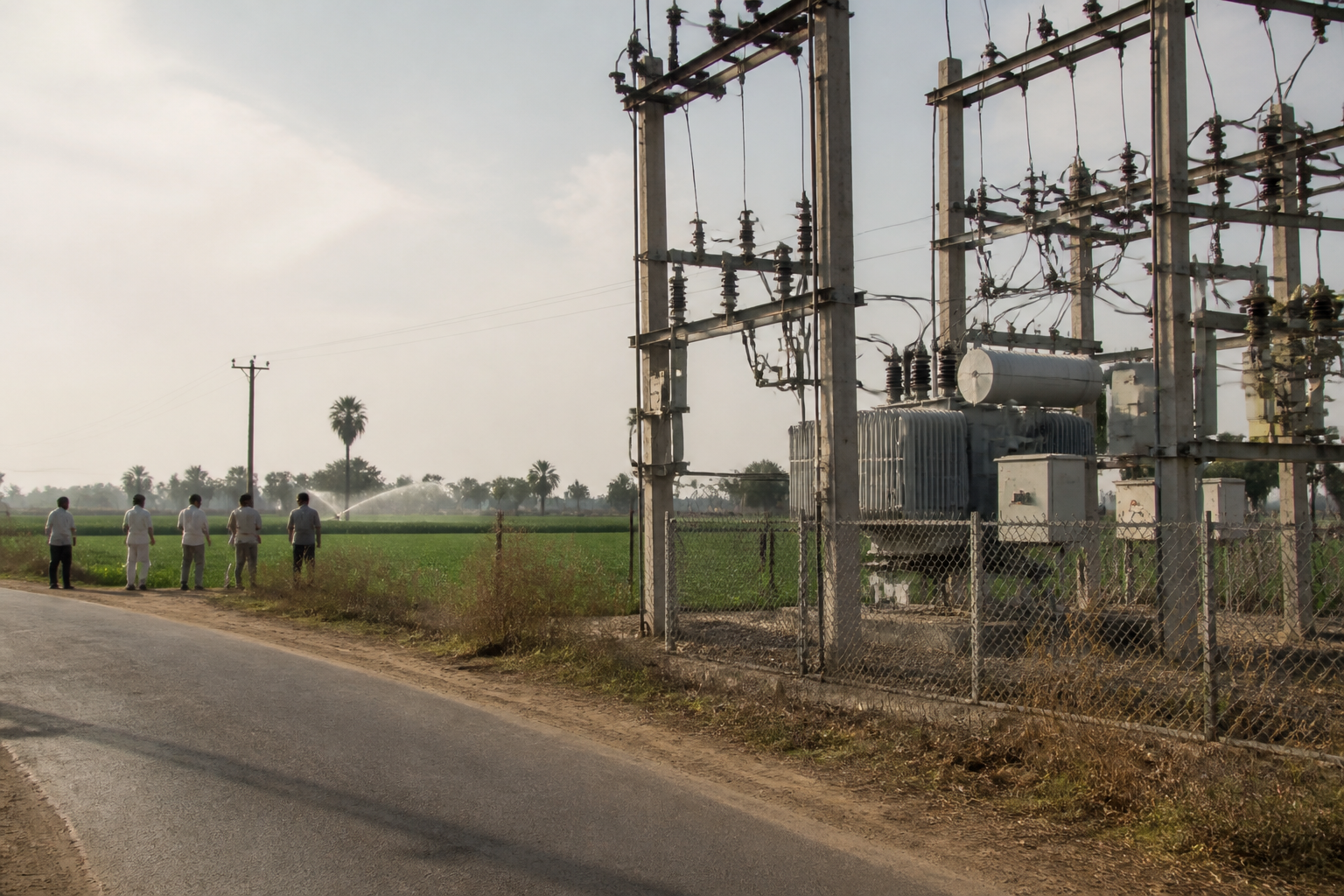
Telangana’s farm power supply has come under fresh political scrutiny after BRS MLA and former minister T. Harish Rao alleged that agricultural consumers in parts of the state were facing undeclared cuts, repeated interruptions and low voltage. He made the allegations after visiting a sub-station at Motakondur and challenged Congress legislators and MPs to inspect power facilities in their constituencies.
According to a report by Deccan Chronicle, Harish Rao said farmers in Motakondur and nearby villages were receiving about six hours of electricity, with interruptions affecting borewell-based cultivation. The claims were made during a media interaction following his visit to the sub-station. The supplied report does not include a response from the Telangana government or electricity officials to the allegations.
Harish Rao also alleged that officials had withheld the sub-station’s log books before his visit. He said the records would show the timing of electricity supply, instances of tripping and the availability of three-phase power for agricultural connections. He questioned why the records were not made available if the state was providing 24-hour power to farmers, as claimed by the government.
The dispute places sub-station records at the centre of the wider political argument over agricultural electricity supply. For farmers using borewells, the reliability of supply is as important as the number of hours announced by the state. Interruptions and low voltage can affect the operation of pumps and make irrigation schedules harder to manage. The report, however, does not provide independent supply data or technical records confirming the duration or quality of electricity delivered in the villages mentioned.
Harish Rao criticised the Congress government for attributing the difficulties faced by farmers to El Niño. He also alleged that irrigation facilities were not being provided despite water being available in projects, citing the Nagarjuna Sagar Project. These claims were part of his broader criticism of the state government’s handling of agricultural support and water resources.
The former minister further said that power generation had increased to 21,000 megawatts during the previous BRS government. He alleged that 3,500 megawatts of generation capacity at the Yadadri, Bhadradri and Kothagudem power plants had been stopped on the grounds of coal shortages. The supplied report does not specify the period for these figures or provide an official explanation for the claimed stoppage.
Harish Rao also raised the issue of properties listed under Section 22-A restrictions, alleging that land belonging to farmers and poorer residents had been included in prohibited lists in Motakondur, Alair and Bhongir mandals. He said his family’s assets had been disclosed in election affidavits and income-tax returns, and urged the state government to act against properties of Congress leaders located in Full Tank Level areas.
The immediate political challenge issued by Harish Rao was for Congress representatives to visit local substations and villages, speak to farmers and verify the status of agricultural supply. Any official response, publication of sub-station records or constituency-level inspection would determine whether the allegations can be substantiated beyond the claims reported from the visit.

