


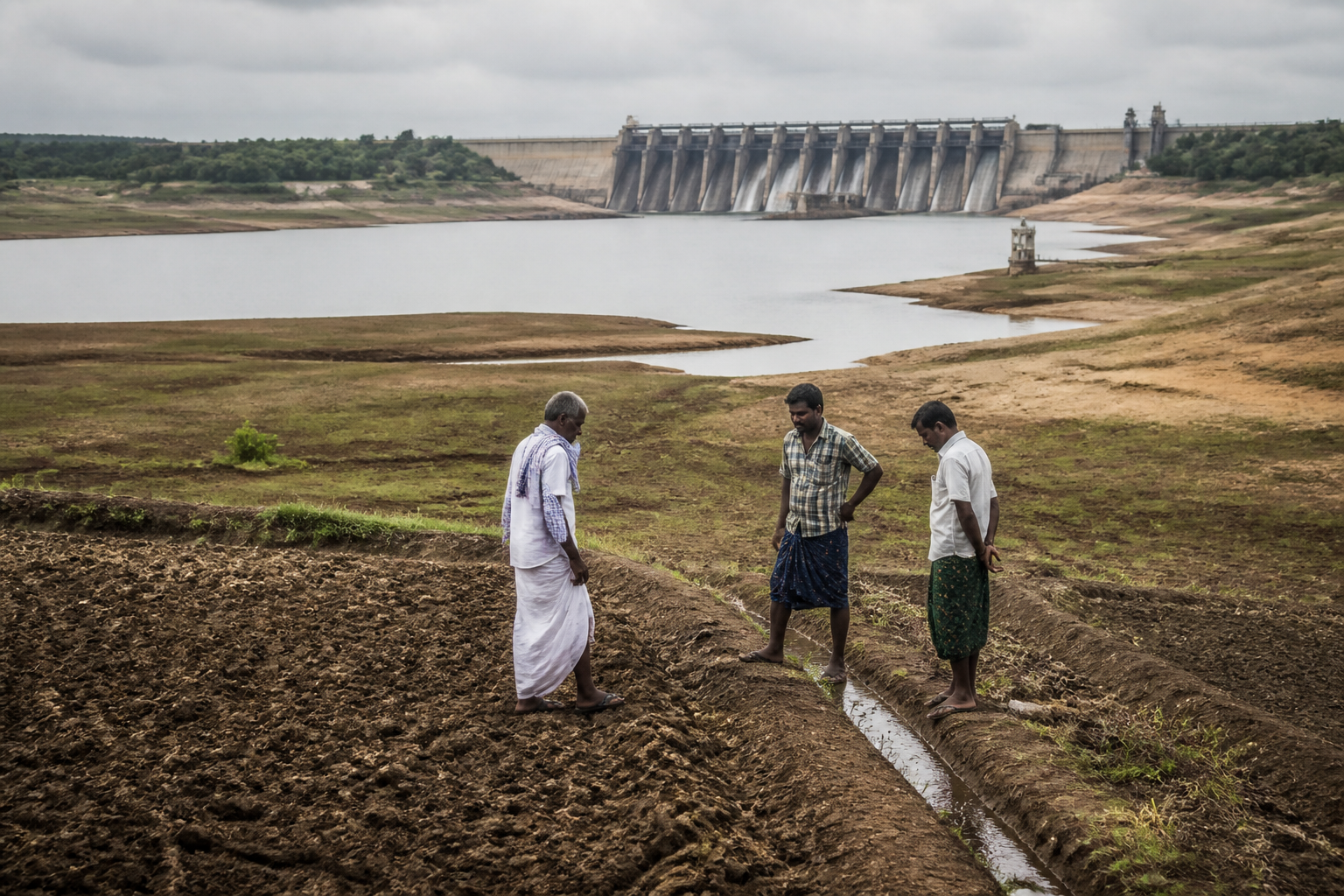
Tamil Nadu has moved the Supreme Court seeking directions to Karnataka to comply with the Cauvery Water Management Authority’s direction to release 6,000 cusecs of water daily at Biligundulu from September 9 to 23, citing a shortfall that has intensified irrigation stress in the state’s Cauvery basin.
The state has also sought directions for Karnataka to make good, on a pro-rata basis, an alleged shortfall of 16 tmcft in water releases between June 1 and September 9. Tamil Nadu’s application says the reduced flows have affected farmers and delayed the release of water from the Mettur dam for cultivation.
In a letter to the CWMA dated September 12, Tamil Nadu alleged that Karnataka had not complied with the authority’s direction. According to the state’s submission, the average flow recorded at Biligundulu was 4,218 cusecs on September 9, 2,412 cusecs on September 10 and 1,695 cusecs on September 11, against the directed daily release of 6,000 cusecs.
Tamil Nadu also cited weak rainfall in its application, saying the state had received 125 mm of rain, or 43% below normal. It contended that the state was facing greater water distress than the upper catchment areas in Karnataka and Kerala, and that Karnataka had sufficient inflows to comply with the release direction.
The water dispute has immediate consequences for the agricultural cycle in the delta. Tamil Nadu said the kuruvai crop had been badly affected because the Mettur dam could not be opened in June. It also said the long-duration samba crop could not be brought under irrigation. The dam was opened only on September 1, according to the application.
Tamil Nadu further stated that the water currently available could support irrigation for only another 25 to 30 days. The state has argued that Karnataka’s position that it must preserve storage for its year-round requirements does not justify withholding water directed by the CWMA. It said the four reservoirs in Karnataka would continue to receive inflows during the northeast monsoon and that there was no need to reserve water for drinking-water needs for the entire year.
The application describes Karnataka’s alleged failure to comply with the CWMA direction as a disregard of directions issued by both the statutory authority and the Supreme Court. Tamil Nadu has contended that any violation of the court’s orders or the CWMA’s directions could amount to wilful disobedience and contempt of court.
The immediate legal and administrative issue is whether Karnataka will be directed to follow the daily release schedule and compensate for the alleged accumulated shortfall. Tamil Nadu’s application seeks the Supreme Court’s directions while the dispute continues to affect irrigation planning in the Cauvery basin.
