


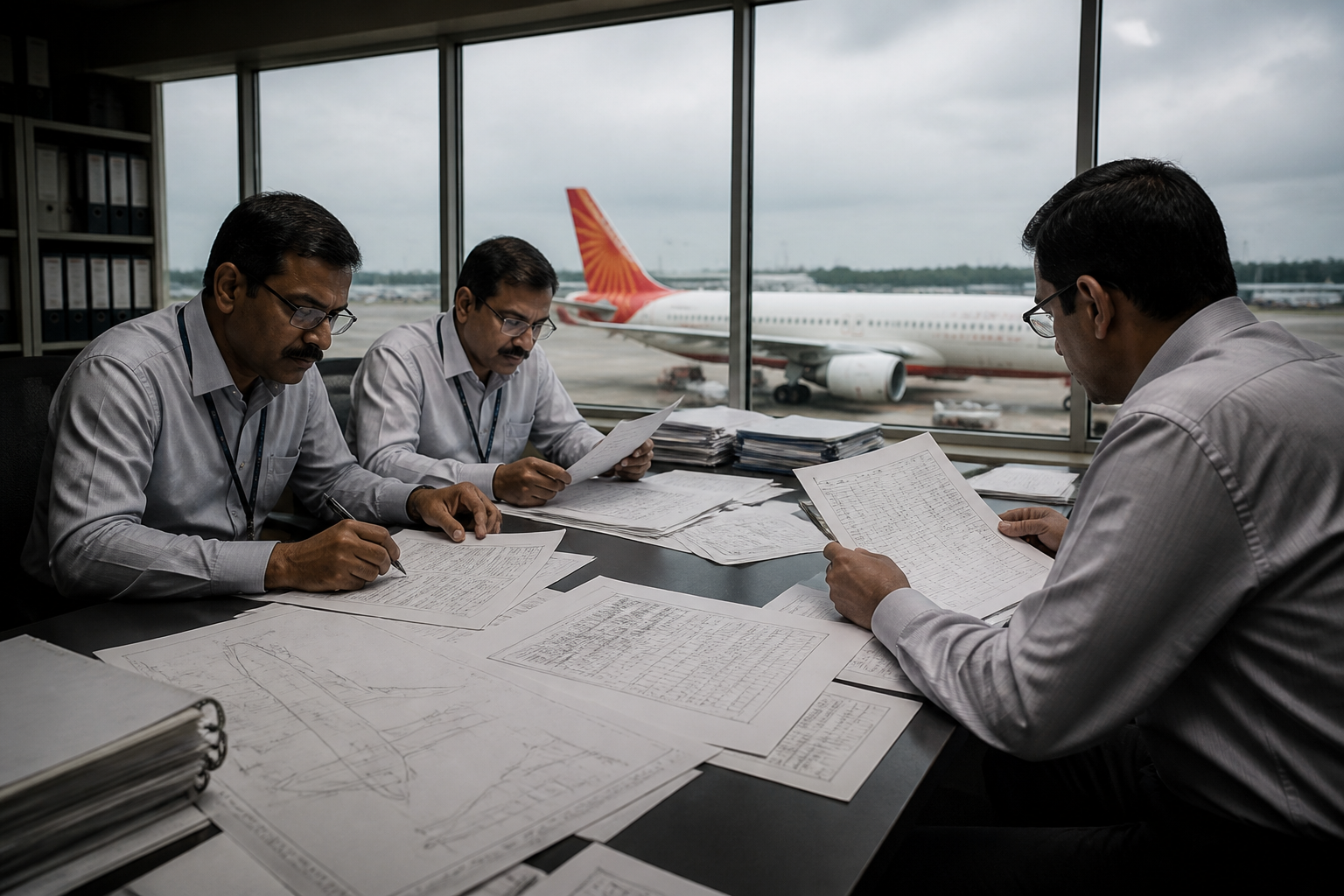
The Air India AI-171 crash probe has moved beyond the question of what happened during the flight to a more consequential institutional question: whether investigators are examining and disclosing all technically relevant evidence. The Foundation for Aviation Safety, a US-based organisation, has accused India’s Aircraft Accident Investigation Bureau of withholding important maintenance records and actual flight data, and of failing to alert the global aviation sector to possible risks.
The allegations were made by FAS executive director Ed Pierson in a letter dated 27 August to AAIB director G. V. G. Yugandhar. According to the report, the foundation claimed that important material relating to the aircraft’s electrical, electronic and flight-computer systems had been concealed or not fully disclosed. It also expressed concern about the transparency of the investigation and what it described as a failure to follow international accident-investigation standards.
The claims remain allegations by FAS, not established findings of the crash investigation. However, the report also cites a response from the AAIB issued a day before Pierson’s follow-up letter. In that response, the director general confirmed that technical information supplied by FAS through an AAIB expert in England had been received on 10 June and was being examined by the investigation team. That response is important because it establishes that the material was not simply ignored or absent from the official process, even as the dispute over transparency remains unresolved.
This distinction matters in any aviation accident investigation. A technical claim can be relevant without being proven, while an official acknowledgement of received evidence does not by itself establish that the evidence has been accepted, rejected or fully integrated into the final findings. The available report does not state what conclusions the investigation team has reached about the material supplied by FAS. It also does not provide the maintenance records, flight data or technical documents at the centre of the dispute.
The controversy therefore concerns two related but separate issues. The first is the technical question of whether the aircraft’s electrical, electronic and flight-computer systems experienced long-term failures. The second is the procedural question of whether potentially relevant information was shared, assessed and communicated in a manner consistent with international accident-investigation expectations. The report supplies FAS’s position on both issues and the AAIB’s confirmation that the technical material is under examination, but it does not establish the final answer to either.
The institutional responsibilities described in the report are significant. The AAIB is the Indian body investigating the accident, and its director and director general are named in the correspondence. FAS, meanwhile, presented itself as an external aviation-safety organisation that had passed documents to Indian authorities through an AAIB expert in England. This creates a chain of evidence with several stages: the preparation or collection of technical material, its transmission to authorities, its examination by investigators and any eventual disclosure in the final investigation record.
Each stage affects public confidence. If technical information is received but its origin, scope and conclusions are not clearly explained, outside observers may interpret the silence as concealment. If investigators disclose preliminary material before completing technical checks, they may risk confusing evidence with findings. The report does not indicate that the AAIB has issued a final determination on the FAS material. That limitation should remain central to any assessment of the dispute.
The timing of the correspondence also shows that the issue did not arise only after the publication of a final report. FAS said it had submitted documents through an AAIB expert in England, and the AAIB’s response acknowledged receipt of technical information on 10 June. Pierson’s 27 August letter subsequently criticised the bureau’s transparency and its alleged failure to comply with international standards. The sequence suggests an unresolved exchange between an external safety organisation and the investigation authority rather than a concluded technical disagreement.
For the public, the most important question is not simply whether one organisation has accused another of withholding information. It is whether the investigation process can show how safety-critical evidence is handled. Maintenance records and flight-system data can influence the reconstruction of an accident, the identification of possible equipment or operational failures and the evaluation of whether other aircraft could face comparable risks. The supplied report does not establish that any such risk exists, but it records FAS’s allegation that the information pointed to long-term problems in key systems.
That is why the AAIB’s acknowledgement is consequential but incomplete. Confirming that information has been received and is being examined indicates that the material has entered the investigative process. It does not clarify whether investigators consider it reliable, whether it relates directly to AI-171, whether it has been corroborated by other records or whether it changes the working theory of the accident. Those questions can be answered only through further official disclosure or the investigation’s eventual findings.
The dispute also highlights the difference between transparency and premature disclosure. Accident investigations depend on technical scrutiny, document verification and the careful separation of established evidence from untested claims. At the same time, the absence of information can make it difficult for families, aviation professionals and the wider public to understand whether important leads are being pursued. A credible process must therefore communicate enough about the evidence under examination without presenting provisional allegations as conclusions.
The available material does not provide details of the crash sequence, the aircraft’s maintenance history, the contents of the disputed documents or the AAIB’s technical assessment. It also does not include a response from the airline or a separate statement from another aviation regulator. Those omissions mean that the central technical allegation cannot be independently evaluated from the report alone. What can be established is narrower: FAS raised concerns, named AAIB officials were involved in the correspondence and the AAIB confirmed that technical information supplied through an expert was being examined.
This makes the AI-171 investigation a test of both technical competence and institutional communication. A final report may eventually clarify whether the alleged electrical, electronic and flight-computer system issues were relevant, whether maintenance records support or contradict the claims and whether any safety action is necessary. Until then, the distinction between an allegation, an item of evidence and an official finding must be maintained.
The next substantive milestone is the AAIB’s assessment of the technical information and any explanation it provides about the evidence cited by FAS. The supplied report confirms that the material was under examination, but it does not state when that examination will conclude or what findings will follow.
