


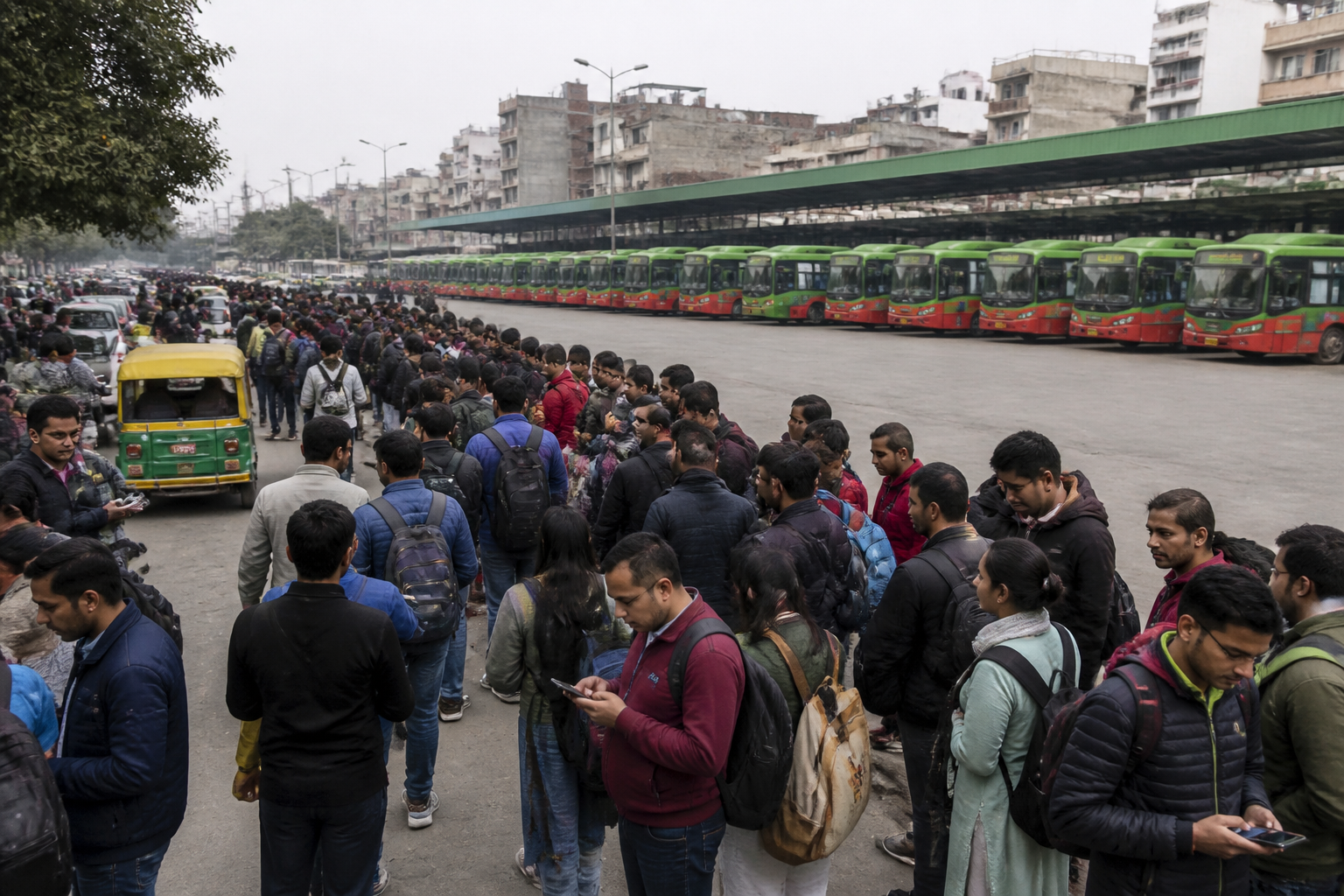
The DTC strike entered its fourth day on Friday, with more than 3,000 buses reportedly remaining off Delhi’s roads and commuters facing long waits, crowded alternatives and disrupted journeys across the capital. The continuing stoppage has pushed more passengers towards the Metro, autos and e-rickshaws, while queues have formed at bus stops in several parts of the city.
Figures cited by the protesting DTC Karamchari Ekta Union indicate that more than 3,000 buses from a fleet of nearly 6,000 were off the roads. The union has separately claimed that the disruption involves more than 5,000 buses from a total fleet of over 6,500. The differing figures were reported in the context of the ongoing strike and could not be independently reconciled in the supplied report.
Buses have remained parked at several depots as drivers and other employees continue their protest. Workers at depots including Rani Khera, Rajghat, Nehru Place, Burari, Wazirpur, Ghumanhera and Sarita Vihar have participated in the strike.
The stoppage continued despite an appeal by transport minister Pankaj Singh on Thursday for drivers to return to work. Singh said most of the employees’ demands had been accepted, while the remaining issue of a salary hike would be taken up after consultation with the labour department.
The protesting workers have demanded daily remuneration of Rs 2,000 for drivers, conductors and other employees. Their demands also include medical facilities, an annual bonus, payment for government holidays, casual and earned leave, insurance cover and equal remuneration for equal work.
Singh said medical insurance had been agreed upon and that coverage for family members was being considered. He also said four days off should be provided to employees and that a proposal on a salary hike had been sent to the labour department.
With no concrete settlement announced in the supplied report, the union has said the strike will continue until a solution is reached. The immediate impact has been felt by commuters who depend on DTC buses for daily travel, particularly on routes and at locations where alternative public transport options are limited. The transport department’s consultations with the labour department are the next stated step in resolving the dispute.
