


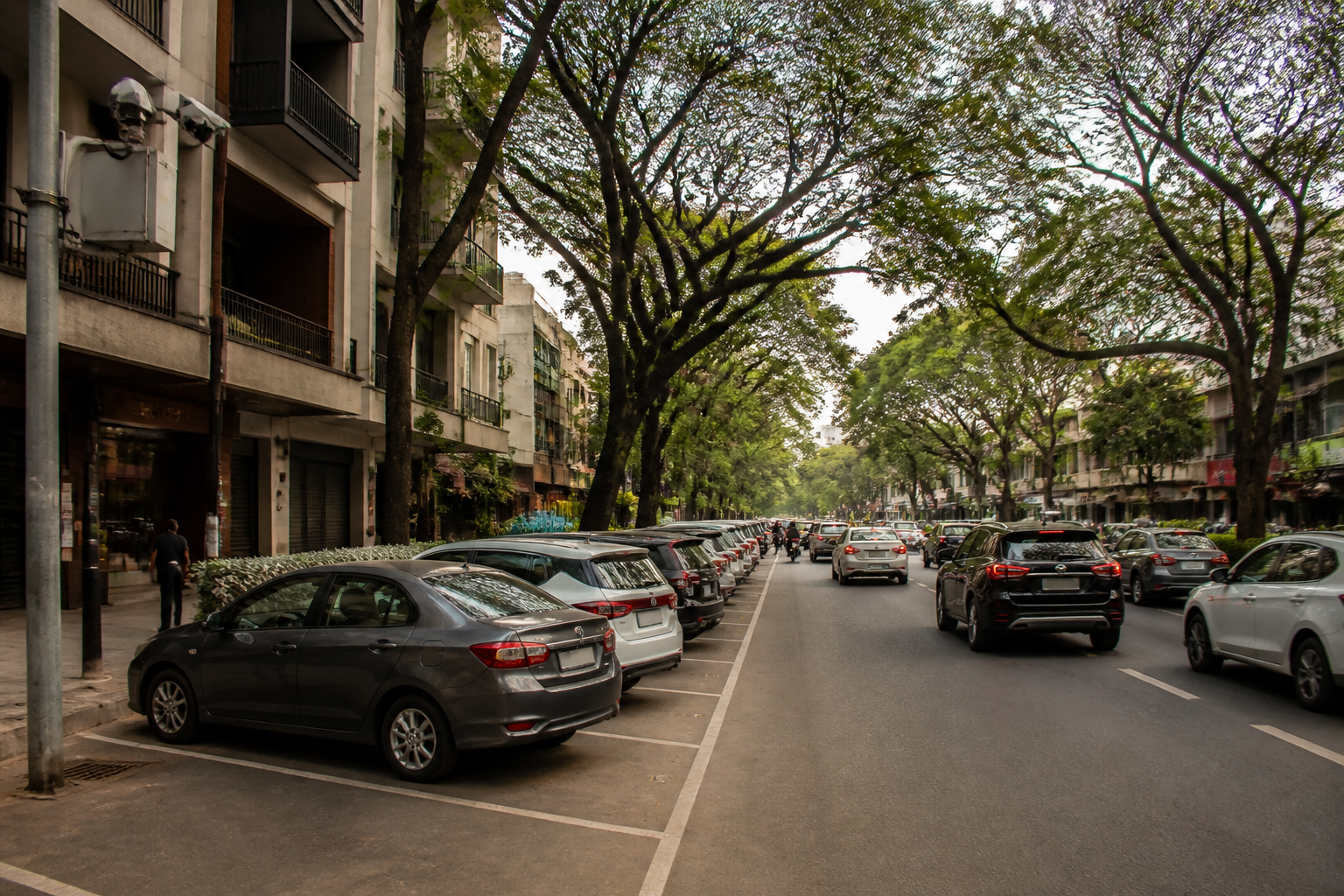
The Bengaluru South City Corporation has planned an artificial intelligence-based parking system for Jayanagar, aiming to organise on-street parking, reduce cross-parking and improve traffic movement in one of the city’s high-traffic areas. The pilot will use AI-enabled cameras to identify vacant spaces and allow motorists to pay parking charges digitally through QR codes and UPI.
Corporation Commissioner KN Ramesh chaired a coordination meeting on Thursday with traffic police and BESCOM officials for the proposed project. He directed officials to prepare a scientific layout for angular parking, with the design intended to accommodate more vehicles while reducing obstruction during entry and exit.
Officials have also been asked to ensure that the parking layout prioritises pedestrian safety and makes efficient use of available road space. The proposed system is intended for busy commercial and residential areas where unmanaged parking can restrict vehicle movement and create difficulties for pedestrians.
Under the plan, Park Lens will install cameras capable of detecting vacant parking spaces in real time. The company will mount the cameras on city street-light poles, for which it has received permission. Motorists will be able to scan QR codes at designated parking locations, select the duration of parking and make hourly payments through UPI.
Representatives of Park Lens said payment will be mandatory within five minutes of parking. The system will also generate automated alerts for two categories of violations: unpaid parking and overstaying. An unpaid violation will apply when a vehicle is parked without payment within the stipulated period, while an overstaying violation will apply when a vehicle remains beyond the paid duration without digitally extending the parking period.
Enforcement personnel will clamp the wheels of vehicles that default under either category and place penalty receipts on their windshields. The vehicles will be released only after the applicable fine has been paid, according to the report.
The corporation will initially test the system on selected roads in Jayanagar rather than introduce it across the area immediately. A broader rollout will be considered after the pilot is assessed for public feedback, technical performance and its effect on traffic management.
The role assigned to BESCOM is to ensure uninterrupted power supply for the cameras and sensors supporting the system. The corporation’s coordination with the traffic police, electricity utility and private technology provider is intended to address the operational requirements before the pilot begins. Further implementation will depend on the outcome of the test and the corporation’s assessment of the system’s performance.
