


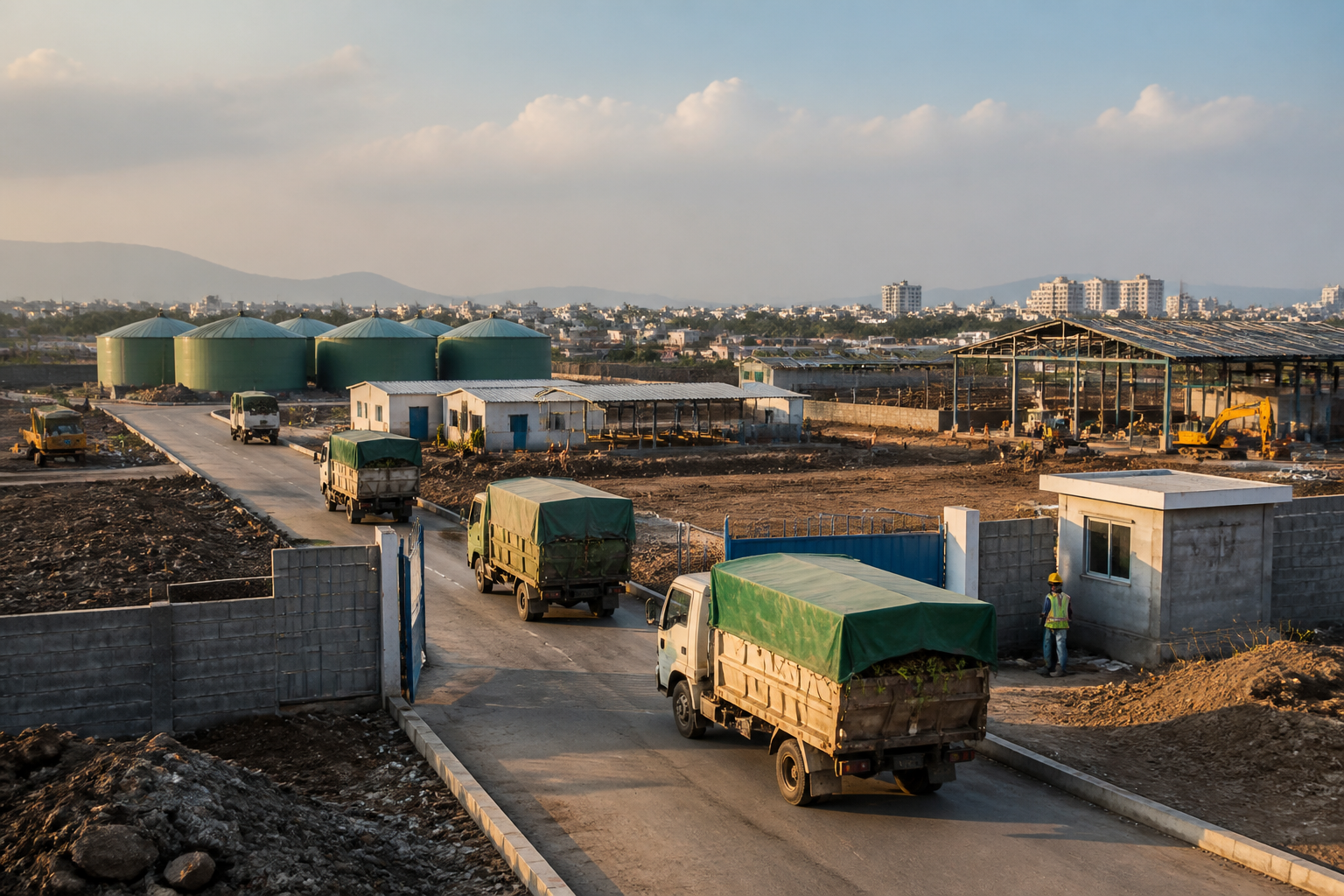
Pune’s proposed biogas plant has moved forward after the Pune Municipal Corporation’s standing committee approved a proposal to provide 12 acres at the Uruli Devachi waste-depot परिसर to Bharat Petroleum Corporation Limited for a bio-CNG project. The facility is planned to process 300 tonnes of wet waste every day, as the civic body faces a gap between the city’s wet-waste generation and its available treatment capacity.
The land is located within the waste-depot परिसर at Devachi Uruli, in the Fursungi-Uruli Devachi area. The municipal administration had placed the proposal before the standing committee last month, but the committee did not take a decision at that time. Approval was subsequently granted after a delay of about one month, according to a report by Loksatta – Pune.
Under the proposal, BPCL will bear the full cost of establishing, operating and maintaining the project. The municipal corporation will not provide financial assistance for construction or operations. Its stated responsibilities will include supplying segregated wet waste to the facility and making basic infrastructure available up to the project site.
The civic body is expected to provide road access, water, electricity, a sewage connection and a boundary wall as part of these minimum facilities. Monthly electricity and water bills will be paid by BPCL, according to the report. The arrangement is therefore structured around municipal access to land and basic services, while the public-sector oil company undertakes the project expenditure and operational obligations.
The 12 acres are proposed to be leased for a total period of 27 years. This includes two years for construction and 25 years for operation and maintenance. The proposed rent is one rupee per acre per year, making the land charge nominal over the lease period.
The project’s planned capacity is significant for Pune’s wet-waste management system because the municipal corporation currently has inadequate processing capacity compared with the quantity of wet waste generated in the city. The proposed facility is intended to convert the waste into bio-CNG, although the supplied report does not specify the expected production volume, construction start date or commissioning deadline.
BPCL will retain ownership of the products generated by the project and the rights to sell them or arrange their scientific disposal. The report does not provide details on the proposed end users of the bio-CNG, the technology to be deployed, the procurement or operating agreement, or the monitoring framework for ensuring that only segregated wet waste reaches the plant.
The standing committee’s approval is the next formal step reported for the proposal. The project now requires implementation over the proposed two-year construction period, while the municipal corporation’s role will centre on providing segregated wet waste and the promised supporting infrastructure.
