


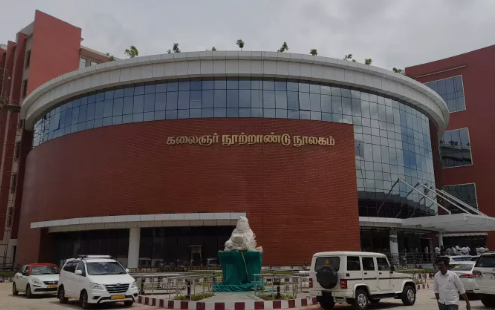
The Madras High Court has instructed the district library officer of Madurai to provide a comprehensive report concerning a public interest litigation (PIL) demanding immediate improvements to the district central library situated in Simmakkal. The court’s directive came during a session held on Tuesday, reflecting growing concerns over the library’s deteriorating condition.
The PIL, filed by a concerned citizen, highlighted multiple critical issues plaguing the library. According to the petitioner, the facility, a vital resource for students and young aspirants preparing for competitive examinations, is grappling with severe infrastructural deficiencies. The petitioner underscored that the library’s building suffers from significant wear and tear, including a damaged roof and crumbling walls. Notably, parts of the roof frequently detach, posing a potential safety hazard, while the compound wall collapsed in 2023, exacerbating the facility’s structural instability. Further compounding these issues, the petitioner reported that the library’s sanitation facilities are in a deplorable state. The toilets lack proper maintenance, and the Reverse Osmosis (RO) water purification system is inadequate for the needs of the visitors.
Additionally, the fans and lighting within the library are malfunctioning, creating an uncomfortable and inefficient environment for its users. Despite submitting a proposal for renovation, there has been no progress or approval for the necessary repairs. In response to these grievances, the High Court has mandated that the district library officer file a detailed report outlining the current state of the library and any planned or pending remedial actions. This judicial intervention highlights the urgency of addressing the infrastructure issues that have left the library in a state of disrepair, affecting its ability to serve the community effectively.
The court’s involvement underscores the importance of maintaining public facilities, particularly those crucial for educational purposes. The outcome of this case will likely influence future investments in the upkeep of similar institutions across the region, setting a precedent for addressing infrastructural deficiencies in public libraries.
