


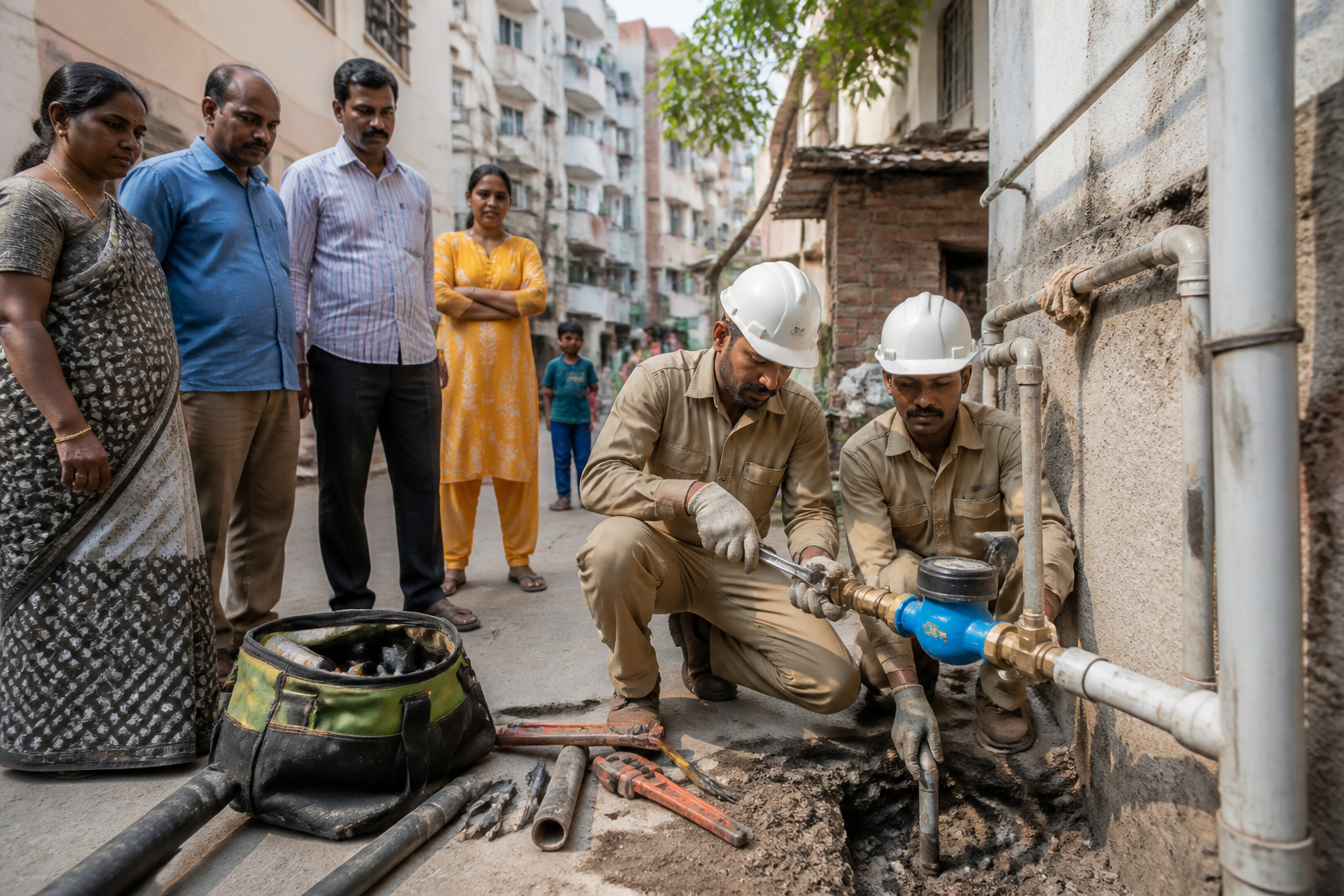
The Pimpri-Chinchwad Municipal Corporation has found 17,500 unauthorised water connections during a citywide survey and regularised 13,500 of them by installing meters, after spending ₹26 crore on the ongoing exercise. The civic body estimates that more than 25,000 unauthorised connections exist across the city and plans to spend ₹32 crore on the survey and metering programme.
The initiative is being carried out through a contractor and began in December 2024. The contract has a 24-month duration and covers the identification of unauthorised connections, their regularisation and the installation of water meters. The municipal water-supply department said four months remain before the survey deadline and that the exercise will be completed within that period.
So far, 307,950 properties have been surveyed across Pimpri-Chinchwad. The unauthorised connections identified through the survey are located in different parts of the city, including slum areas. Of the 17,500 connections found, 13,500 have been regularised and fitted with meters. The civic body has started charging these consumers for water supply.
The municipal administration had first launched a special campaign in 2023 to encourage residents to regularise unauthorised connections. The campaign was extended three times and the civic body did not collect a security deposit. Despite those measures, only 1,673 residents from eight municipal ward areas applied to regularise their connections.
The administration has linked the drive to water losses, theft and weak revenue collection. It estimates that around 40 per cent of the city’s water is lost or stolen, while the municipal corporation has not been receiving the expected income through water charges. The survey-and-metering approach was adopted after the earlier campaign received limited public response.
Pimpri-Chinchwad has 784,000 registered properties, while the number of officially recorded water connections is about 200,000. The administration has said the lower number of connections compared with properties is partly because housing societies often use a single combined connection and because unauthorised connections are not included in official records.
Under the current arrangement, meters are being installed through contractors after connections are regularised. The cost of installing one meter for residential and non-residential buildings starts at ₹10,000 and varies according to the diameter of the connection. The municipal corporation plans to recover this cost from connection holders through their monthly water bills, in instalments of ₹150.
The remaining unauthorised connections identified during the survey are being verified. The water-supply department has said the survey will continue until the remaining four months of the contract period are completed.
