


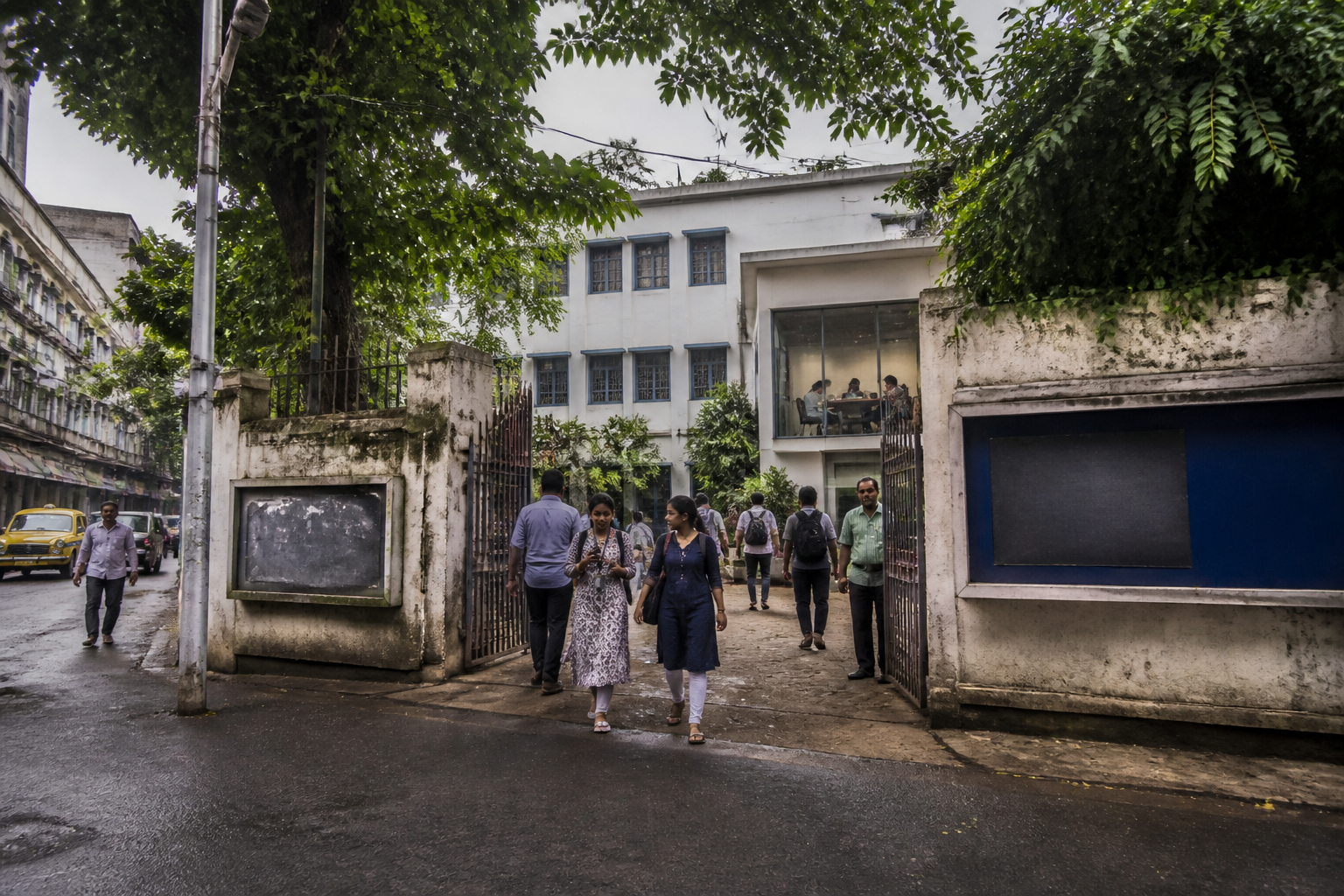
The appointment of BJP leaders, teachers and former teachers associated with the party to head governing bodies of 171 government-aided colleges in Bengal marks more than a change in personnel. It establishes a governing approach in which political affiliation is no longer separate from the administration of higher education institutions, even as the state government presents the appointments as a way to restart stalled college administration.
The higher education department announced the appointments on Wednesday. They follow the government’s decision on August 22 to appoint BJP MLAs and MPs as presidents of governing bodies at 247 aided colleges. Taken together, the two rounds place political leaders and party-linked education figures in formal positions across hundreds of government-aided institutions.
The immediate administrative justification is that governing bodies had not been reconstituted after earlier changes. A higher education department official said the functioning of colleges had been affected because the bodies could not meet while awaiting reconstitution. The latest appointments, the official said, would allow administrative activities to resume.
That explanation identifies the first institutional problem: a prolonged vacancy or transition in governing bodies can slow decisions inside colleges. But it does not resolve the second problem raised by the appointments—whether the restoration of formal administration must also involve the direct placement of ruling-party figures in positions that oversee college affairs.
This tension is central to the Bengal decision. A principal of an aided college in Calcutta told The Telegraph that the BJP, when it was in Opposition, had accused the Trinamool Congress of influencing college governing bodies through party leaders. The principal said there had been an expectation that the BJP would appoint independent academicians rather than its MLAs or party leaders.
The comparison is not incidental. After coming to power in Bengal, the BJP government dissolved governing bodies headed by Trinamool leaders and subsequently appointed government officials as administrators. The latest appointments now replace that interim arrangement with governing bodies led by BJP leaders and teachers or former teachers linked to the party’s teachers’ cell.
The sequence shows how the administrative issue and the political issue have become intertwined. The government’s stated objective is to restore functioning bodies. At the same time, the people selected to lead some of those bodies are prominent party functionaries, making the appointments part of the governing party’s institutional presence in colleges.
The named appointments illustrate the pattern. Anupam Bhattacharya, the BJP’s South Calcutta district president, has been appointed president of the governing body of Netaji Nagar Day College. Tamaghna Ghosh, the BJP’s North Calcutta district president, has been appointed to the same position at Surendranath Day College in Sealdah. BJP leader Priyanka Tibrewal has been appointed president of the governing body at Surendranath College for Women.
The appointments also connect college administration to the wider political network around the state government. Bhattacharya had accompanied chief minister Suvendu Adhikari at a meeting outside Jadavpur University on August 28 and at a march to the university on September 9, according to the report. His appointment therefore places a district-level party leader with a visible political role in charge of a college governing body.
Bhattacharya said he would work to improve college infrastructure. He also said the standard of education had deteriorated during the Trinamool government and that further decline had to be arrested. Ghosh said he would try to ensure that bright students were admitted and that the college improved its National Assessment and Accreditation Council ranking.
These statements point to the performance benchmarks the appointees say they will pursue: infrastructure, student admissions and accreditation. However, the supplied report does not provide baseline data on the physical condition of the colleges, their enrolment, staffing, finances or existing accreditation scores. It is therefore not possible to assess from the appointments alone whether the new governing bodies have the academic or administrative capacity to deliver those objectives.
The distinction matters because governing a college involves more than announcing an intention to improve it. A governing body operates within an institutional structure that includes college principals, teachers, non-teaching staff, students and the higher education department. The report confirms that the bodies could not meet during the period of reconstitution, but it does not detail which decisions were delayed, how long individual colleges remained without functioning bodies or whether any academic or financial deadlines were missed.
That missing information limits the public assessment of the government’s administrative argument. If the principal consequence of the delay was the inability to convene meetings, the government can claim that the appointments remove a bottleneck. If the interruption affected admissions, infrastructure decisions, staffing or accreditation processes, the consequences would be wider. The available account establishes the disruption but not its full scale.
The political representation question is clearer. The higher education minister, Jagannath Chattopadhyay, said: “What the party decided has been implemented by the department.” This statement directly links the party’s decision to the department’s appointments. It provides an unusually explicit account of how the appointments were made and makes the boundary between party choice and government administration a central issue in the story.
The government’s other defence is that political affiliation does not necessarily disqualify a person from managing a college. Tibrewal challenged the description of the appointees as simply politicians, asking why attention was not also given to the number of educated people appointed to the posts. Bhattacharya and Ghosh said they would not repeat what they described as the mistakes made by Trinamool leaders and rejected the possibility that their own appointments would lead to similar interference.
This defence shifts the debate from who appointed the governing body presidents to whether the appointees can perform their roles professionally. That is a legitimate administrative question, but it also creates a test that can be measured only over time. The relevant evidence would include the conduct of meetings, the transparency of decisions, the treatment of teachers and students, the handling of infrastructure work and the relationship between governing bodies and college principals.
The Bengal government has thus replaced one governance model with another. Under the earlier arrangement described in the report, governing bodies headed by Trinamool leaders were dissolved and government officials served as administrators. The latest arrangement restores governing bodies but gives leadership positions to BJP leaders and party-linked teachers and former teachers. In institutional terms, the state has moved from temporary official administration to a more politically identifiable governing structure.
The shift also revives a broader question about aided colleges: whether their governing bodies should be designed primarily for administrative continuity, academic expertise or political representation. The government has not, in the supplied material, described a selection framework based on independent academic qualifications, institutional experience or transparent criteria. Nor has it explained how the appointments will be reviewed or how conflicts of interest will be addressed.
That gap is important because the appointments cover a large number of institutions. The first round involved 247 aided colleges and the latest round 171 more. The report does not clarify whether there is overlap between the two groups, but the two announcements together indicate a substantial reorganisation of college governance across Bengal.
For students and staff, the immediate consequence should be the return of functioning governing bodies and the decisions that were held up during the transition. For the public, however, the more significant issue is whether administrative continuity will be accompanied by institutional independence. The appointments have made that question unavoidable because the government’s own minister has acknowledged that the department implemented a decision taken by the party.
The evidence currently confirms three facts: governing bodies in aided colleges were awaiting reconstitution; the higher education department has now announced appointments for 171 institutions; and several appointees have direct links to the BJP as leaders or members of its teachers’ network. What remains unestablished is whether the new bodies will improve infrastructure, education quality or accreditation outcomes, and whether political appointments will affect the independence of college administration.
The next measure of the policy will not be the announcement itself but the functioning of these governing bodies. Their meetings, decisions and stated performance indicators will show whether the appointments primarily restored administration or institutionalised a new form of party-linked college governance.
