


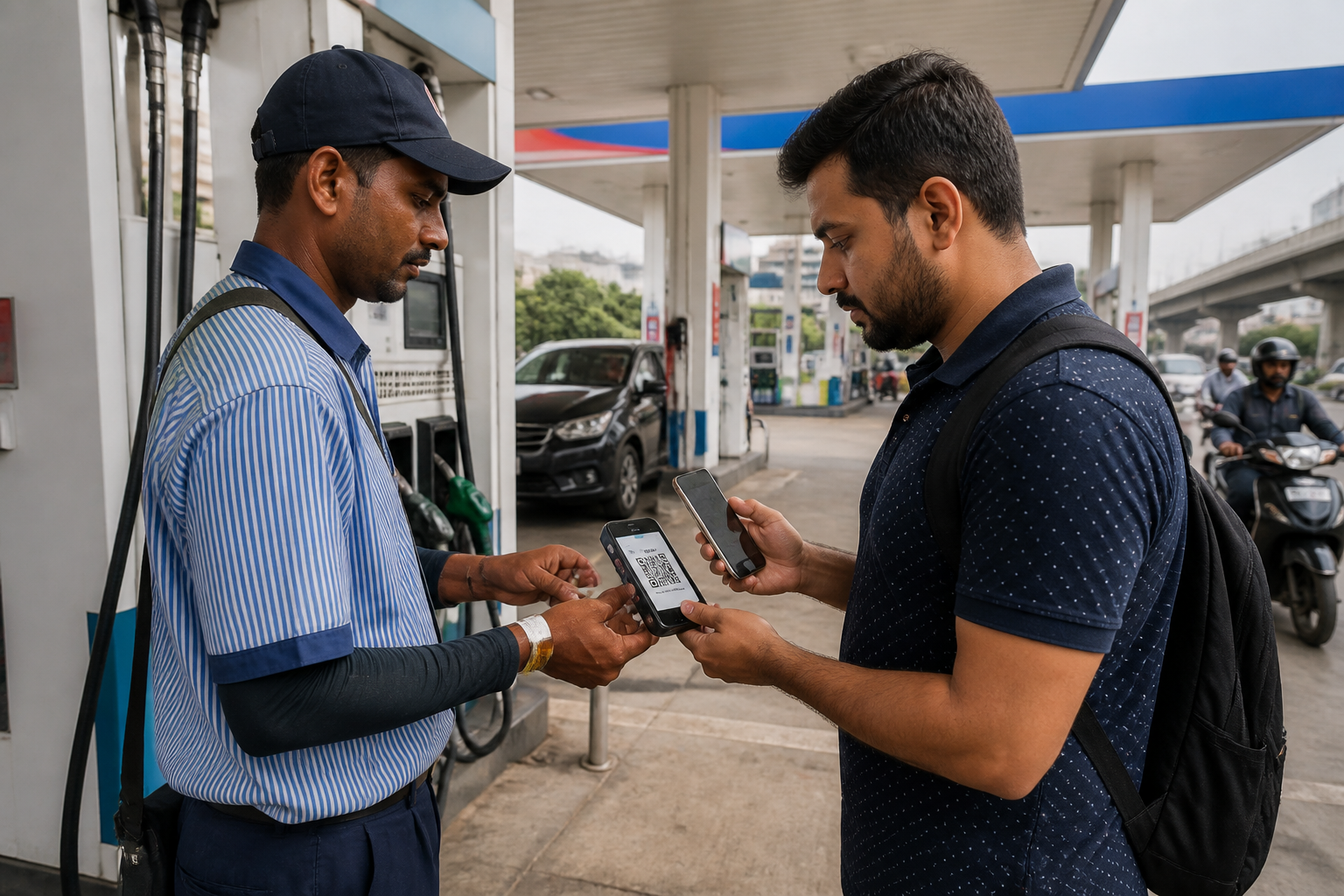
Petrol pump dealers have urged the Centre to exempt fuel purchases above ₹2,000 from a proposed flat Merchant Discount Rate (MDR) of ₹5 per UPI transaction, warning that they may stop accepting larger digital payments if the charge is imposed.
Monty Sehgal, national spokesperson for the Federation of All India Petroleum Traders (FAIPT), said dealers were already operating on thin margins and could not absorb the additional cost. “We may have to stop accepting UPI payments of ₹2,000 and above if exemption is not allowed to fuel retailers,” Sehgal told The Hindu BusinessLine.
He said dealer margins had not been revised in line with inflation since 2017. Although there was a nominal margin increase in 2024, Sehgal said it was insufficient to cover fixed establishment costs at retail outlets.
Hemant Sirohi, a member of the Empower Petroleum Dealers Foundation, said transactions above ₹2,000 account for about 20 per cent of cumulative transactions at retail outlets. Based on figures he attributed to the National Payments Corporation of India’s June 2026 data, around 23.9 million UPI transactions take place at fuel outlets across India.
Sirohi estimated that the proposed charge could result in MDR costs of about ₹2.4 crore a day across fuel retail outlets. He said this would translate into an average cost of ₹230-250 per day for each outlet, although the burden could be higher at highway and semi-urban pumps. Highway outlets could face daily costs of ₹500-1,400, while semi-urban outlets could incur ₹300-600, according to his assessment.
The proposed charge is significant for dealers because their commissions are fixed within the petroleum retail system. Sirohi said dealer margins currently range between ₹3.40 and ₹3.70 per litre for petrol and ₹2.40 and ₹2.70 per litre for diesel.
The Akhila Karnataka Federation of Petroleum Traders (AKFPT) has separately written to Finance Minister Nirmala Sitharaman and Oil Minister Hardeep Singh Puri, expressing concern over the possible introduction of MDR on selected UPI merchant transactions. Its president, K M Basavegowda, said petrol pumps could not be treated like ordinary retail businesses because the selling prices of petrol and diesel are determined by oil marketing companies (OMCs).
“Petroleum dealers operate on a prescribed dealer commission and margin structure,” Basavegowda said in the letter. He added that dealers could not increase the retail selling price merely because the cost of accepting a particular digital payment method increased.
The Karnataka association cited the post-demonetisation period beginning in November 2016 as a policy precedent. It said the government had then exempted retail outlet dealers from MDR charges, with the cost absorbed by OMCs, as fuel stations supported the shift towards cashless and digital transactions.
Sirohi also suggested that OMCs could again absorb the charge or that dealer margins could be revised sufficiently to cover it. The trade bodies are seeking an exemption for fuel retailers before any proposed UPI MDR framework is applied to transactions above ₹2,000.
