


Delhi recorded 179 clean-air days up to September 15, the highest number reported for the same period in a decade, according to the Environment Department, as authorities continued action against road dust, waste, vehicle emissions and construction debris across the capital.
The figure compares with 172 clean-air days recorded during the corresponding period in 2025 and 94 days in 2016. The latest count represents an increase of 85 days over the 2016 figure, according to data cited by the department. Environment Minister Manjinder Singh Sirsa described the result as a sign of continuing improvement in Delhi’s air quality.
The minister attributed the improvement to sustained action against multiple pollution sources, including dust, waste and vehicular emissions. The department’s figures indicate that the measures have combined road-cleaning operations, enforcement against polluting vehicles, waste processing and the treatment of construction and demolition debris.
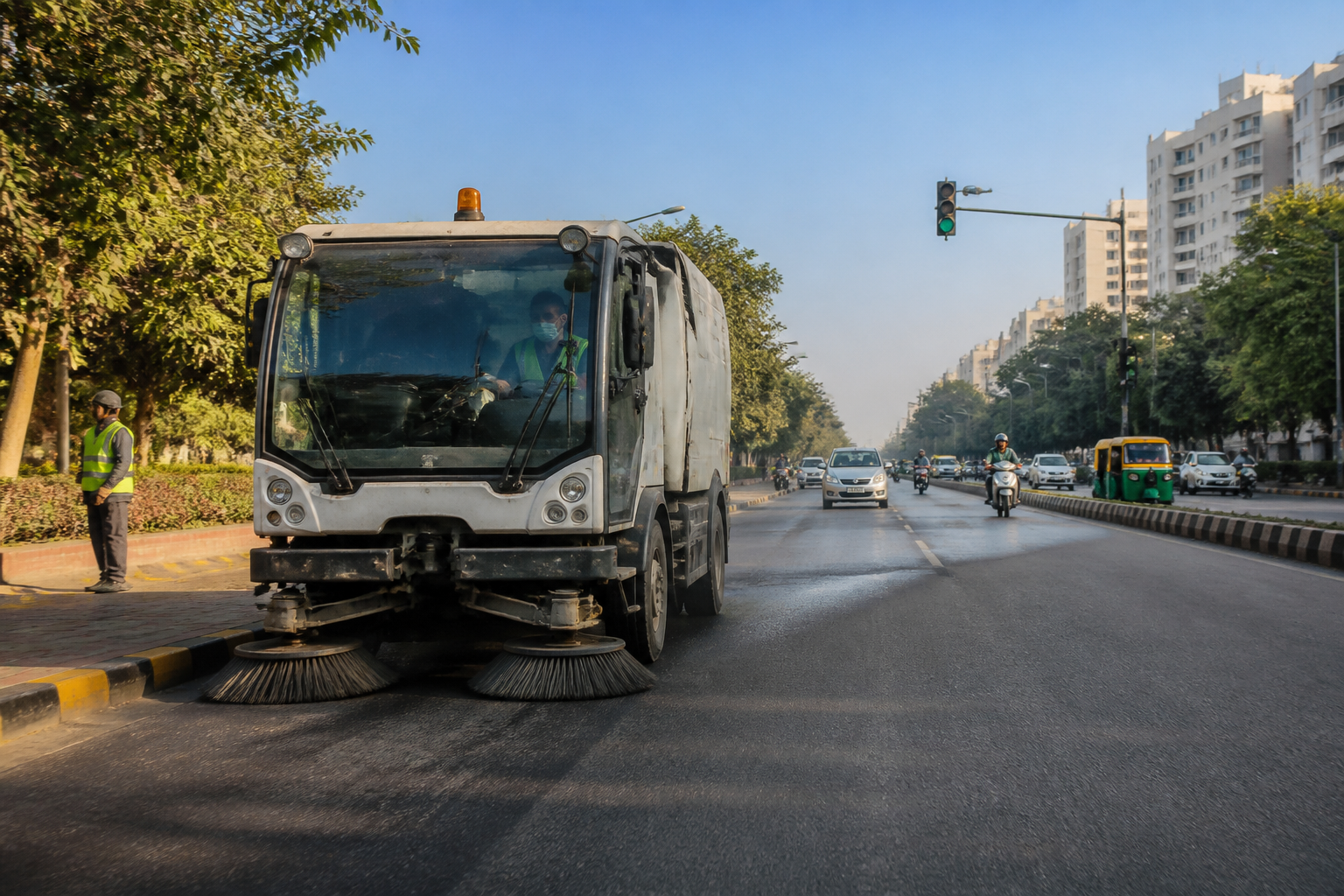
Delhi’s air quality index stood at 98 on September 15, placing it in the ‘satisfactory’ category. In the previous 24-hour period, 81 mechanised road sweepers covered approximately 2,279 kilometres of roads and removed 170 metric tonnes of road dust, according to the report. Road dust is one of the recurring sources targeted by the city’s pollution-control operations.
Enforcement against vehicle-related pollution also continued during the period, with 4,976 challans issued for violations. The reported action comes as Delhi authorities prepare for the seasonal deterioration in air quality that typically places greater pressure on transport, construction and waste-management systems. The source report, however, does not specify the individual categories of vehicle violations covered by the challans.
Waste and construction debris formed another part of the reported intervention. Authorities disposed of around 12,715 tonnes of waste and 2,113 tonnes of construction and demolition waste during the same period. At the Bhalswa, Ghazipur and Okhla landfill sites, approximately 19,212 metric tonnes of legacy waste were processed through biomining.
The figures present a combined account of ambient air-quality readings and operational enforcement by several civic and government agencies. They show a higher number of clean-air days and substantial activity in road sweeping, waste disposal, landfill remediation and vehicle enforcement, while the supplied report does not establish how much each intervention contributed to the overall change.
The Environment Department’s latest update therefore places Delhi’s air-quality performance alongside the administrative capacity required to manage its main urban pollution sources. Further monitoring will depend on subsequent air-quality readings and the continuation of road-cleaning, waste-processing, landfill biomining and vehicle-enforcement measures.
