


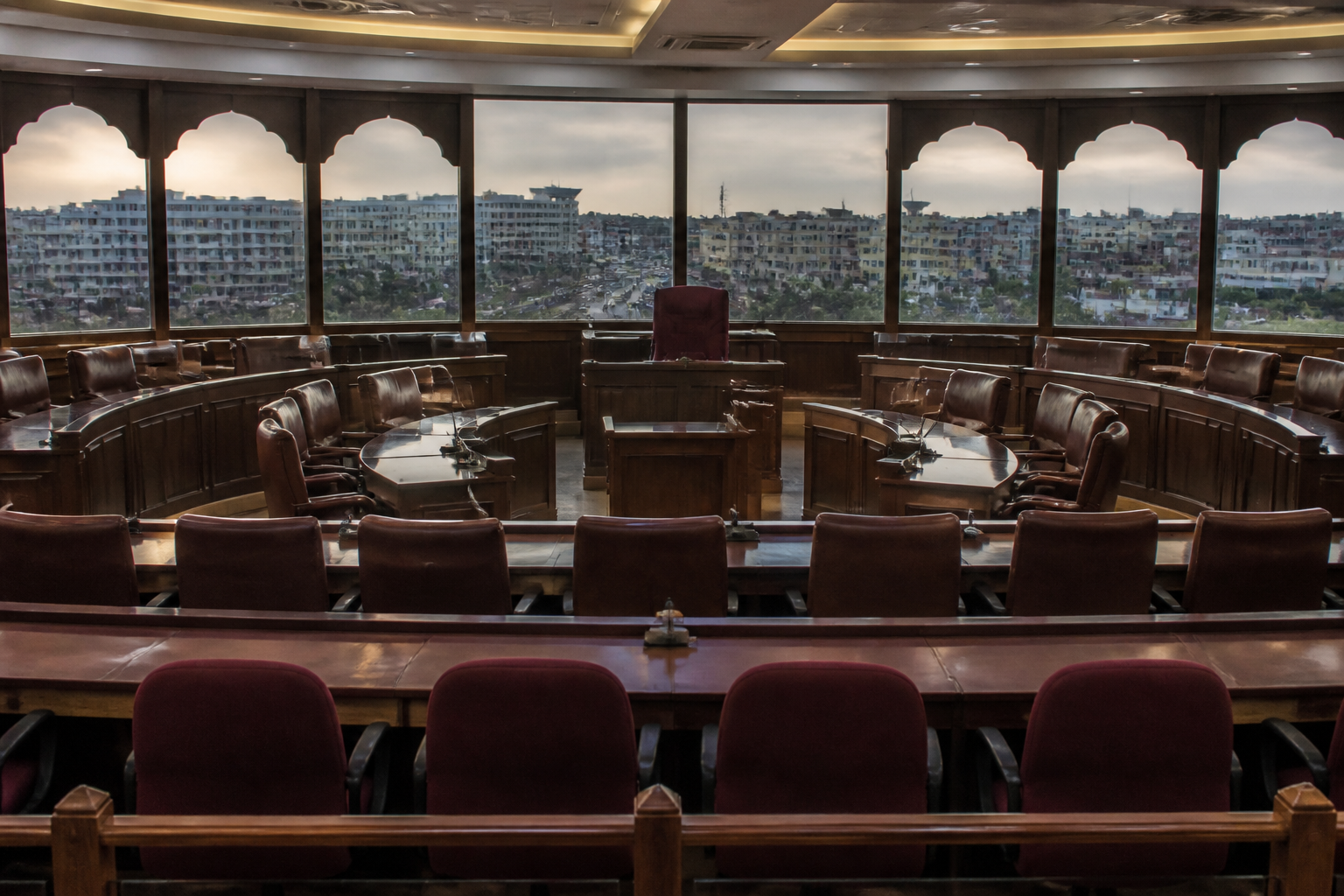
The unresolved position of AIMIM MLC Mirza Rahmat Baig has revealed a larger institutional problem in Telangana: a vacancy in the Hyderabad local-authority constituency cannot be filled until Greater Hyderabad has an elected municipal body. The immediate issue is whether Baig will resign after being expelled by AIMIM over allegations of sexual misconduct involving a minor girl. The more consequential question is what happens when the electorate for an indirect legislative seat no longer exists in its required form.
According to a Times of India report, AIMIM directed Baig to resign about two weeks ago after expelling him from the party. He was reportedly outside Hyderabad on Umrah when the decision was announced and returned a few days ago, but has not yet met the chairperson of the Telangana Legislative Council or submitted his resignation. The report also says he has not attended council sessions in recent days. AIMIM sources told the newspaper that the party was monitoring the situation and would decide on its next step.
The reported delay matters because the seat is not filled through a direct public election. In the Hyderabad local-authority constituency, municipal corporators are the voters. That arrangement links the existence of the legislative seat to the functioning of the municipal corporation. Since the term of the Greater Hyderabad Municipal Corporation ended in February 2026 and no elected body is currently in place, the constituency does not have its normal voting base.
This creates a distinction between a political vacancy and an administratively fillable vacancy. If Baig resigns and the Election Commission formally notifies the vacancy, the seat may still not immediately go to a bypoll. The official sources cited in the report said an election could be held only after GHMC elections are conducted. In practical terms, the sequence is dependent on the restoration of the municipal electorate before the legislative vacancy can be addressed.
That dependency shows how local government elections influence institutions beyond the municipal corporation itself. GHMC elections are not only about choosing councillors or determining control of the civic administration. They also determine who is eligible to vote in the Hyderabad local-authority MLC constituency. When the municipal term ends without a successor elected body, that representative chain is interrupted.
The situation is not limited to Hyderabad. The report refers to the resignation of Telangana Rakshana Sena chief Kalvakuntla Kavitha from the Nizamabad local-authority constituency nearly nine months ago. That seat also remains unfilled, although its electorate is broader than Hyderabad’s. It includes mandal parishad territorial constituencies, zilla parishad territorial constituencies and municipal councillors.
The Nizamabad case demonstrates a different version of the same institutional constraint. According to a council official quoted by the newspaper, Election Commission norms require 75% of the total voters to be in place. Municipal elections have reportedly been held in the constituency in recent months, but zilla parishad and mandal parishad elections have not been conducted. Because part of the prescribed electorate is absent, the vacancy cannot be filled under the stated norms.
The exact operation of the 75% requirement is important because local-authority constituencies are built around a defined electoral college rather than a general population-wide vote. Their legitimacy depends on the existence and continuity of the local representatives designated as voters. If one layer of local government is missing, the election process can become impossible even when the legislative seat itself is vacant.
This structure also means that delays in local elections can have effects at the state level. A municipal or panchayat election is often treated as a separate administrative exercise, with consequences confined to local representation. In Telangana, the reported vacancies show that the timing of those elections can affect membership of the Legislative Council as well.
The institutional responsibility is therefore distributed across multiple bodies. The state government is responsible for conducting the relevant local elections. The GHMC electoral cycle determines the availability of corporators for the Hyderabad constituency. The Election Commission must notify and conduct a bypoll when the legal conditions for one are met. The Legislative Council has to process a resignation and manage the resulting vacancy. None of these institutions alone can complete the process if the underlying local electorate is not constituted.
This arrangement produces a form of representative lag. A legislative seat may become politically contested or formally vacant, but the next election cannot begin because the voters are not available in the required institutional capacity. Citizens may continue to be represented by an incumbent who has lost party backing, while the formal process for replacing that representative remains dependent on elections in another tier of government.
The reported Baig case makes that gap particularly visible because the political trigger and the administrative response are moving at different speeds. AIMIM has sought his resignation, but the reported resignation had not occurred when the article was published. Even if he submits it, the Hyderabad local-authority seat would remain tied to the timing of GHMC elections and the subsequent notification of a vacancy.
The report also identifies upcoming changes in the Legislative Council. Governor-nominated MLCs Goreti Venkanna, Buggarapu Dayanand and Basvaraju Sariah are due to complete their terms in November, while Graduate constituency MLCs Surabhi Vani Devi and Chintapandu Naveen Kumar, popularly known as Teenmar Mallanna, are due to complete their terms in March 2027. These vacancies follow different electoral or nomination routes and should not be conflated with the local-authority seats, but their timing adds to the importance of understanding how each category is filled.
For Hyderabad, the central issue is not simply whether one MLC resigns. It is whether the city’s municipal electoral base is restored in time for the local-authority constituency to function as designed. Until GHMC has an elected body, the chain connecting municipal representation to Legislative Council representation remains incomplete.
The available report establishes that Baig had not resigned at the time of publication, that the Hyderabad local-authority constituency is voted on by municipal corporators, and that the absence of an elected GHMC body prevents an immediate bypoll. It does not establish when GHMC elections will be held or when the Election Commission would notify any resulting Legislative Council vacancy. Those milestones will determine whether the present political dispute becomes a formal vacancy and whether that vacancy can then be filled.

