


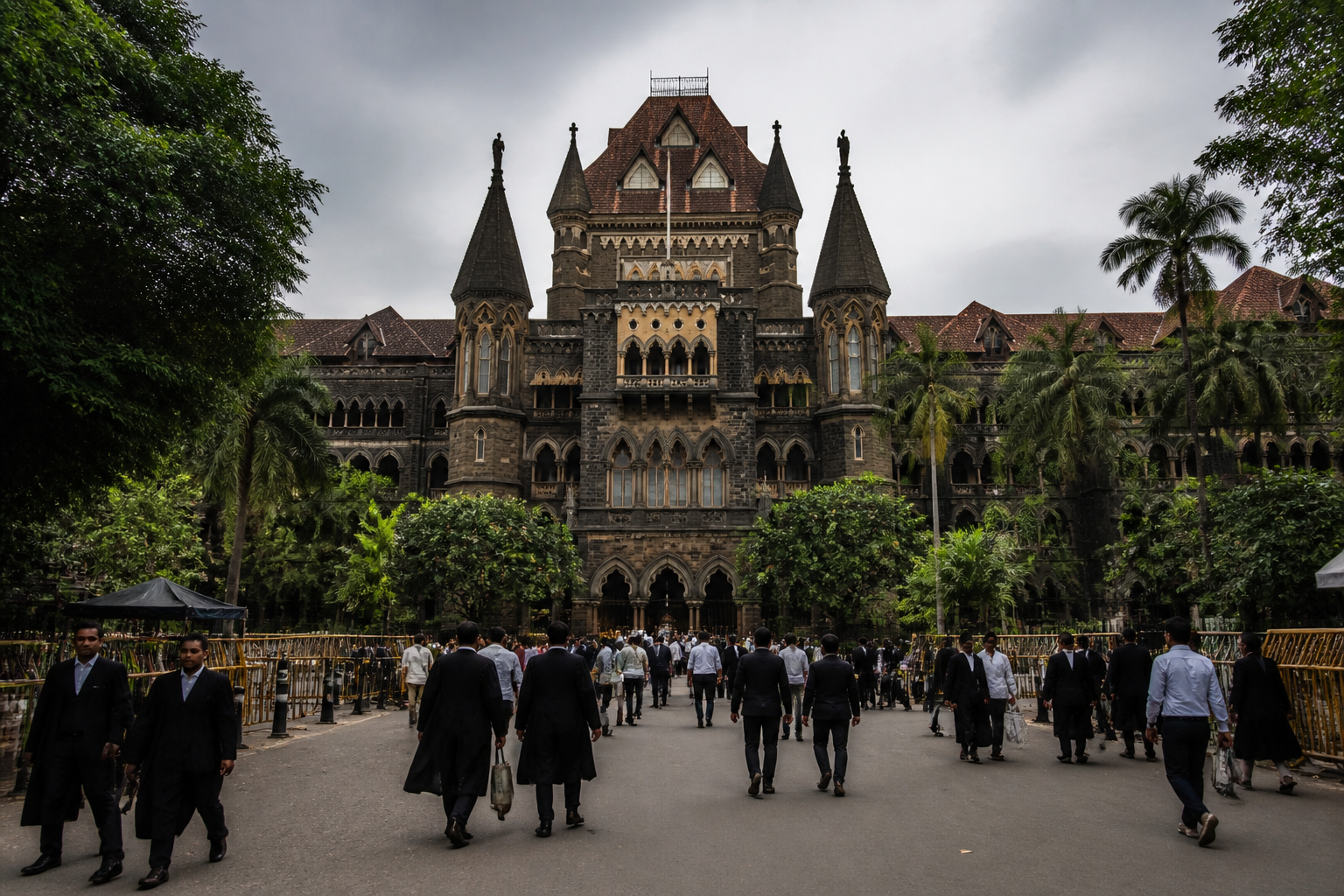
The Bombay High Court has sought responses from the Maharashtra government and the Centre on a public interest litigation seeking a standard operating procedure for medical termination of pregnancy beyond 24 weeks, along with wider powers for medical boards to reduce the need for vulnerable women to approach courts.
A division bench comprising Chief Justice Mahesh Chandra Tripathi and Justice Advait Sethna issued notice on the petition filed by the Pune-based Medico Legal Society of India through paediatrician Dr Rajeev Joshi. The matter has been posted for October 9.
The petition challenges a clause in Maharashtra’s government resolution dated June 3, 2024. The clause states that cases involving vulnerable categories, including rape survivors, minors and persons with disabilities, may be taken to court when the pregnancy is beyond 24 weeks and there is no foetal abnormality.
Under the Medical Termination of Pregnancy Act, termination is permitted up to 24 weeks, while procedures beyond that limit are restricted to circumstances involving a risk to the woman’s life or severe foetal abnormality. The petition argues that the existing framework leaves women in vulnerable situations dependent on court proceedings even when medical and social circumstances require time-sensitive decisions.
“Pregnancy is a highly time-sensitive medical status. Forcing vulnerable individuals like rape survivors and minors into expensive and prolonged litigation during a crisis constitutes institutional cruelty,” the petition states.
The PIL also points to uncertainty over the medical and legal processes to be followed in late-term cases. It refers to unresolved questions involving foeticide through intracardiac injection, pre-term delivery and the legal, ethical and financial liabilities that may arise if a viable foetus is born alive following a court order.
The petition cites recent examples to highlight the risks faced by medical professionals. These include an FIR against a gynaecologist in Satara who performed a late-term termination and a contempt notice issued by the Supreme Court against doctors at AIIMS who refused to terminate a 30-week pregnancy.
According to the petition, the absence of a clear SOP has shifted responsibility from the executive and medical boards to the courts. It argues that women seeking termination after 24 weeks face unequal treatment depending on the circumstances of their pregnancy. While a woman carrying a foetus with substantial abnormalities may receive a swift evaluation by a medical board at any stage of gestation, the petition says a rape survivor at the same stage may be pushed into prolonged litigation.
The case also raises an administrative capacity issue for Maharashtra’s public health system. The petition states that expert committees formed by the High Court for individual medical termination cases are increasingly difficult to convene, placing additional demands on doctors in government hospitals. It has therefore sought medical boards at district hospitals in every district rather than concentrating cases in one or two institutions.
Among its prayers, the PIL asks the High Court to quash the disputed clause as being beyond the authority of the parent Medical Termination of Pregnancy Act. It also seeks a direction for the state to bear the expenses of tertiary neonatal intensive care if a child is born alive following a court-ordered late-term termination. The state and Centre are expected to respond before the matter is heard next on October 9.
