


The Maharashtra government has ordered immediate assessments of drought-like conditions from October 5 after a prolonged monsoon break damaged Kharif crops across the state and intensified demands for drought relief. Chief Minister Devendra Fadnavis directed officials to begin the formal assessments according to National Disaster Response Fund (NDRF) criteria, while measures to address scarcity are to be implemented without waiting for the assessment process to conclude.
The decision followed a detailed discussion at the state Cabinet meeting on Tuesday. According to the report, the government’s assessment will cover 86 talukas affected by the rainfall deficit. The exercise is intended to establish the extent of crop damage and drought conditions before relief measures are processed under the applicable disaster-response framework.
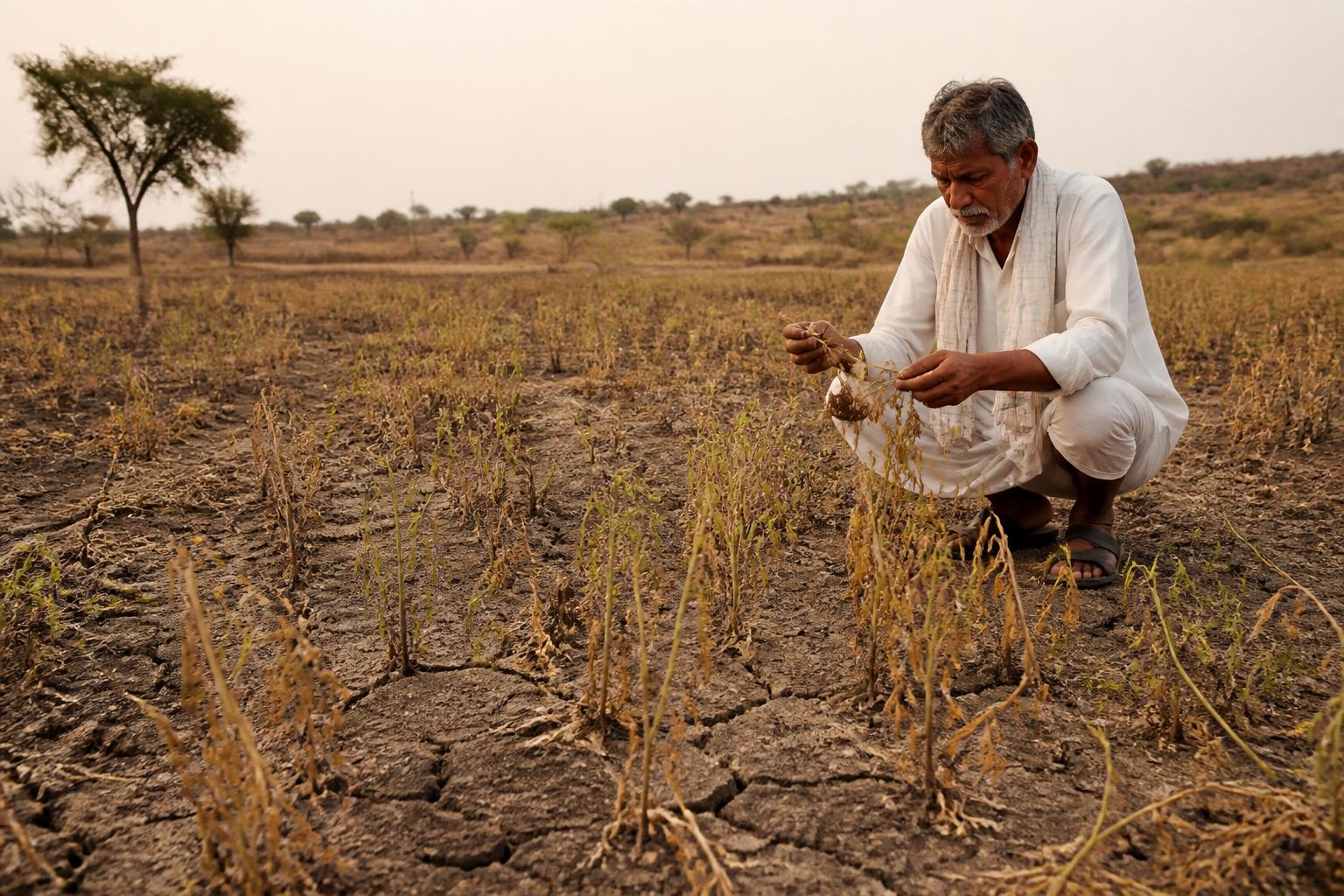
The assessment orders come after rainfall weakened during August and September, leaving the Kharif season in a vulnerable position. Rural ministers told the Chief Minister that the situation had become extremely serious in areas that depend on seasonal rainfall. They reported that crops had withered after rainfall failed for about a month in several locations.
Short-duration pulses, including moong, matki and chawli, were reported to have failed in many areas. In rain-dependent locations, farmers were said to be unable to recover even a meaningful harvest by removing the damaged crops. Sugarcane growth has also been affected, while newly planted sugarcane fields are facing water shortages, according to the report.
The distinction between the assessment and a formal drought declaration is important for the administration of relief. The panchnamas, or official field assessments, are expected to document crop losses and local conditions in line with NDRF norms. These records will provide the administrative basis for determining the scale of intervention and compensation or other relief measures under the relevant framework.
The government has nevertheless indicated that scarcity-relief measures will begin urgently, even though the official assessment is scheduled for the first week of October. The report does not specify the individual measures, funding allocation or implementation schedule for those interventions.
The demand for a drought declaration had been growing among elected representatives as the rainfall deficit began affecting crops and water availability. The Cabinet discussion brought those demands into the state’s formal administrative process, with the Chief Minister instructing departments to move ahead with the assessments rather than wait for further deterioration in farm conditions.
For rural communities, the immediate issue is the loss of the current crop cycle and the pressure created by limited irrigation. The reported damage is most acute in places without assured irrigation, where the failure of the monsoon directly affects both cultivation and the possibility of salvaging produce. The impact on sugarcane also extends to newly planted fields that require water to establish.
The next formal step is the commencement of drought-condition panchnamas on October 5. The resulting assessments, prepared under NDRF criteria, will determine the documented extent of crop damage and guide the state’s subsequent relief response.
