


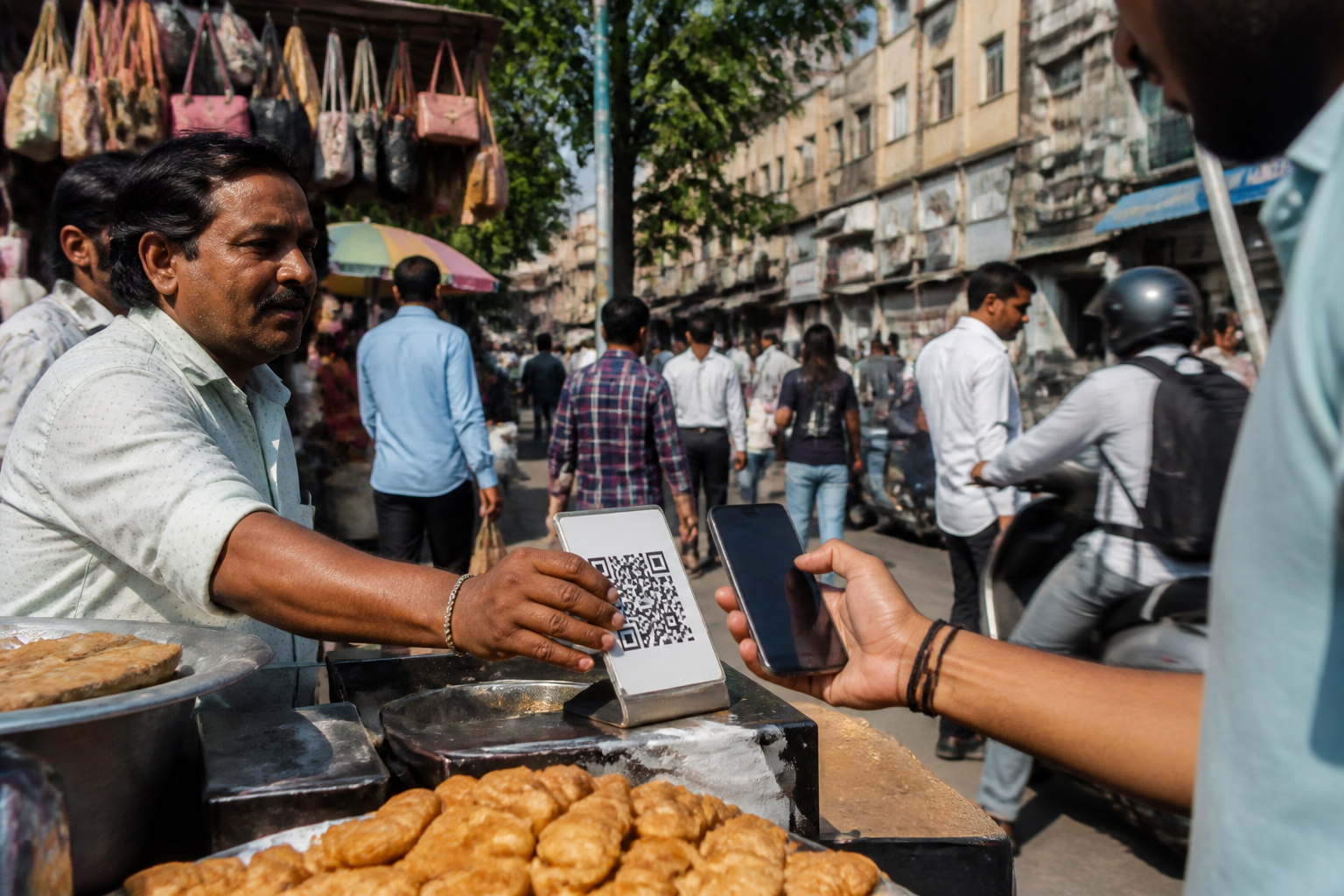
UPI charges on select person-to-merchant transactions above Rs 2,000 will come into effect from October 15, with merchants paying a Merchant Discount Rate of 0.4%, according to a framework announced by the National Payments Corporation of India (NPCI). Consumers will not be charged for making UPI payments under the new rules.
The charge will apply to selected P2M transactions, while all person-to-person transfers will remain free regardless of the amount. Payments to merchants up to Rs 2,000 will also continue to carry zero MDR and account for more than 95% of UPI’s P2M transaction volume, according to the FAQ released by the authorities.
The MDR will be capped at Rs 300 for transactions of Rs 75,000 or more. This means a Rs 3,000 payment would attract an MDR of Rs 12, while a Rs 50,000 payment would attract Rs 200. A Rs 1 lakh payment would be charged Rs 300 instead of Rs 400 under the cap.
NPCI said the new framework is intended to create a more sustainable commercial model for UPI. The proceeds are expected to support spending on payment infrastructure, servers, bandwidth, fraud prevention, cybersecurity, innovation and customer service. The authority has said that maintaining UPI at its current scale costs about Rs 20,000 crore annually.
The Ministry of Finance clarified that the MDR will be borne by merchants and cannot be passed on to customers. Individuals will not face a separate transaction fee, platform fee or other charge for sending or receiving money through UPI. The listed price paid by a customer using UPI will therefore remain unchanged under the framework.
Small merchants classified under the Person-to-Person-Merchant framework will continue to be protected from MDR. This includes vendors receiving up to Rs 1 lakh a month through UPI QR codes. The provision covers many small sellers, including street vendors, whose digital collections fall within the specified monthly limit.
The framework provides concessional rates for selected sectors. Railways, telecom, insurance and fuel payments above Rs 2,000 will attract a flat MDR of Rs 5 instead of the standard 0.4% rate. Capital-market transactions, including payments to mutual funds, stockbrokers and securities dealers, will attract an MDR of 0.02%, capped at Rs 300.
The scale of the network has increased the financial pressure behind the change. UPI processed 2,451 crore transactions worth Rs 29.9 lakh crore in August 2026 alone. NPCI’s new model is intended to reduce reliance on government subsidies, which the authority has described as short-term support for digital-payment adoption rather than a permanent way to fund operating costs.
Industry estimates cited in the report indicate that a 40-basis-point MDR on half of UPI’s transaction value could create an annual revenue pool of Rs 22,000 crore by financial year 2028. Bernstein estimates that banks could receive about Rs 14,000 crore, payment apps around Rs 7,000 crore and the network approximately Rs 1,000 crore, subject to regulatory allocation and commercial agreements between payment apps and partner banks.
NPCI has also proposed a dedicated fund for small merchants and digital-payment infrastructure in Tier 3 to Tier 6 centres, including the northeastern states, Jammu and Kashmir and Ladakh. The fund would also support notified government schemes in Tier 1 and Tier 2 centres. Its detailed framework is expected to be finalised in consultation with the Reserve Bank of India within three months.
