


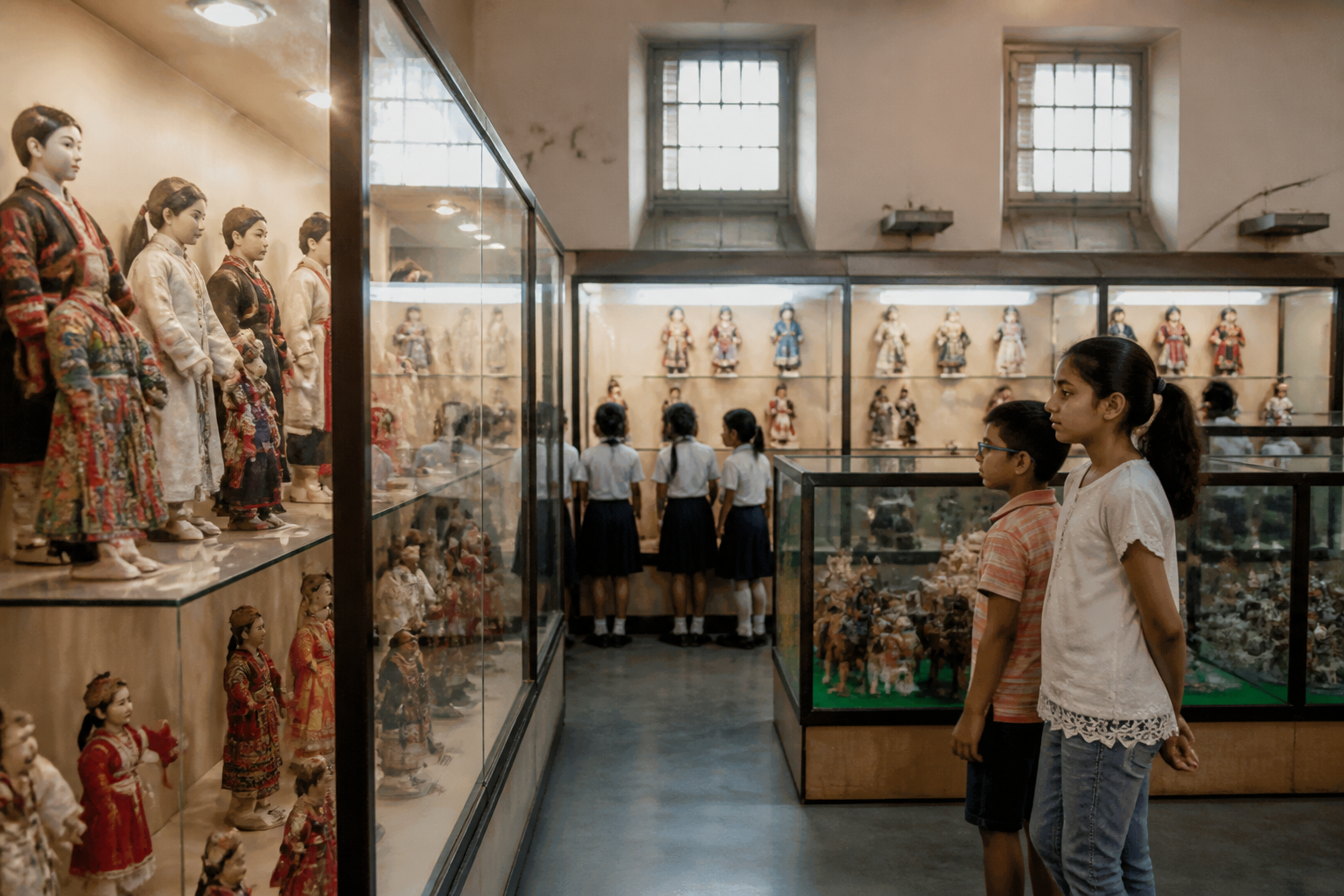
The Nehru Children’s Museum in Kolkata will remain open after the Bengal government reversed an earlier order to shut the 53-year-old institution and promised assistance to upgrade its basic fire-safety infrastructure.
The decision protects a public museum whose collection includes clay models, miniature figures and dolls from countries including Syria, China, Brazil, Belarus, Thailand and the United States. The museum, which opened in 1972, has faced financial difficulties and struggled to generate enough revenue to cover its expenses.
The institution was inaugurated on November 14, 1972, by then Bengal chief minister Siddhartha Shankar Ray. The state government had leased the land to the museum for 99 years from December 22, 1966. The museum was founded by Jugal Srimal, who used family jewellery to help establish it and sought contributions from schools and other supporters.
Its first exhibits were clay models depicting scenes from the Ramayana and the Mahabharata. For almost two and a half years, artisans from Krishnagar stayed at the Srimals’ home in Gariahat and worked on the models, according to museum director Sudip Srimal. The dolls gallery was added around 1978 and has since expanded through contributions from consulates, countries and private collections.
The collection includes Japanese Ningyo, including Washi Ningyo made from traditional washi paper using the origami technique and Kokeshi Ningyo known for their simple forms and bright colours. The latest addition is the Moomin family from Finland. Many of the dolls came from Jugal Srimal’s personal collection, assembled during his travels.
Schools regularly organise visits to the museum on Children’s Day and during winter. Sudip Srimal said one common complaint from children was that they could not play with the dolls. The museum’s role, however, extends beyond its exhibits: it has remained part of the childhood memories of several generations of Kolkata residents.
The closure proposal prompted former visitors living in India and overseas to contact the museum’s administrators. Soumita Das, 61, recently returned after nearly three decades after reading about the proposed shutdown. She recalled visiting the museum with her father when she was 10 and said she was relieved that it would not close.
The museum’s history also reflects the role of private contribution in creating public cultural institutions. Srimal said his father used jewellery belonging to family members to set up the museum, while small Bengali-medium schools and their students also contributed. Former prime minister Indira Gandhi reportedly made a personal contribution of ₹1,000 and provided financial support through the Jawaharlal Nehru Memorial Fund. Contributions also came from Jyoti Basu and former Union education minister Triguna Sen.
The Bengal government’s intervention addresses the immediate closure threat, but the museum’s financial difficulties remain unresolved. The next official step is assistance for upgrading its basic fire-safety infrastructure, while the institution continues to depend on revenue and support to meet its operating expenses.

