


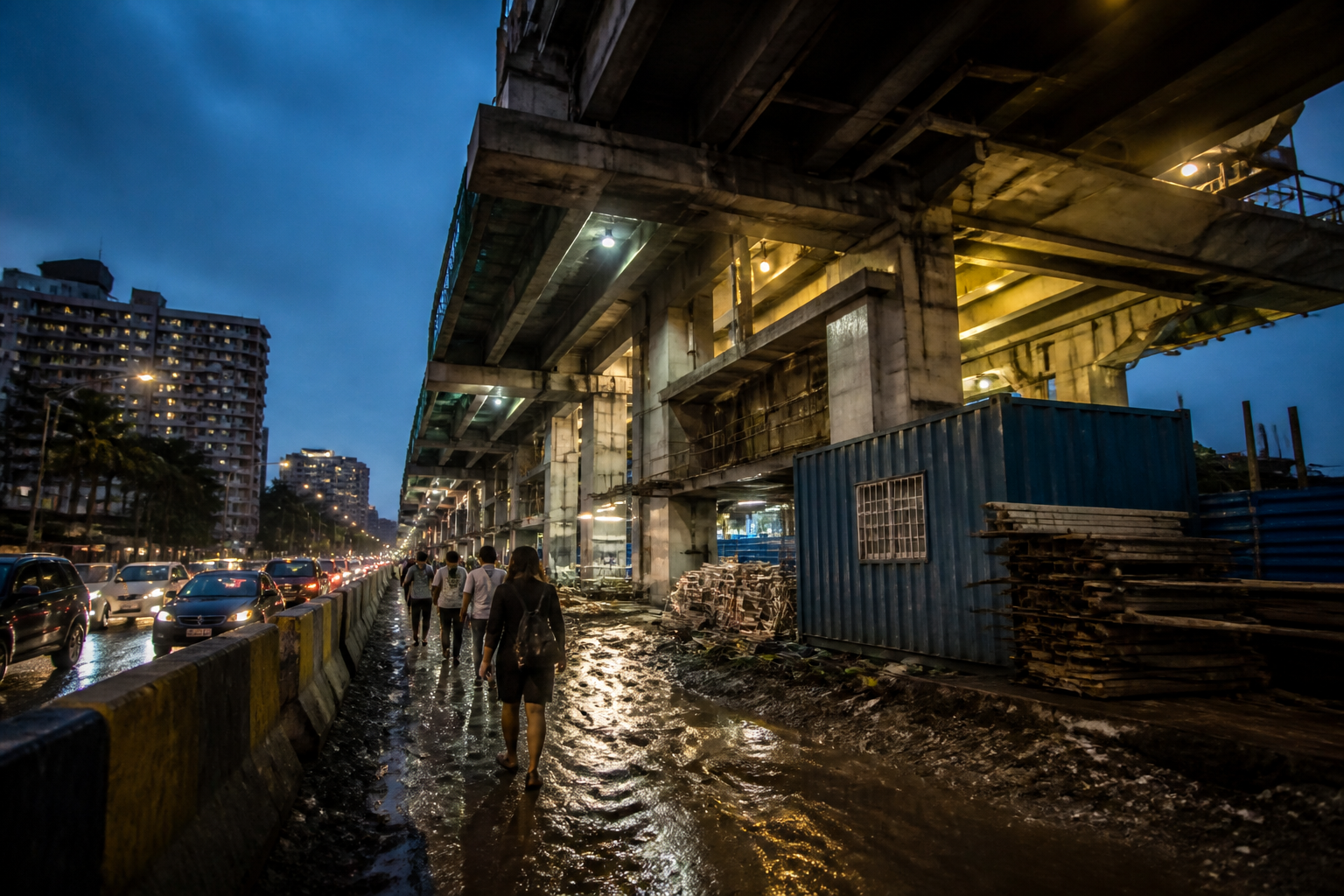
Temporary lighting installed beneath the under-construction Swami Samarth Nagar Metro station in Lokhandwala, Andheri West, has addressed only one part of a larger access problem. Construction material and container cabins reportedly remain beneath the structure and along the footpath, forcing pedestrians to walk on or close to the road as the area prepares for increased movement during Ganeshotsav.
The lighting was installed after Mid-Day reported on September 7 that residents, particularly women, were finding it difficult to use the stretch after sunset. The contractor concerned subsequently placed temporary lights beneath the station at Swami Samarth Nagar. Some construction material was also moved away, according to residents cited in the report.
However, a follow-up visit to the site on September 11 found that construction material had not been fully cleared from beneath the Metro station and the footpath. The report said that only a few temporary lights were visible. This leaves the area facing two separate but connected problems: insufficient visibility and reduced pedestrian space.
That distinction is important in a construction zone. Lighting can improve visibility, but it does not restore a continuous walking route when building materials, site equipment or temporary cabins occupy the footpath. Residents using the road must then choose between navigating an obstructed pedestrian edge and walking closer to moving traffic. The available account does not establish the extent of the obstruction or record an official safety assessment, but it does document the gap between a partial site response and the access conditions residents say they continue to experience.
Yukti Pal, who regularly uses the road, welcomed the installation of temporary lights but said more lights were needed on both sides of the stretch. She also called for the removal of construction material and container cabins from the footpath, saying pedestrians were being forced to risk walking on the road. Her account links the problem to regular daily use as well as to the expected increase in pedestrian movement during Ganeshotsav.
Komal Mehta, a Lokhandwala resident, similarly questioned why material remained on the footpath and road beneath the station. She said the area sees increased pedestrian movement during Ganeshotsav and that leaving the footpath blocked creates a danger for people walking through the stretch.
The report therefore illustrates how infrastructure construction affects a neighbourhood before a project becomes operational. The station is part of the under-construction Metro Pink Line 6, but residents are currently interacting not with a completed transit service but with its construction footprint. The immediate urban issue is not access to a functioning station; it is whether the public realm around the future station remains usable while work continues.
In this case, the contractor’s response appears to have followed a specific complaint: the lack of illumination after sunset. The subsequent site condition suggests that the complaint was narrower than the full pedestrian-access problem. Temporary lights respond to darkness, while clearing the footpath would respond to obstruction. Treating these as separate tasks can leave residents with a better-lit route that is still difficult or unsafe to walk through.
The sequence also shows the role of local reporting and resident feedback in identifying construction-site shortcomings. Mid-Day’s initial report brought attention to the lighting issue, after which temporary lights were installed. Residents then identified the remaining obstruction during the follow-up. This does not by itself establish a formal grievance-redressal system, but it shows that the visible response was driven by public reporting rather than explained through a publicly cited project update in the supplied account.
The location’s expected festival footfall adds a time-sensitive operational dimension. The residents quoted in the report specifically referred to devotees and increased pedestrian movement during Ganeshotsav. The concern is therefore not limited to ordinary weekday circulation. A footpath narrowed or blocked by construction material may become more difficult to use when more people are moving through the area, especially after dark and around a large public celebration.
The supplied report does not provide the station’s construction schedule, the contractor’s name, the responsible implementing authority, the approved pedestrian-management plan or a deadline for removing the material. It also does not include an on-record response from the contractor or the Metro authority explaining why the material and container cabins remained in place after the temporary lighting was installed. Those gaps matter because lighting, barricading, material storage and pedestrian diversion are usually connected site-management questions, not isolated amenities.
For residents, the practical test is whether the construction site allows a reasonably continuous and visible walking path. The report confirms improvement in one element—temporary lighting—but also records that the footpath remained obstructed during the September 11 visit. It does not establish whether the lights meet any specified illumination standard or whether the material was later removed. The status of the site beyond that visit therefore remains unconfirmed.
The Swami Samarth Nagar stretch raises a broader question for Mumbai’s expanding Metro network: how should pedestrian access be managed around stations that are still being built? A future station can improve connectivity once it opens, but construction can impose immediate costs on the surrounding neighbourhood if the project footprint is not actively managed. Those costs are experienced at street level through darkness, blocked footpaths, roadside walking and more difficult movement during local events.
The evidence in this case supports a limited conclusion. Temporary lighting was installed after residents’ concerns were reported, but the follow-up account found that construction material and container cabins still affected the footpath beneath the station. The next measurable developments are whether the remaining material is cleared, whether lighting is extended across the full stretch and whether the responsible authority provides a site-management timeline before increased festival movement begins.
