


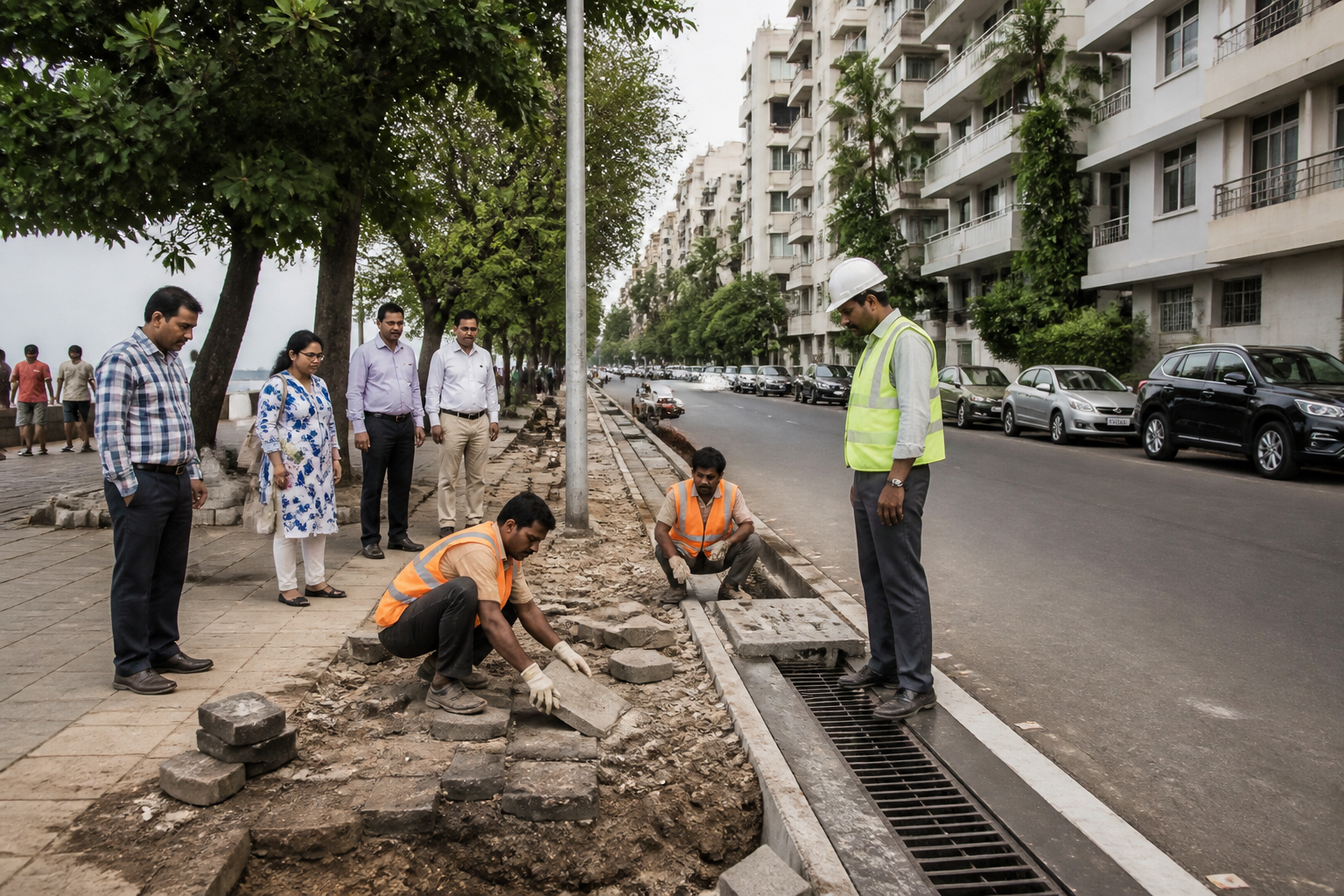
Mumbai civic works could be subject to a new resident-led accountability check if a proposal submitted by BJP corporator Makarand Narwekar is accepted by the Brihanmumbai Municipal Corporation. Narwekar has asked the civic body to make a Completion Certificate or Satisfactory Work Certificate from local residents mandatory before contractors receive final payments for works in residential areas and public premises.
In a letter to the BMC, Narwekar said the proposed certificate should confirm that a project was completed according to its approved scope, required quality standards and the satisfaction of local residents. The proposal would place residents at a formal checkpoint in the payment process, rather than limiting oversight to the civic administration and its ward-level officers.
Narwekar, who represents ward 226 and is associated with the Cuffe Parade area, said the system could improve transparency and accountability in civic works undertaken in residential colonies and public spaces. His proposal is based on the premise that residents who experience the work directly should have a documented role in confirming whether it has been completed as approved.
The corporator cited concerns about the quality of work in parts of Colaba and Cuffe Parade. “Quality of work executed in many areas of Colaba and Cuffe Parade is not good. Ward-level officers are failing to ensure strict compliance, due to which residents are suffering,” Narwekar said. He added that a certificate from residents was needed to confirm compliance with the approved scope, quality standards and local satisfaction.
The proposal would affect the final stage of civic procurement: the point at which completed work is reviewed before the contractor’s final payment is released. The report does not establish whether the BMC has accepted the proposal, whether it would require changes to existing contracting procedures, or how disagreements between residents, contractors and civic officials would be resolved.
It also does not specify who would be authorised to issue the certificate in a residential colony, how many residents would need to endorse it, or whether the mechanism would apply to all civic works or only projects funded through the corporator’s allocation. These details would determine whether the proposal functions as a formal quality-control measure or as an additional verification step alongside existing municipal procedures.
The initiative follows Narwekar’s effort to introduce a more resident-driven approach to the use of the corporator’s fund. After being elected from ward 226, he wrote to residents of Cuffe Parade in February inviting suggestions for civic works that could be undertaken using the fund.
The next step is for the BMC to respond to the proposal and clarify whether resident completion or satisfactory-work certificates can be incorporated into the approval and payment process for civic projects.
