


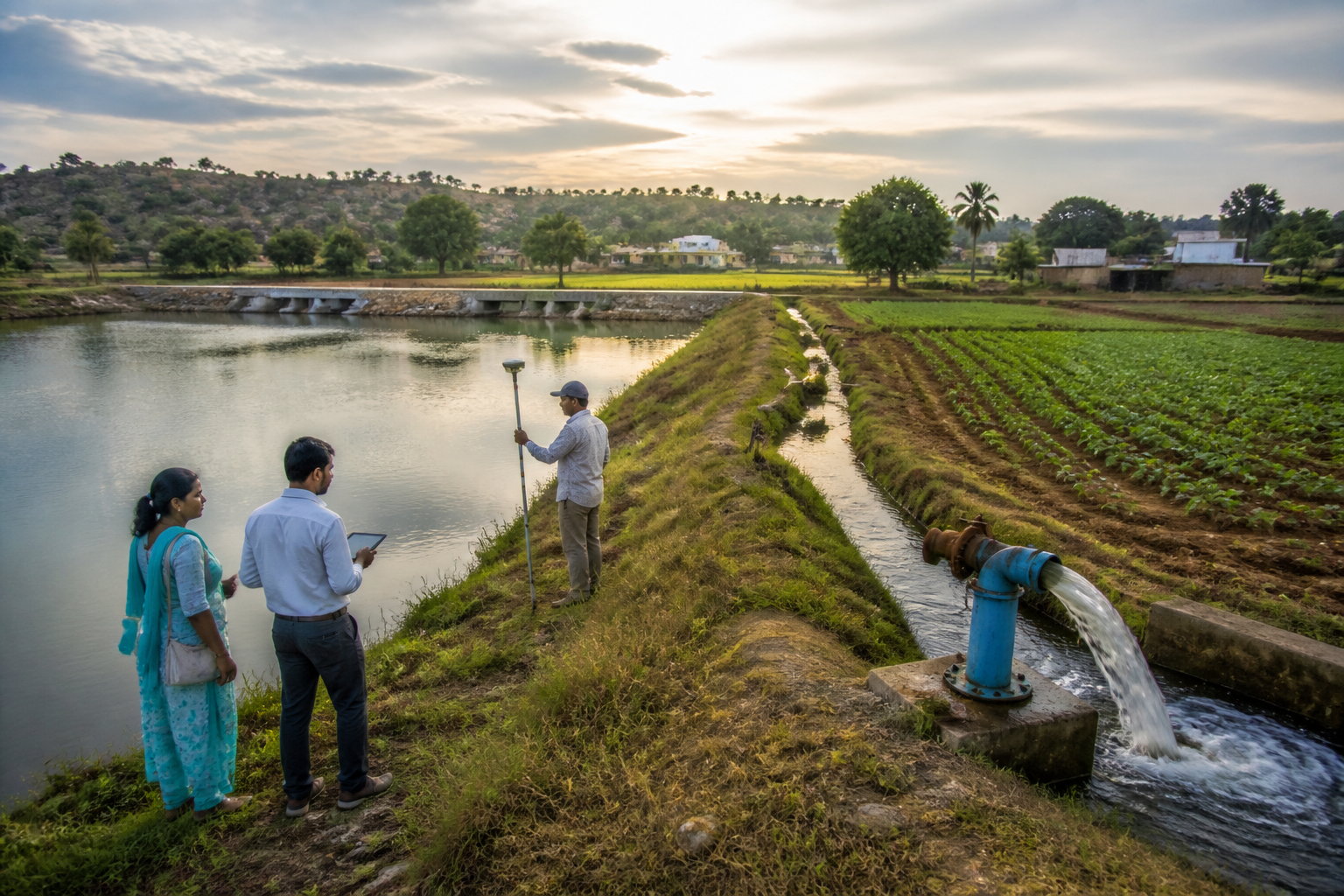
Karnataka has completed fieldwork for its seventh minor irrigation census and second water-bodies census, documenting 15.35 lakh water resources across 30,671 villages, 300 urban local bodies and 7,128 urban wards, Minor Irrigation Minister Ajay Singh said in a statement on Sunday.
The census recorded 14.18 lakh borewells, 77,573 irrigation projects and 38,960 water bodies during the field exercise. The figures are intended to provide the state with a consolidated account of its groundwater and surface-water assets for future irrigation and water-conservation planning.
Singh said the exercise was important for understanding the actual condition of Karnataka’s water resources and for designing future schemes on a scientific basis. The census covered both rural and urban administrative areas, providing data across locations where water demand, irrigation dependence and groundwater conditions vary considerably.
The minister linked the exercise to the state’s continuing challenges of drought, falling groundwater levels and climate change. He said accurate information on the number and distribution of water resources, along with the condition of groundwater and surface-water projects, would help the government plan irrigation and water-conservation measures according to local requirements.
The data is also expected to inform decisions in drought-prone areas. Singh said officials had been directed to use the census information to prioritise water security measures, restoration of lakes, groundwater recharge, construction of check dams and schemes to fill lakes. The statement did not provide a district-wise breakdown of the recorded resources or details of the condition and functionality of each asset.
The minister said the census figures should not remain limited to a report. He called for data-based planning and the use of technology to improve the management of the state’s water resources. The statement also credited department officials and staff for completing the fieldwork and said the government would take steps to ensure that their work resulted in follow-up action.
The completed fieldwork now provides the department with the basis for using the recorded data in irrigation and water-conservation planning. Further details on implementation priorities, restoration projects and district-level interventions were not specified in the statement.
