


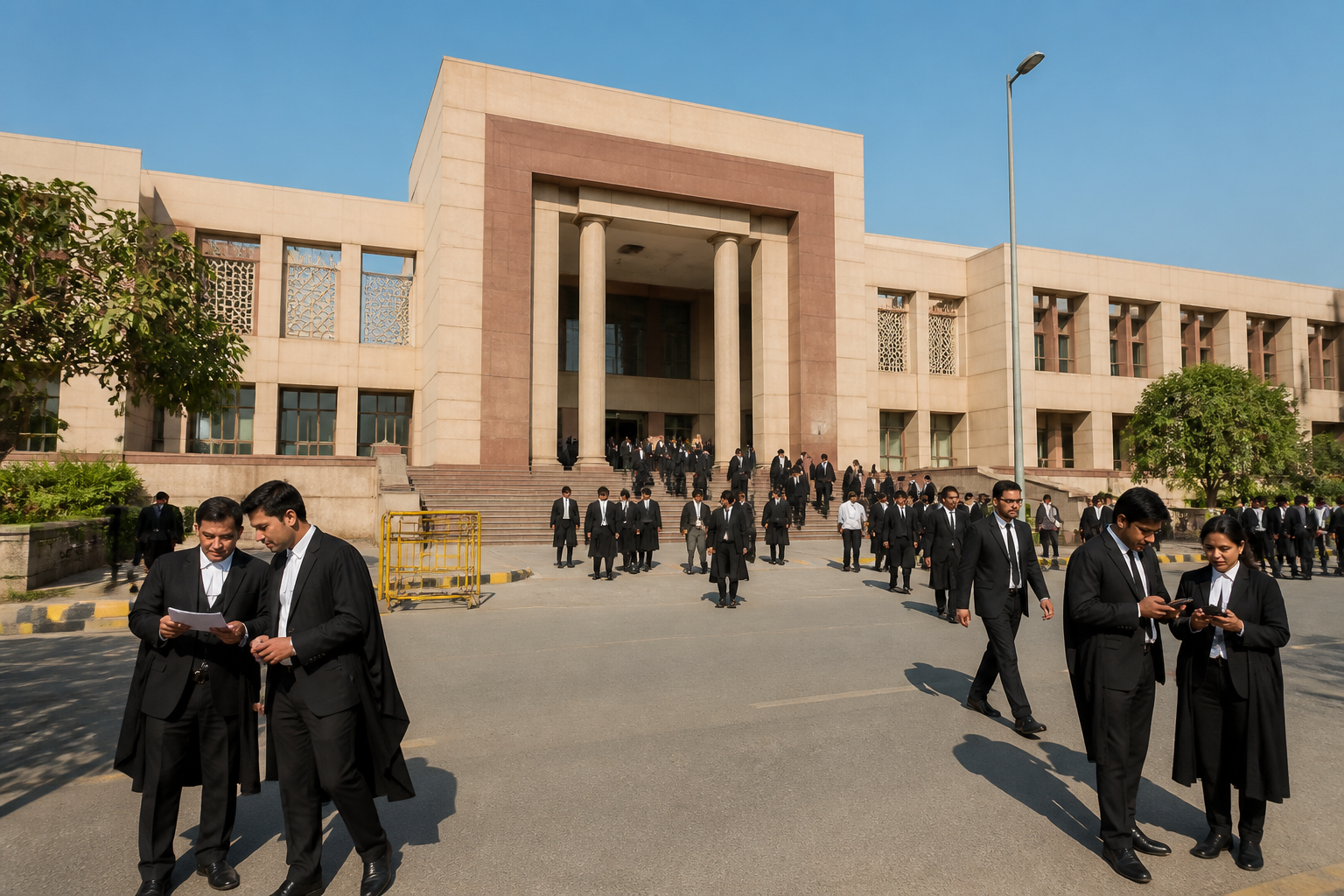
Advocate Kulbhushan Bhardwaj has been elected president of the Gurugram District Bar Association, defeating Vinod Rao by 244 votes in a six-candidate contest, according to a report by Navbharat Times. Bhardwaj secured 1,834 votes against Rao’s 1,590, with 4,963 votes counted in the election.
The result puts a new leadership team at the centre of ongoing discussions about relations between lawyers and judicial officers at the Gurugram district court. In his post-election remarks, Bhardwaj said his priorities would include improving coordination between the bar and the bench and strengthening infrastructure at the court complex.
The election also marks a change in the community dynamics of the association. Navbharat Times reported that Bhardwaj’s victory was being viewed by some as the end of the long-standing influence of the Yadav community in the bar association. The report did not provide a detailed electoral or historical breakdown of the association’s membership or previous office-bearers.
Bhardwaj has previously been associated with protests concerning the use of public spaces for prayers. The report said a first information report was registered against him in 2021 after he allegedly led a rally in Sadar Bazaar while carrying a sword on an excavator during protests against public prayers. These allegations are reported as part of his public record; the supplied report does not provide details of the case’s present legal status.
He was also reported to have participated in a lawyers’ protest concerning alleged misconduct by judicial officer Rupam. During that episode, lawyers were accused of shutting the court gate and obstructing judicial work, according to the report. The supplied account does not include a court order or official statement establishing the final outcome of those allegations.
The election campaign was also reported to have received support from the Rashtriya Swayamsevak Sangh and organisations associated with it. Navbharat Times attributed this information to people familiar with the matter, saying that appeals were made to bar members to vote for Bhardwaj. No documentary evidence or formal campaign statement from those organisations was included in the source report.
The immediate institutional challenge for the new president will be to manage the relationship between the lawyers’ association and judicial officers while addressing members’ operational concerns. District court infrastructure affects the daily functioning of advocates, litigants, court staff and judges, although the source report did not specify which facilities require improvement or identify a funding allocation.
Manish Shandilya, general secretary of the Advocates Council Gurugram and a senior member of the bar, said he expected the new body to reduce the distance between the bar and the bench. He also said all members should be taken along without discrimination and that lawyers’ concerns should receive due respect.
The new association leadership is expected to begin its term with a stated focus on improving bar-bench coordination and strengthening facilities at the Gurugram district court. Further details on its infrastructure priorities and implementation plans were not available in the supplied report.
