


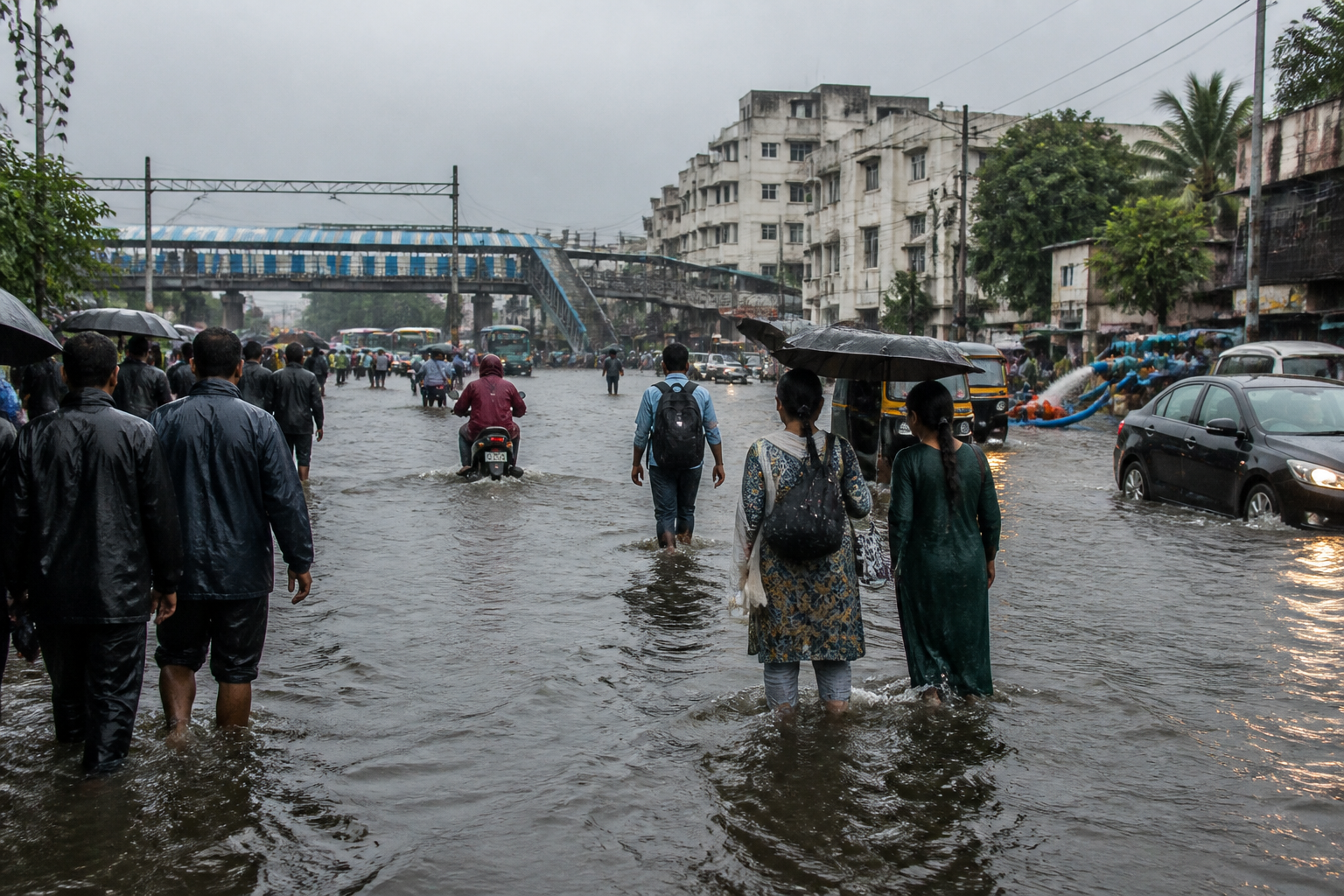
Heavy rain across Vasai-Virar and Nalasopara on Sunday caused widespread waterlogging, disrupted road traffic and made access to Nalasopara railway station difficult, just a day before Ganeshotsav preparations were due to intensify across the region.
According to a report by Loksatta – Vasai-Virar, rain began around 3 am and continued to affect low-lying areas in Nalasopara, Virar, Naigaon and Vasai. Water accumulated around Nalasopara East railway station, Tulinj, Central Park, Galanagar and Star City, as well as parts of Vasai East and West.
The waterlogging was particularly severe on the eastern side of Nalasopara railway station. Passengers were reported to be entering the station through knee-deep water, while crowds gathered around the station waiting for trains. Road traffic in the area moved slowly, with several vehicles becoming stranded in water on busy routes.
The disruption came as residents, traders and festival organisers were completing preparations for Ganeshotsav, which is scheduled to begin on September 14. People who had travelled to markets for festival shopping faced difficulties because of waterlogged roads and traffic congestion. The sudden spell of heavy rain followed several days during which rainfall had eased across the city.
The affected locations include areas that serve as important residential, commercial and transport links for the wider Vasai-Virar urban region. The flooding has affected both daily mobility and access to the railway network, increasing pressure on residents who depend on roads and suburban rail for commuting.
Local authorities have begun using suction pumps to remove accumulated water, the report said. However, drainage operations are continuing while rain remains a concern, and residents have been advised to avoid leaving home unless necessary while conditions remain difficult. Further updates will depend on rainfall intensity and the progress of water-clearance work in the affected areas.
