


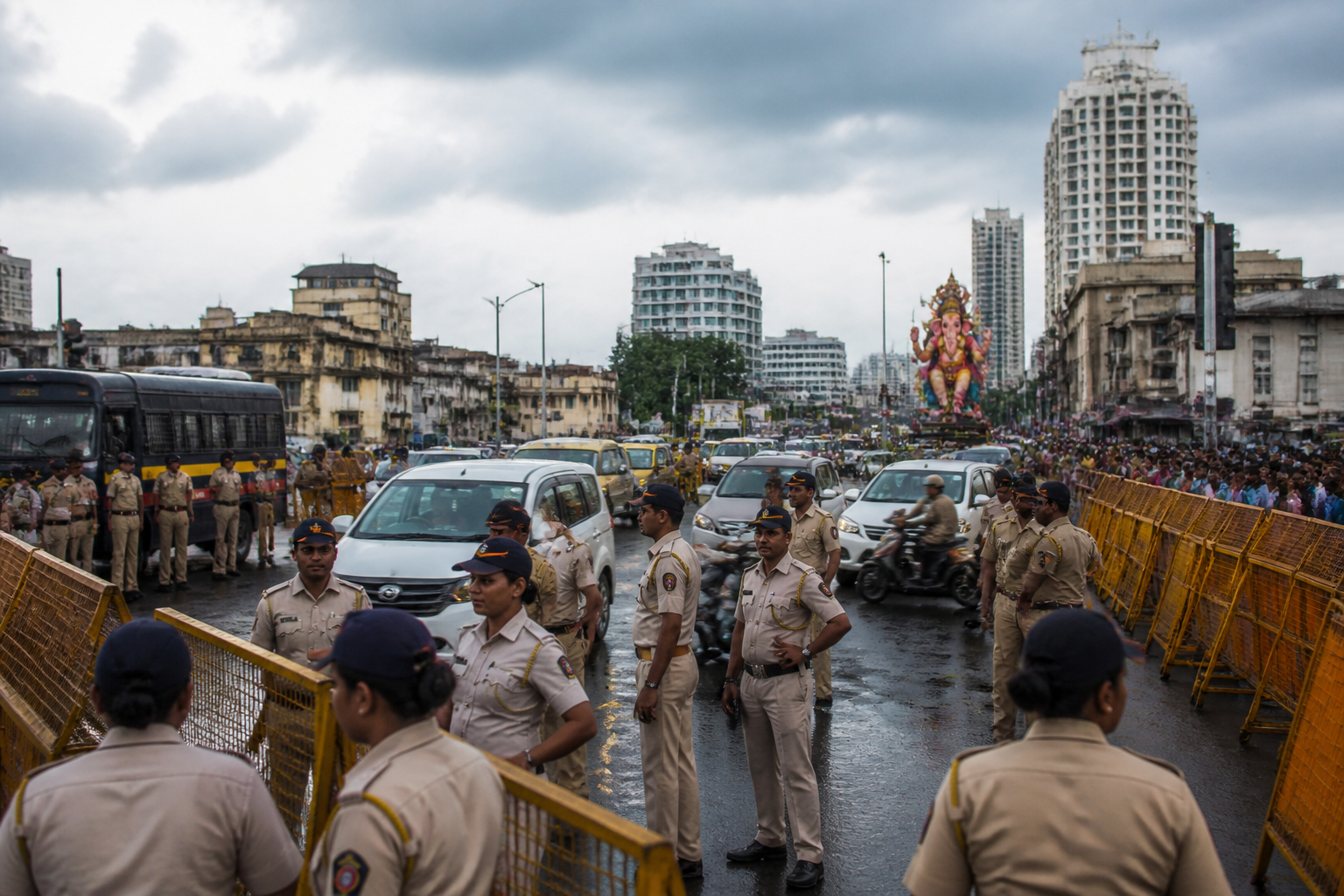
The planned Manoj Jarange Mumbai protest between September 17 and 19 has placed additional pressure on Maharashtra’s Home Department and police forces, as authorities prepare to manage the proposed agitation alongside Ganeshotsav crowds and immersion-related traffic across the Mumbai Metropolitan Region.
Jarange is expected to begin travelling towards Mumbai from Antarwali Sarati on September 15, with a proposed protest at Azad Maidan on September 19, according to a report by Loksatta. The timing coincides with heightened security and traffic requirements in Mumbai, Thane, Raigad and Navi Mumbai during the festival period.
A senior official cited in the report said that a deployment plan involving more than 17,000 police personnel and 12 companies of the State Reserve Police Force was being prepared. Riot-control units, quick-response teams, bomb-detection squads and other security agencies are also expected to be used for the festival and the proposed protest.
The police will have to coordinate three separate crowd and mobility challenges: supporters travelling towards Mumbai, Ganeshotsav-related movement and the city’s regular traffic. Planning is expected to cover vehicles arriving from Navi Mumbai, traffic regulation on the Panvel-Kalamboli-Vashi route, parking for vehicles associated with the protesters and crowd control around Azad Maidan.
The report said a meeting of senior officials had been scheduled to discuss the arrangements. Navi Mumbai is expected to serve as an important security and traffic monitoring point for movement towards Mumbai, with authorities assessing entry routes, vehicle numbers and the likely size of the gathering in advance. During an earlier Jarange-led mobilisation, protest vehicles affected traffic on the Mumbai-Pune Expressway and the Sion-Panvel Highway, according to the report.
The proposed mobilisation also comes against the backdrop of last year’s experience, when police faced pressure from the simultaneous management of the protest and Ganeshotsav crowds, particularly in south Mumbai. The authorities will therefore need to regulate movement into the city while maintaining access for routine commuters and festival participants.
The Bombay High Court has recognised the right to hold peaceful protests, while also stating that the administration can impose conditions to protect law and order and prevent disruption to citizens’ daily lives. The immediate administrative task is to balance those requirements with the operational demands of festival security, traffic management and crowd control. Further arrangements are expected to be finalised through the scheduled meeting of senior officials.
