


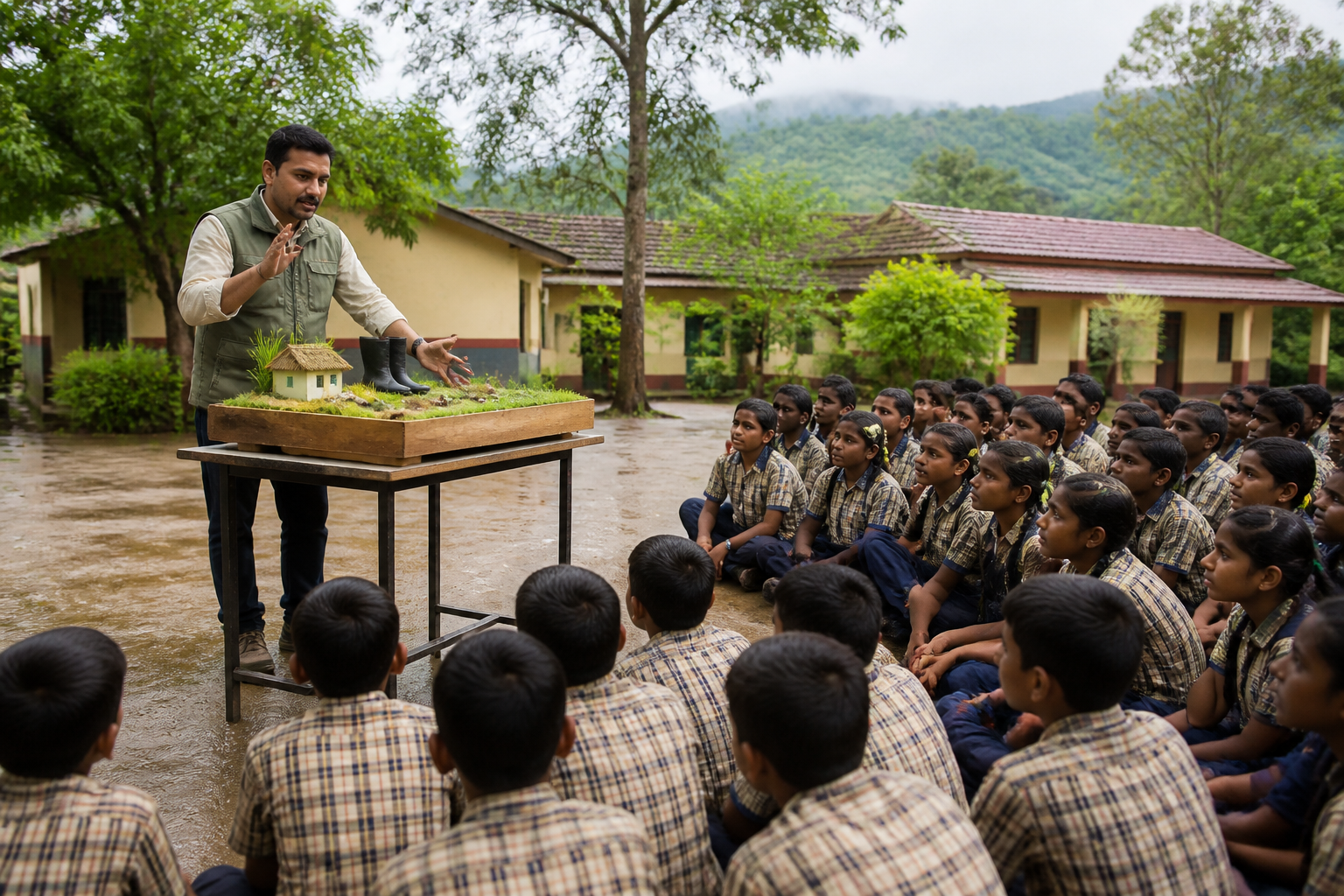
A snakebite awareness campaign will be conducted across tribal residential schools and hostels in Thane district from September 19 to 26, with the programme focusing on prevention, emergency response and scientifically accurate information for students living near hilly and forested areas.
The campaign, to be implemented by the Tribal Development Department, will cover government and aided ashram schools, Eklavya Model Residential Schools and hostels. Each participating institution will hold at least one special awareness session lasting a minimum of one hour, according to the plan reported by Loksatta – Thane.
Local snake rescuers, snake experts, the health department and the forest department are expected to support the sessions. Students will be taught how to respond if a snake is seen on or around school premises, including maintaining a safe distance, moving away calmly and avoiding attempts to catch or kill the animal.
The programme is also intended to prepare students and staff for a possible snakebite emergency. The guidance will stress the need to limit the movement of the affected person and take them immediately to the nearest health centre rather than relying on incorrect first-aid practices or delaying treatment.
The department said the initiative is particularly important because many ashram schools and hostels under the tribal development system are located in remote, hilly areas close to forests. Students living in these facilities may come into contact not only with snakes but also with scorpions and other wildlife.
The campaign will address misconceptions, superstitions and unsafe treatment methods associated with snakebites. Its stated objective is to develop a scientific understanding of snakebite risks while explaining preventive measures and the steps to be followed during an emergency.
The announcement follows a Maharashtra government decision dated August 18, 2026, to include snakebite as a notifiable disease. This means that snakebite incidents must be recorded and reported within the health system, allowing authorities to monitor cases and plan preventive interventions.
The change also places greater importance on keeping updated information about health centres and storage facilities where anti-snake venom is available. For schools and hostels in remote locations, the campaign is expected to focus attention on how quickly an incident can be recognised, reported and referred for treatment.
The proposed sessions will therefore combine wildlife safety with public-health preparedness. Students will receive information on avoiding dangerous encounters, while school and hostel systems will be encouraged to improve their response arrangements for emergencies.
The awareness programme is scheduled to run from September 19 to 26 across the identified institutions in the district. The participation of local experts and government departments is planned as part of the implementation process.
