


Subheadline: Xi Jinping’s planned India visit may ease political tensions, but investment curbs, visa delays and equipment restrictions continue to limit commercial engagement.
Standfirst: Chinese President Xi Jinping’s planned visit to New Delhi for the BRICS summit comes as India and China attempt to stabilise relations after years of border tensions and economic restrictions. New Delhi has eased some investment rules and approved selected projects, while direct flights and visa procedures have resumed in limited ways. Yet the commercial relationship remains constrained by scrutiny of Chinese companies, delayed visas, restrictions on technology and reported customs hold-ups affecting equipment used in solar energy, electronics and infrastructure. This analysis examines why diplomatic contact has not yet translated into broad business confidence, and what the reported barriers reveal about the dependence and strategic risk embedded in India-China economic ties.
Xi Jinping’s planned visit to New Delhi, his first to India in seven years, is expected to test whether improving political contact can begin to repair India-China business ties. China’s foreign ministry has confirmed that the Chinese president will be in Delhi this weekend for the annual BRICS summit. A bilateral meeting with Prime Minister Narendra Modi has not yet been confirmed, but the possibility is being closely watched because the direction of leader-level engagement could influence the next phase of commercial relations.
The immediate issue is not whether India and China have resumed dialogue. They have. The harder question is whether that dialogue can overcome the security concerns and institutional restrictions that have accumulated since the 2020 border clash, in which 20 Indian and four Chinese soldiers were killed, according to the supplied report. The result is a relationship in which diplomatic contact has improved faster than business confidence.
That gap matters because the two countries remain economically connected even while they seek to reduce strategic vulnerability. Chinese equipment and components are used in sectors including solar energy, electronics and infrastructure development. At the same time, New Delhi has placed greater scrutiny on Chinese investment, technology platforms and corporate activity. Beijing, according to sources cited in the report, has also increased scrutiny of proposed investments involving sophisticated manufacturing and high-end technology.
The reported pattern is therefore not a complete breakdown in trade. It is a managed and conditional relationship. Selected channels are reopening, but the broader commercial environment remains shaped by national security concerns, regulatory approvals and mutual distrust.
The policy changes announced by India in recent months show the limits of a simple decoupling approach. In March, New Delhi eased some restrictions on Chinese investment, particularly in electronics, capital goods and solar-cell sectors. The government has also been considering faster approvals for joint ventures between Indian and Chinese firms in some industries. These changes suggest that India continues to see potential value in Chinese capital, manufacturing capability and supply-chain participation, even as it maintains safeguards around sensitive areas.
Several projects have subsequently received approval, including a manufacturing venture between Indian electronics company Dixon Technologies and Chinese smartphone maker Vivo Mobile. But the approval of individual projects has not been sufficient to bring back all major investors. Great Wall Motor and BYD, which had shelved planned investments in India after facing heightened scrutiny, have not returned, according to an Indian government source cited in the report. Both companies declined to comment.
This distinction between project-level approval and economy-wide confidence is central to understanding the relationship. A government may approve a particular venture after assessing its ownership, technology and sectoral implications. Companies, however, make longer-term decisions based on how predictable approvals, visas, technology access and regulatory enforcement are likely to be. The report indicates that this wider confidence has not yet been restored.
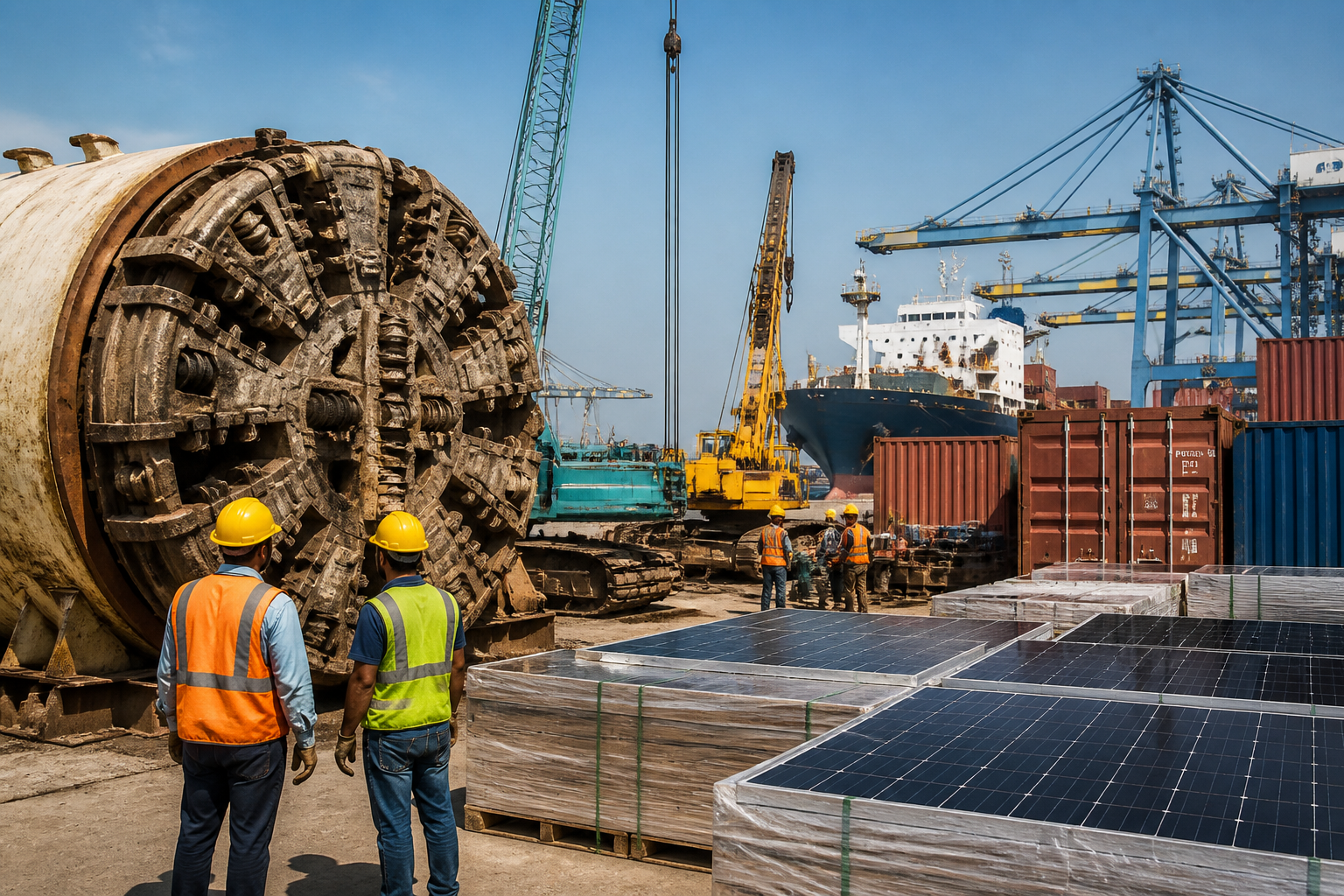
The financial and technology relationship is also being affected by restrictions on Indian access to Chinese systems and equipment. The report says Chinese authorities have asked companies not to sell critical technology and infrastructure to India, including port equipment, solar panels and mobile manufacturing equipment. A Chinese commerce ministry response was not available to Reuters, and the claim is attributed to Indian sources and an industry executive.
The reported delays are particularly significant for infrastructure because specialised equipment cannot always be replaced quickly. One Indian government official said that some large boring machines imported from China for major infrastructure projects had been held up for more than a year. The report also describes delays involving equipment and components needed for solar energy, electronics and infrastructure development at Chinese customs.
These claims do not establish the cause of every delay. They do, however, point to a structural vulnerability: India’s ambition to expand domestic manufacturing and infrastructure remains connected to imported machinery, components and technical systems. When diplomatic or regulatory relations deteriorate, the disruption may appear not as a formal trade ban but as slower approvals, uncertain customs treatment, restricted business travel or difficulty obtaining specialised equipment.
Visa access is part of the same problem. India and China resumed direct flights last year, and New Delhi eased visa procedures for Chinese business professionals. Yet the report says some Indian business people with interests in China have recently faced difficulty securing visas. China’s foreign ministry said it issues visas to Indian nationals with a genuine need to travel in accordance with its laws and regulations.
For companies, such friction can have consequences beyond travel. Business visas support factory visits, supplier negotiations, technical inspections, project management and after-sales service. Delays can increase costs and weaken the ability of firms to operate across borders, particularly in sectors where equipment installation and maintenance require direct engagement between engineers and manufacturers.
India’s own restrictions reflect a different but related concern. New Delhi has declined to approve a proposal by Alipay, a platform associated with China’s Ant Group, to link with India’s instant payments system, citing national security concerns, according to the report. The government is also considering a recommendation by the Serious Fraud Investigation Office that Chinese cellphone maker Xiaomi be investigated for alleged business irregularities and breaches of foreign investment laws. Xiaomi has said it complies with local laws and has not received communication from the SFIO.
These cases show how the relationship has moved beyond conventional questions of tariffs or market access. Digital payments, mobile manufacturing, infrastructure equipment and industrial technology are all being evaluated through a security lens. That makes commercial negotiations more politically sensitive and increases the number of institutions involved in decisions affecting companies.
The institutional structure is consequently fragmented. Business ties are shaped by foreign-policy decisions, investment rules, national-security assessments, visa administration, customs procedures and sector-specific approvals. A leader-level meeting may improve the political atmosphere, but it cannot by itself settle every operational dispute. Ministries, regulators, customs authorities and companies would still need to convert diplomatic signals into predictable procedures.
The same complexity applies in China. The report says proposed investments by Chinese companies in India are facing greater scrutiny from Beijing itself, including in areas involving sophisticated manufacturing and high-end technology. If confirmed, this would mean that companies are not simply responding to Indian restrictions; they are also operating within a Chinese policy environment that may limit the transfer of strategic equipment and capabilities.
The result is an uneven commercial map. Some activities remain possible, especially where projects align with India’s manufacturing priorities and can pass regulatory review. Other areas, including sensitive technology, digital platforms and critical infrastructure equipment, remain exposed to political calculation. The relationship is open enough for selective cooperation but restricted enough to prevent a broad return to pre-2020 business expectations.
The reported developments also complicate India’s efforts to build resilient supply chains. Diversification can reduce dependence on any one country, but replacing Chinese equipment and components may take time, particularly in sectors with large manufacturing ecosystems and specialised machinery. The delays described in the report indicate that supply-chain resilience is not only a question of finding alternative suppliers. It also involves securing reliable access to equipment, technical support, visas and cross-border logistics.
At the same time, India and China face pressure from a changing external environment. The report says both countries are dealing with volatile relations with the United States, including the effects of American trade policies. That creates an incentive for New Delhi and Beijing to preserve areas of economic engagement, even while strategic distrust remains high.
Chinese foreign ministry officials have described the two countries as partners rather than competitors, and as opportunities rather than threats to each other’s development. Indian and Chinese officials have also indicated that a meeting between Modi and Xi could help align political and economic interests. But the available evidence suggests that diplomatic language has not yet produced equivalent changes in corporate behaviour.
The central urban and industrial question is how India can pursue infrastructure expansion and manufacturing growth while managing dependence on foreign technology and equipment. Projects involving transport, ports, energy and electronics require not only financing but also machinery, components, technical personnel and predictable cross-border access. Restrictions in any one of these areas can affect delivery even when a project has domestic political support.
The evidence currently confirms a limited thaw rather than a full commercial reset. India has eased some investment restrictions, approved selected projects and restored certain travel links. Yet major investors remain cautious, reported equipment and visa delays persist, and national-security scrutiny continues to shape decisions on Chinese companies and technology. What remains uncertain is whether a Modi-Xi meeting, if held, will produce specific administrative changes or only a more favourable diplomatic atmosphere. The developments to monitor are new investment approvals, the treatment of sensitive equipment and technology, visa processing, and whether companies such as BYD and Great Wall Motor reconsider their India plans.
