


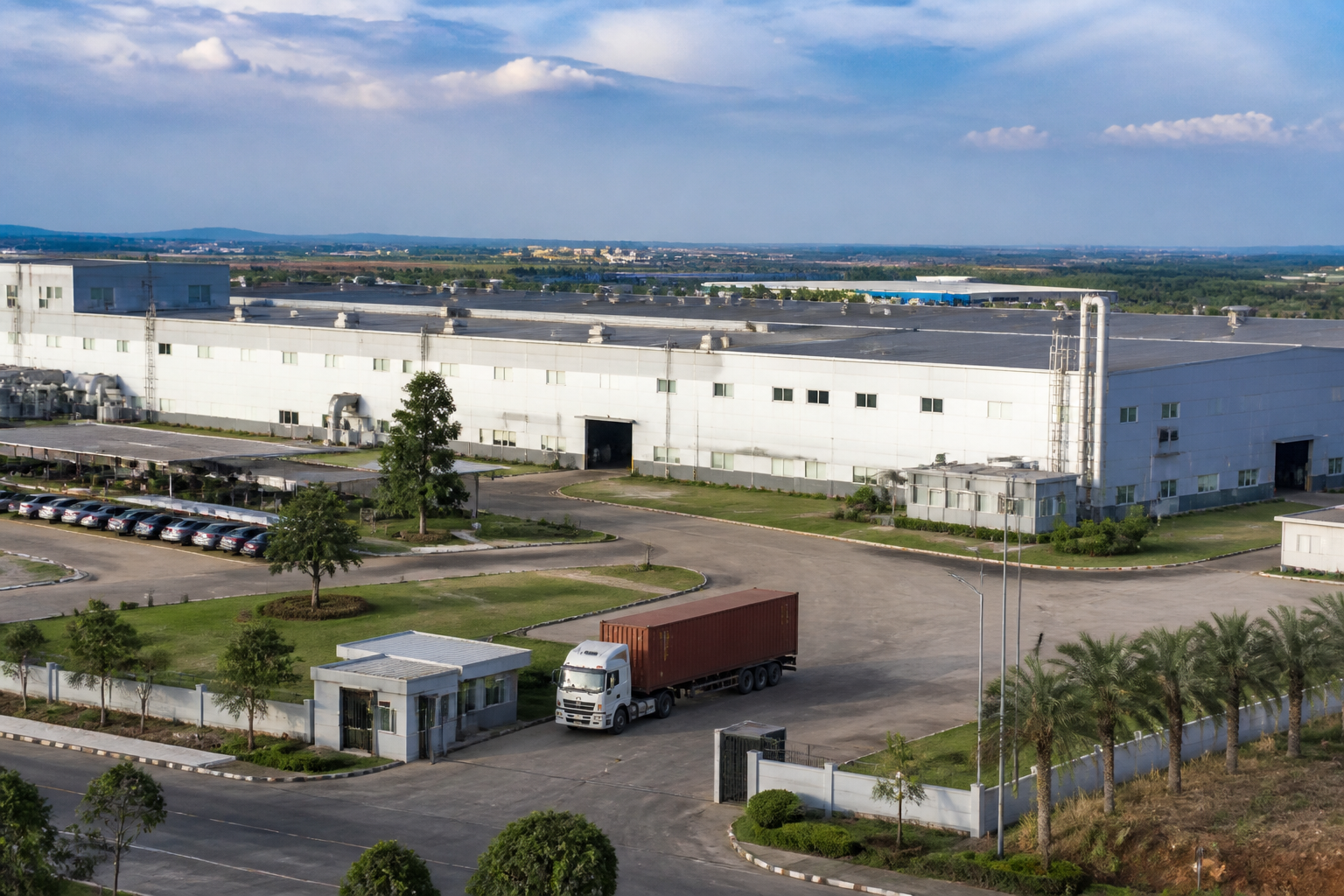
Sigma Advanced Systems has moved its aerospace facility at Sri City, Andhra Pradesh, from construction into active production, completing the transition in eight months. The company says the first batch of precision-machined components has been manufactured and shipped to Sigma UK for final verification before formal delivery to a customer. The immediate event is a production start. Its larger significance lies in whether Sri City can support the difficult shift from attracting a high-value investment to building a durable aerospace manufacturing ecosystem.
The facility is being developed on a 500,000-square-foot campus. About 75,000 square feet is currently operational, providing 100,000 annual machining hours. Sigma says the first facility is budgeted to reach nearly 300,000 annual machining hours, while the remaining campus is expected to become operational over the next 12 months. Once the full set of capabilities is established, approximately 70 per cent of the manufacturing process is expected to be undertaken in India.
Those figures indicate a staged industrial build-out rather than a single completed project. The first production area is functioning, but most of the wider campus remains to be activated. The distinction matters because aerospace manufacturing depends not only on floor space or machine capacity, but also on approvals, process control, specialised skills, logistics and the ability to meet the standards of global programmes. In Sigma’s case, the Sri City operation has completed the initial stages of the source-change approval process with Rolls-Royce Aerospace, while the first manufactured components are still undergoing final verification in the United Kingdom.
This sequence places the facility at an intermediate point between investment announcement and full supply-chain integration. Production has begun, but the company’s role in formal customer delivery and the eventual scale of Indian value addition depend on verification, approvals and the commissioning of additional capabilities. The supplied information does not establish when final delivery will occur or when the full campus will reach its intended operating profile.
Sigma’s stated objective is to replicate its established aerospace manufacturing capability in the UK in India. That is a more demanding proposition than adding isolated machining capacity. Replication involves transferring processes, quality systems and technical capabilities across locations while maintaining the consistency required by aerospace customers. The company says it will progressively bring a larger part of the aerospace manufacturing value chain into India, with the Sri City facility eventually forming part of its global manufacturing platform.
The planned increase from 100,000 annual machining hours currently in operation to nearly 300,000 at the first facility provides the clearest measure of the expansion under way. It also shows why the 500,000-square-foot campus is being developed in phases. The initial operating area provides a base for production, while the remaining space is intended to add manufacturing capacity and aerospace-critical processes over the next year. The source does not specify the precise processes to be added, the number of machines to be installed or the workforce required for each phase.
Sri City’s role in the project is tied to connectivity as well as land and industrial space. Sigma said the location was selected for rapid capability development, long-term manufacturing scale and access to major international logistics gateways. The company identified connectivity to four major ports as a logistical advantage for export-oriented operations. For a facility whose first batch is being sent to the UK and whose output is intended for global aerospace programmes, the movement of components between the plant, ports and overseas customers is part of the manufacturing system rather than a separate service.
This makes the project relevant to the way industrial clusters are planned. A manufacturing campus can provide the immediate physical base, but its competitiveness also depends on external networks: freight connections, export procedures, reliable utilities, technical training and access to suppliers and customers. In the information provided, Sri City’s port connectivity is the most clearly stated part of that external network. The source does not provide data on transit times, logistics costs, utility capacity or the number of suppliers expected to locate near the facility. Those gaps limit what can yet be concluded about the wider cluster.
The project also places skills at the centre of the development. Sigma says it will establish specialised aerospace manufacturing skills through on-campus training and capability development. The stated aim is to strengthen Andhra Pradesh’s skilled talent pool in advanced manufacturing. This is significant because the localisation of aerospace production depends on trained personnel who can operate precision equipment, follow controlled processes and work within customer approval systems. The company has not disclosed the planned size of the training programme, the number of jobs to be created or the qualifications required.
The skills component therefore remains an announced capability-building measure rather than a quantified labour-market outcome. Its effectiveness will become clearer as the campus expands, more processes move to India and the company reports the scale of its workforce and training activity. For the state, the project’s contribution will depend not only on the facility’s direct employment but also on whether training supports a broader pool of technicians and manufacturing specialists available to other firms.
Andhra Pradesh has positioned the development as evidence of its ability to attract high-value, export-oriented manufacturing. The Sri City facility reinforces that positioning by combining an international aerospace customer relationship, a phased production campus and a stated plan to increase Indian participation in the manufacturing value chain. However, one facility does not by itself establish a complete aerospace ecosystem. Such an ecosystem would require sustained supplier relationships, specialised services, workforce depth, regulatory capability and dependable links to international markets. The supplied material confirms the project’s intended direction but does not demonstrate the scale of those wider networks.
The institutional structure described in the announcement is also notable. Sigma’s UK operations remain part of the production and verification chain, while the Sri City unit is being developed to reproduce and expand those capabilities in India. The first batch’s shipment to Sigma UK shows that the two locations are being used as connected parts of one manufacturing platform. The source-change approval process with Rolls-Royce Aerospace adds another layer: the Indian facility must be accepted within the requirements of an established aerospace programme before the localisation effort can be considered complete.
This arrangement suggests that industrial localisation is being pursued through a gradual transfer of capability rather than an immediate relocation of the entire value chain. India-based production begins with an operating area and selected components, followed by additional capacity, processes and approvals. The company’s expectation that roughly 70 per cent of manufacturing will eventually take place in India provides a stated target, but the current announcement does not identify the percentage already localised or the timetable for reaching that level.
The project’s physical scale and operating metrics also illustrate the difference between campus capacity and active production. The campus is planned at 500,000 square feet, but only approximately 75,000 square feet is operational today. Similarly, the facility is described as having the ability to scale to nearly 300,000 annual machining hours, while current annual capacity stands at 100,000 hours. These numbers should be read as stages in an expansion programme, not as current output. The announcement does not provide actual component volumes, revenue from the facility or the number of customer programmes served.
Sigma has said that the facility could support future acquisitions and that the development is expected to drive double-digit earnings before interest, taxes, depreciation and amortisation expansion. Those are company expectations rather than independently established outcomes. They indicate how the company views Sri City within its corporate strategy, but they do not yet measure the facility’s realised economic contribution to Andhra Pradesh.
The central urban and industrial question is whether the infrastructure supporting Sri City can convert a fast-built facility into a resilient, high-value manufacturing node. The eight-month transition from ground-breaking to production demonstrates speed in the initial development phase. The next test is operational depth: whether the remaining campus is commissioned on schedule, whether approvals progress, whether specialised skills are developed and whether the facility can reliably connect Indian production to global aerospace demand.
The announcement confirms that production has started, 75,000 square feet is operational, 100,000 annual machining hours are available and further expansion is planned over the next 12 months. It does not yet establish full customer delivery, the final employment impact or the performance of the wider ecosystem. Those are the milestones to monitor as Sri City’s aerospace proposition moves from a company announcement into a longer-term measure of industrial capability.
