


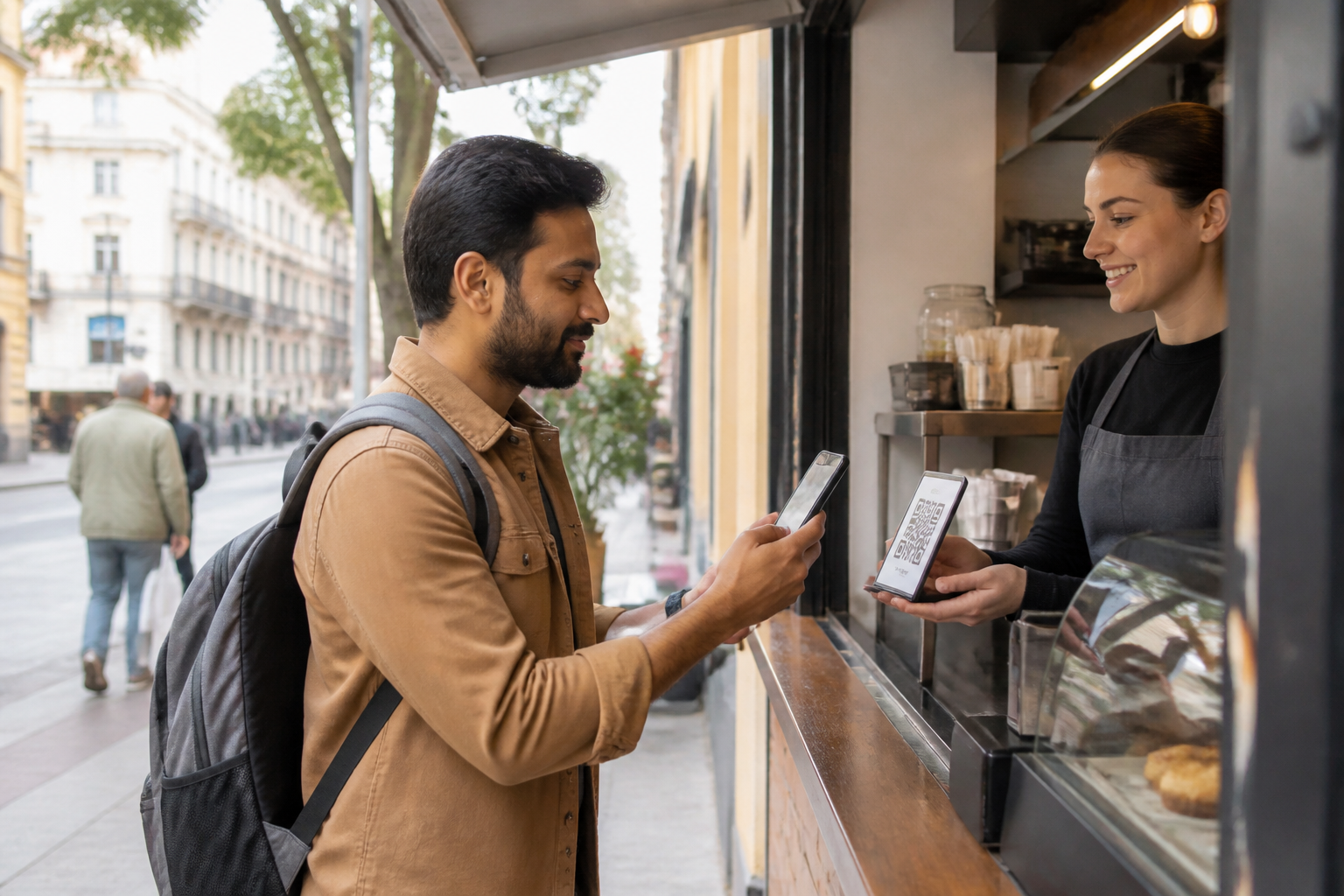
UPI is becoming an international payment option for Indian travellers, with the system now available across 11 countries. Its expansion promises a familiar way to pay abroad, but the central consumer question is not simply whether UPI works overseas. It is whether the total cost of using it is lower than paying with cash, a forex card or an international credit or debit card.
International UPI gives travellers the ability to scan a participating merchant’s QR code, enter an amount and authorise a payment through a linked Indian bank account. That process removes some of the friction associated with overseas spending. Travellers may not need to load a forex card before departure or carry large amounts of foreign currency for routine purchases.
But convenience and cost are not the same thing. The final amount debited from an Indian account depends on the exchange rate applied to the transaction, any currency conversion markup, bank charges and the payment instrument connected to the UPI account. A payment that appears to have no separate fee may still become more expensive if the exchange rate includes a wider margin.
That distinction matters because the price displayed at a foreign merchant is only part of the transaction. The relevant figure for an Indian traveller is the final rupee amount deducted from the bank account. Akshay Mehrotra, managing director and group chief executive of Fibe, told NDTV that consumers should compare the complete cost rather than assume that one payment method will always be cheaper.
The difference may be small for an individual low-value purchase, such as a coffee. Across a longer trip, however, repeated payments for hotels, restaurants, shopping and other expenses can make exchange-rate differences more significant. Travellers therefore need to compare the rate offered for a transaction with the prevailing market rate and check whether a bank or payment provider applies a separate foreign-exchange or currency-conversion charge.
This makes international UPI part of a broader shift in how Indians manage payments outside the country. In India, UPI has become a routine interface for groceries, restaurants, bill payments and transfers between individuals. Its overseas expansion extends that familiar behaviour to participating merchants in other markets, potentially reducing reliance on cash for smaller purchases.
The system’s usefulness, however, depends on acceptance. International UPI is not automatically available at every merchant in every destination. Acceptance can differ by country, city and business, and depends on whether the merchant supports the relevant UPI or network-partner QR code. The source report identifies expansion into markets such as Uzbekistan as a recent development, but it does not establish uniform acceptance across those markets.
That limitation means UPI cannot yet function as a complete replacement for other payment methods. Travellers need to confirm before departure whether international UPI is enabled for their bank account and whether the destination merchants they are likely to use accept the applicable payment network. Transaction limits also need to be checked with the bank or payment provider.
Forex cards offer a different form of certainty. The exchange rate is generally locked in when a traveller loads foreign currency onto the card. This can help people planning a longer trip who want to establish the rate for some expenses before departure rather than rely on the rate available at the time of every payment.
That certainty does not make forex cards universally cheaper. Issuance, loading, reloading and overseas ATM withdrawal charges can affect the total cost. Destination-specific fees may also apply. The value of a forex card therefore depends on how the traveller expects to spend, how much currency is loaded and whether withdrawals are required.
International credit and debit cards remain competitive in destinations with strong card acceptance. Their cost depends heavily on the foreign-exchange markup attached to the particular card. Some cards charge relatively high markups, while others offer lower or zero foreign-exchange fees. Without comparing those terms, it is not possible to conclude that UPI will always be less expensive.
The method of conversion at the merchant also matters. When a foreign merchant offers to charge a card in Indian rupees instead of the local currency, the transaction uses dynamic currency conversion. The rupee amount may appear easier to understand, but the exchange rate may not be favourable. In many cases, travellers may prefer to pay in the local currency and allow their card issuer or payment network to handle the conversion, while checking the terms applicable to their card.
The comparison, then, is not simply between UPI and cards. It is between the total cost of a particular transaction through different payment systems. That total includes the exchange rate, explicit fees, markups, withdrawal charges and the practical cost of access. A method that is efficient for a small merchant payment may not be the best option for a hotel bill or a cash withdrawal.
Cash continues to have a role because digital payment acceptance is not universal. It can be useful for taxis, small shops, local markets and other situations in which a digital payment option is unavailable. But cash carries its own costs. Currency exchange providers may include a spread in their rates, while carrying large amounts creates a security concern.
Withdrawing cash abroad can also become expensive. The Indian bank may charge a fee, the overseas ATM operator may impose another charge, and currency conversion costs may add to the final amount. Repeatedly withdrawing small sums can therefore be inefficient, even when cash is necessary for certain purchases. Carrying enough local currency for those situations while using digital payments or cards elsewhere may reduce dependence on repeated withdrawals.
The larger significance of international UPI lies in choice rather than replacement. Its expansion gives Indian travellers another payment channel that is connected to an account and interface they already understand. It may reduce the need to carry large amounts of cash and could simplify routine payments at participating merchants. But the system’s value still depends on acceptance, bank-level terms and the exchange rate applied at the time of payment.
The practical discipline for travellers is to assess the rupee cost before authorising a transaction. The foreign-currency amount, rupee equivalent, exchange rate and applicable fees should be reviewed where displayed. Users should also verify the merchant name and transaction amount, use genuine QR codes and never share their UPI PIN or approve an unexpected payment request.
International UPI is therefore changing the payment infrastructure available to Indian travellers, but it has not eliminated the need for comparison. The evidence in the supplied material supports a more limited conclusion: UPI can be cost-effective and convenient in some circumstances, while forex cards, cash or international cards may be more suitable in others. What remains decisive is the transaction’s complete rupee cost and whether the payment system is accepted where the traveller needs to use it.
