


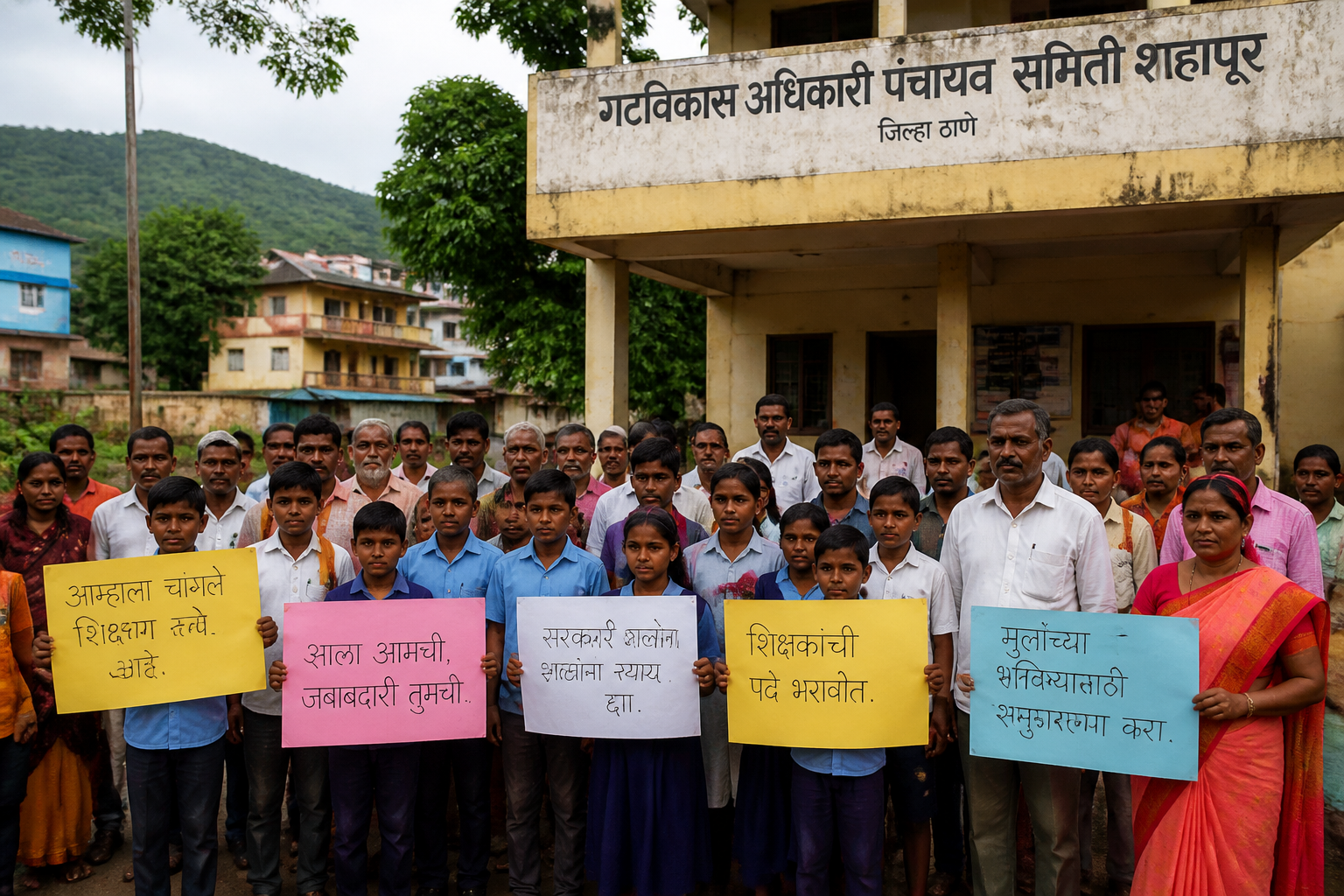
Subheadline: Students and parents have sought an immediate halt to school closures and mergers, citing teacher shortages, unsafe buildings and missing basic facilities.
Shahapur | September 9, 2026
Students and parents in Shahapur staged a protest at the panchayat samiti on Wednesday against the proposed closure or merger of government schools, demanding immediate improvements to basic facilities, teacher appointments and school safety. The protest was led by the Students’ Federation of India and the Democratic Youth Federation of India.
The protesters questioned what they described as a policy of shutting or merging government schools instead of addressing the conditions that have contributed to declining enrolment. They said several schools lack regular teachers and that some school buildings are in a dangerous condition. The protesters also raised concerns about the absence of drinking-water facilities and toilets in school buildings.
According to the organisations involved in the protest, low student enrolment is being cited as a reason to consider closing or merging schools. They argued that reducing the number of students without examining the causes of declining enrolment would not resolve the underlying problem. In their view, the priority should be to improve the quality of education and provide students with a safe and adequately equipped learning environment.
The demands presented during the protest included stopping the process of closing or merging schools immediately and reviewing every school independently. The protesters said each institution should be assessed on its own conditions, location and requirements rather than being considered only through student numbers.
The protest also called for regular appointments of teachers, repairs or improvements to unsafe school buildings, access to drinking water and clean toilets, and better facilities for students. The organisations further sought nutritious meals and special funding for schools serving tribal and remote areas. These demands link school enrolment to the availability of essential public services and the physical condition of school campuses.
The issue is particularly significant for communities that depend on government schools for access to education close to home. The protesters said that if schools provide quality teaching, necessary facilities and a safe environment, enrolment could improve. They therefore asked the administration to address deficiencies in existing schools before taking decisions on closure or merger.
The report does not include a response from the Shahapur administration on the status of the proposed closures or mergers, the number of schools under consideration, the extent of teacher vacancies, or the condition of individual school buildings. Details of any administrative decision or timeline for reviewing the protesters’ demands were also not provided.
