


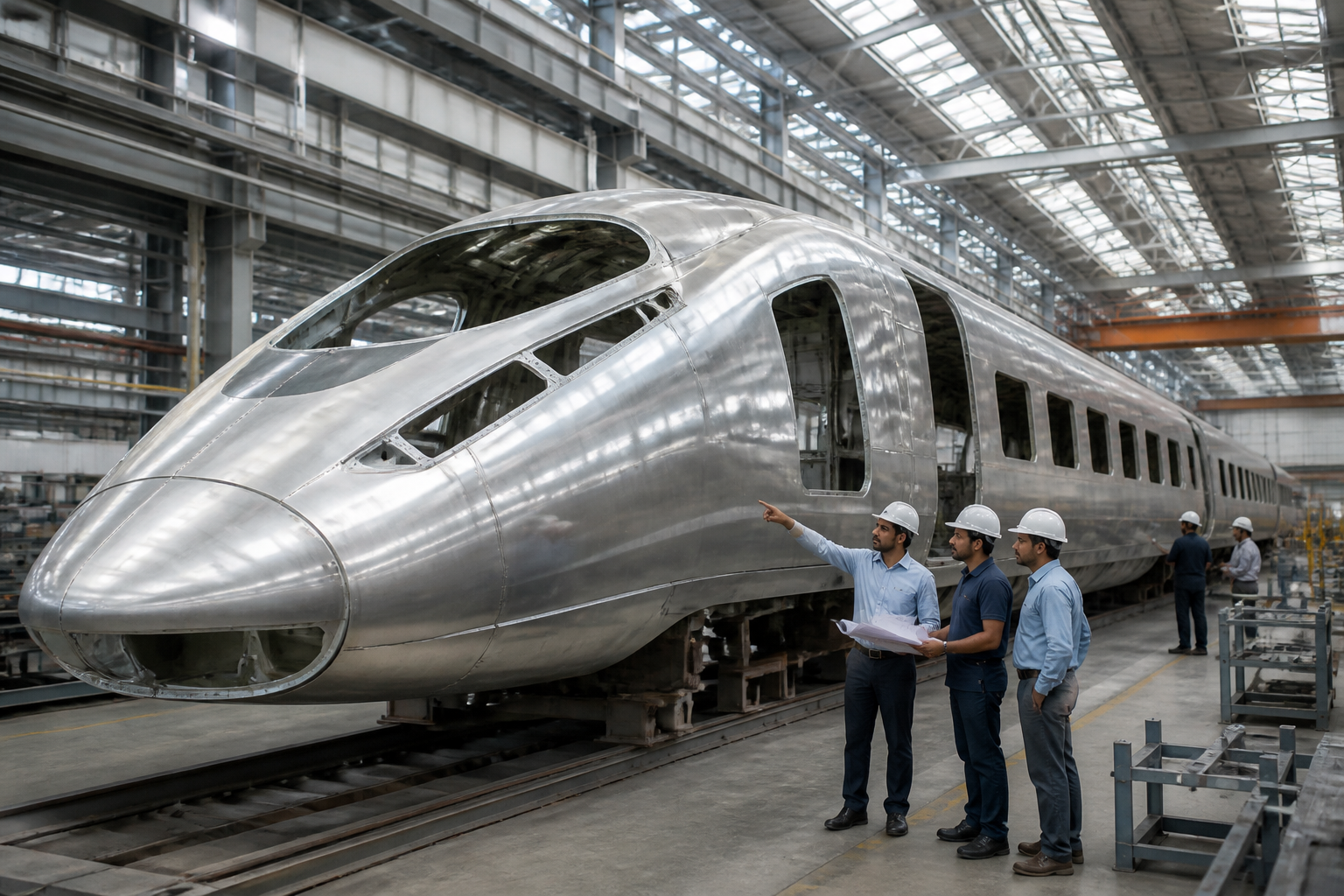
India’s first indigenous bullet train is expected to begin track testing in May or June 2027 after the first train body frame was completed and sent for a squeeze test, Railway Minister Ashwini Vaishnaw said at an event in Vadodara on September 9.
The testing phase is expected to continue for two to four months before the high-speed train is inaugurated, according to the minister. Vaishnaw said construction on the wider high-speed rail project was progressing, with the Surat-Vapi section expected to be completed by December 2026.
“By May or June of next year, India’s own bullet train will be on the tracks for testing. After a testing period of 2-4 months, the bullet train will be inaugurated by the Prime Minister himself,” Vaishnaw said while addressing the ‘NaMo for Viksit Bharat’ event in Vadodara.
The train is being developed as part of Indian Railways’ efforts to build domestic capability in high-speed rail technology. Integral Coach Factory, Chennai, has awarded BEML Limited an Rs 866.87-crore contract to design, manufacture and commission two prototype high-speed trainsets.
The two trainsets, identified by the codename B-28, will each have eight coaches. They are designed to operate at 280 kmph and will be capable of exceeding 250 kmph. BEML is manufacturing the trains at its dedicated Aditya High-Speed Rail Complex in Bengaluru.
The trainsets will comprise fully air-conditioned chair-car coaches with reclining and rotatable seats, onboard infotainment systems and facilities for passengers with disabilities. Indian Railways plans to use stainless steel for the trains, which are being engineered for India’s heat and dust conditions.
The first prototype is targeted for rollout by March 2027 and is expected to undergo extensive testing by the Research Designs and Standards Organisation. The development programme is planned in stages, with later generations of India’s high-speed trains expected to reach speeds of up to 350 kmph.
Vaishnaw also said the Surat-Bilimora section of the Mumbai-Ahmedabad bullet train project was expected to be commissioned by August 2027. The minister said the service could reduce travel time between Vadodara and Mumbai to about one and a half hours.
The Mumbai-Ahmedabad high-speed rail project has been under construction in phases. According to the minister, the first section was completed in 2020, after which work on the remaining sections accelerated. He also referred to broader changes in Indian Railways, including the modernisation of operating and reservation systems and construction practices.
The minister cited the redevelopment of 280 railway stations and the development of 36,000 kilometres of new railway tracks as part of the wider railway expansion programme. He also said work was nearing completion on cargo trains incorporating Vande Bharat technology and highlighted new wagon designs, including a specialised wagon for transporting salt.
The immediate milestones for the indigenous bullet train programme are the completion of the prototype, its rollout by March 2027, and the start of track testing in May or June. The Surat-Bilimora section is scheduled for commissioning in August 2027, according to the timelines announced by the railway minister.
