


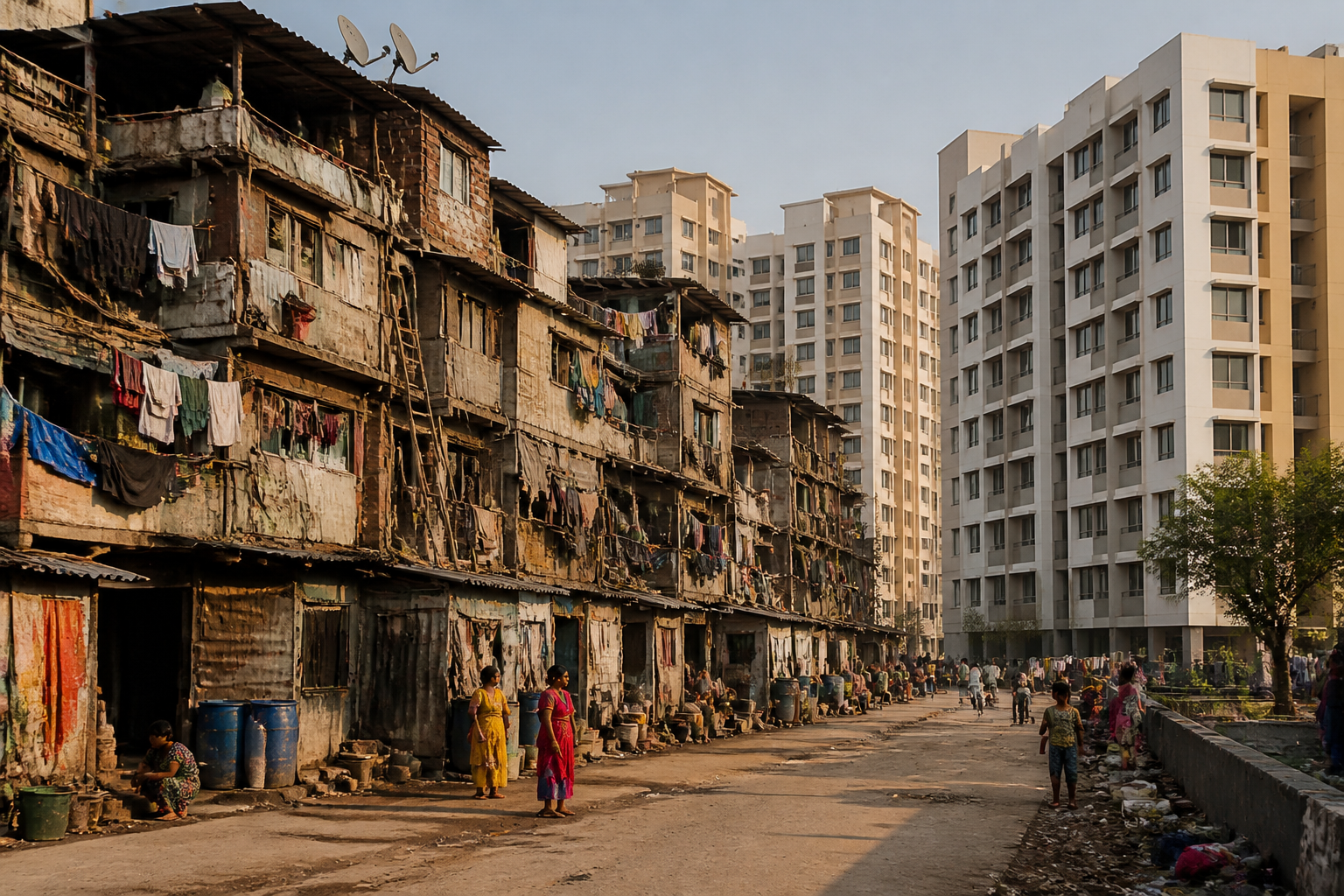
Subheadline: The Supreme Court will hear a petition challenging the denial of rehabilitation homes to first-floor slum dwellers outside the Dharavi redevelopment framework.
Mumbai | September 9, 2026
The Supreme Court has scheduled a September 29 hearing on a petition seeking permanent rehabilitation homes for first-floor slum dwellers in Mumbai, reopening a dispute over eligibility under the Slum Rehabilitation Authority framework.
The petition was filed by former Bharatiya Janata Party MP Gopal Shetty after the Bombay High Court rejected his challenge to the policy that does not extend housing benefits to all residents of multi-level slum structures. The petition seeks to overturn that decision and argues that first-floor residents should also be considered for free or paid rehabilitation housing.
According to the report, the state government has already presented its position before the Supreme Court. The case will now be considered at the hearing fixed for September 29. The outcome could determine whether residents living above ground-floor slum units receive permanent homes under Mumbai’s slum rehabilitation framework.
The dispute has gained significance because the rehabilitation terms proposed for the Dharavi Redevelopment Project differ from those generally applied under existing slum rehabilitation schemes. Residents of multi-storey slum structures in Dharavi are to receive paid or rental housing under that redevelopment plan, while the government has not agreed to extend the same benefit across the broader Slum Rehabilitation Authority system.
Shetty’s petition questions how two different housing approaches can operate within the same city. It argues that if residents of multi-level slums are eligible for housing under the Dharavi redevelopment plan, the state should explain why first-floor residents elsewhere are denied a similar benefit.
The Bombay High Court had dismissed the earlier petition, holding that the decision not to provide housing benefits to residents of multi-storey slums was a matter of policy. The court also observed that judicial intervention would not be justified unless the policy was shown to be unconstitutional.
That ruling left uncertainty for residents living on upper floors of slum structures, who may not qualify for permanent rehabilitation accommodation under the prevailing rules. Their eligibility depends on the distinction drawn by the government between qualifying slum occupants and residents living above the ground floor.
The case also places the eligibility framework of Mumbai’s slum rehabilitation programmes alongside the broader redevelopment arrangements being prepared for Dharavi. While the Dharavi plan provides for housing for all eligible residents under its own terms, the state has maintained that the same provision need not automatically apply to other rehabilitation projects.
The Supreme Court’s September 29 hearing is expected to examine the challenge to that distinction and the state’s policy position. Until the court rules, the housing status of first-floor slum dwellers outside the Dharavi redevelopment project remains unresolved.
