


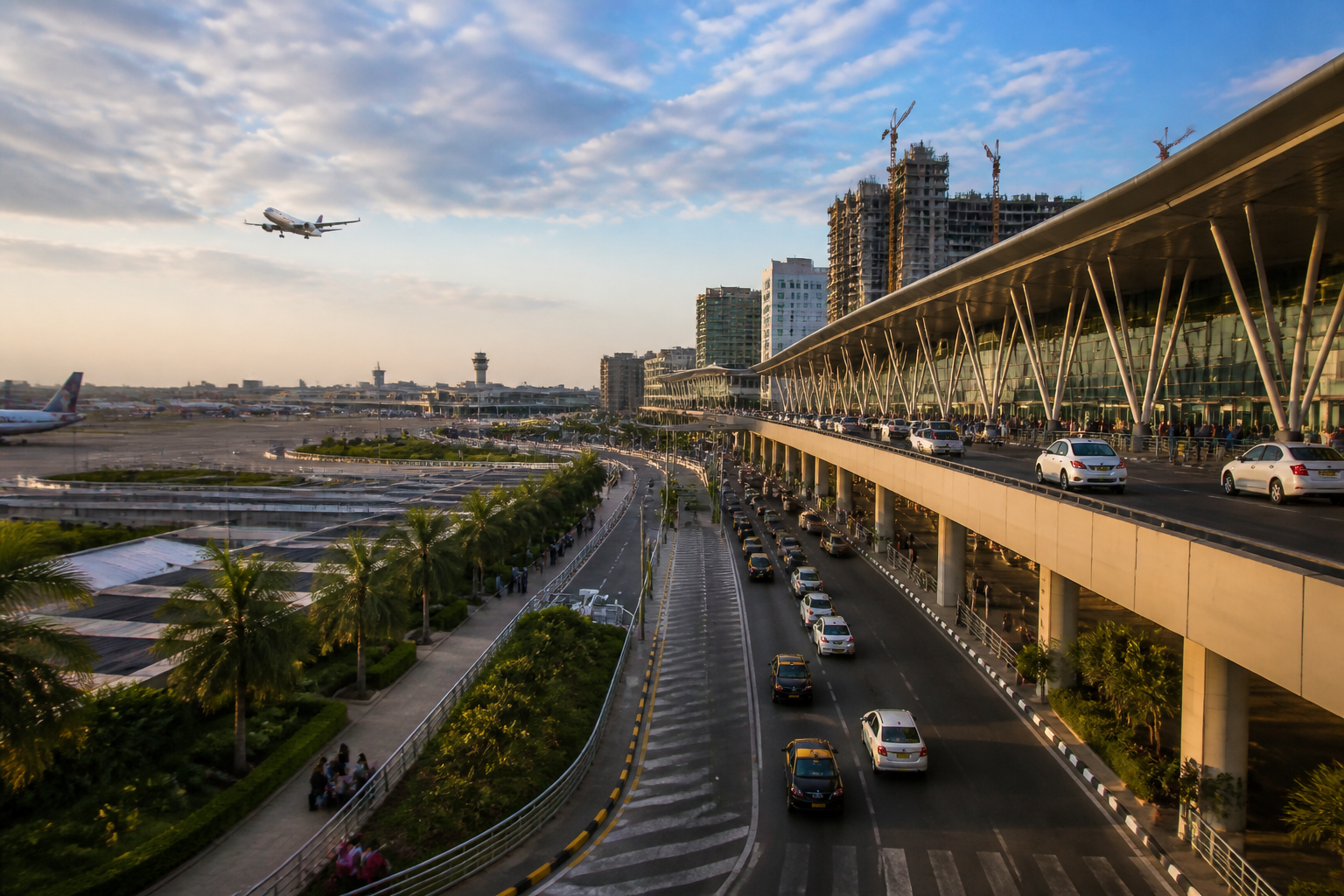
Adani Airports’ decision to raise about $1 billion from global and domestic investors is more than a capital-market transaction. It is a bet on airports becoming large urban development platforms, combining passenger infrastructure with mixed-use projects, commercial activity and city-side businesses. The announcement also shows how airport expansion in India is increasingly being planned around capacity, real estate and the wider economic role of major gateways.
Adani Airport Holdings Ltd (AAHL) said on Wednesday that it would raise approximately $1 billion, or Rs 9,825 crore, in primary equity from a consortium that includes Alpha Wave Global, Premji Invest, Temasek and funds managed by BlackRock. The transaction values AAHL at a pre-money equity valuation of around $18 billion. Once the three tranches are completed, the investors are expected to collectively acquire approximately 5.54 per cent of the company.
The Share Subscription Agreement and Shareholders’ Agreement have already been signed, according to the company. The final tranche is expected to be completed by July 2027, subject to customary conditions precedent, including applicable approvals. The staged structure means the full financial and operational impact of the transaction will unfold over several years rather than through a single immediate infusion.
The announcement matters to the built environment because AAHL has said the proceeds will primarily support the expansion and modernisation of airport infrastructure, the development of integrated airport-city ecosystems and the scaling up of passenger-facing and other non-aeronautical businesses. This places airport terminals, runways and passenger facilities within a wider development model that includes land use around airports and commercial activity beyond the aeronautical core.
## Adani Airports and the airport-city model
AAHL plans to develop around 22 million square feet of mixed-use projects in the first phase of its Adani Airport City developments around its airports. The company has not, in the supplied announcement, provided a project-wise break-up of this area, details of the proposed uses, development timelines for individual locations or the infrastructure arrangements that will support these projects.
That absence is significant because mixed-use development around airports is not simply a real-estate exercise. It requires coordination between aviation operations, road access, public transport, utilities, land-use planning, security requirements and surrounding municipal systems. The airport-city model brings these functions into the same development geography, but the announcement does not establish how each proposed project will be integrated with local planning authorities or existing urban infrastructure.
The company said the investments are expected to take the platform’s annual passenger-handling capacity to around 200 million. AAHL currently manages eight airports across India and serves more than 23 per cent of the country’s total passenger traffic, according to the company. Its platform covers aeronautical operations, passenger-facing non-aeronautical businesses and city-side development.
The capacity target therefore represents an expansion across multiple linked businesses rather than a terminal-only plan. More passengers require additional processing capacity, but they also generate demand for parking, access roads, retail, food and beverage, hotels, offices and other services. The company’s stated strategy is to scale these components together, creating a platform in which passenger growth supports activity on the city side and city-side development supports the broader airport ecosystem.
## What the funding structure reveals
The proposed investment is primary equity, meaning the funds are intended to be raised by issuing new shares in AAHL rather than by existing shareholders selling their holdings. The company has described the transaction as one of the largest primary equity investments by financial institutions in India’s airport infrastructure sector. The announced investors include long-term institutional names with exposure to infrastructure and growth businesses, although the supplied material does not specify the amount committed by each investor or the financial rights attached to their holdings.
The transaction values AAHL at approximately $18 billion before the new capital is added. Against that valuation, the investors’ combined 5.54 per cent stake indicates that the raise is being used to expand the platform while bringing in institutional partners at the holding-company level. The company has not disclosed the post-money valuation, the precise ownership structure after each tranche or the expected return profile of the investors.
AAHL’s fundraise follows Adani Enterprises’ Rs 15,000-crore qualified institutional placement in July, which the company described as the largest QIP by a non-financial corporate in India. The two transactions are not the same: one concerns the parent company’s institutional equity raising, while the AAHL transaction is directed at the airport platform. Taken together in the supplied material, they indicate that airport infrastructure is being positioned as a major growth area within the wider corporate structure.
The airport sector’s appeal, as presented by AAHL, rests on strong passenger growth and substantial investment in capacity. Jeet Adani, Non-Executive Director of AAHL, said the investment would support the expansion of infrastructure, city-side developments and non-aeronautical businesses. He also described air connectivity as a multiplier for trade, tourism, employment and regional development. These are company statements rather than an independently assessed forecast, but they explain the strategic logic behind the capital raise.
## The infrastructure challenge behind passenger growth
The proposed increase to around 200 million passengers in annual handling capacity will test more than the airports’ internal systems. Capacity at the terminal is only one part of the passenger journey. The effectiveness of an airport also depends on how travellers reach it, how freight and service vehicles move around it, how utilities are supplied and how surrounding land uses are managed.
The announcement does not provide details on the roads, rail links, public transport systems, parking capacity, water supply, power requirements or waste-management arrangements associated with the planned expansion. It also does not state how the 22 million square feet of mixed-use development will be phased alongside passenger-capacity additions. These details will be central to understanding whether the airport-city model functions as an integrated urban system or as a collection of adjacent projects.
The institutional structure is similarly important. AAHL operates airports, while city-side development would necessarily intersect with state governments, municipal bodies, planning authorities and other public agencies. Airport land and aviation operations are governed through one set of institutional arrangements, while surrounding roads, public transport, utilities and local development permissions may involve separate authorities. The supplied announcement confirms the company’s ambition but does not identify the governance mechanism for coordinating these responsibilities.
This is where the transaction becomes relevant beyond corporate finance. Airport expansion can reshape land values, employment locations, traffic patterns and the distribution of commercial activity across a metropolitan region. However, the announcement alone does not establish the scale of these effects at any particular airport or city. It confirms a platform-wide strategy, not the final urban form of individual airport districts.
## What remains to be established
The company’s stated targets are clear in broad terms: a $1 billion equity raise, an approximately $18 billion pre-money valuation, a combined investor stake of about 5.54 per cent, 22 million square feet of first-phase mixed-use development and annual passenger-handling capacity of around 200 million. The final tranche is expected by July 2027, subject to approvals and other conditions.
What remains unclear is how these figures will translate into specific projects and measurable public outcomes. The announcement does not provide airport-wise capacity targets, construction schedules, investment allocations, expected completion dates for the mixed-use developments or details of local transport and utility integration. It also does not indicate how the company will measure the claimed economic benefits of airport expansion.
Arun Bansal, CEO of AAHL, said the company would continue building its capabilities as it expands its airport portfolio and described city-side developments as economic catalysts in major urban centres. That statement captures the company’s strategic direction, but implementation will depend on project approvals, construction delivery, coordination with public agencies and the ability of surrounding infrastructure to keep pace.
The immediate next milestone is the completion of the transaction’s tranches, with the final tranche expected by July 2027. Until then, the clearest evidence of the airport-city strategy will come from the detailed project plans, approvals, financing deployment and infrastructure commitments that follow the announcement. The capital raise establishes the scale of AAHL’s ambition; the next phase will show how that ambition is converted into functioning airport and urban infrastructure.
