


The West Bengal government has directed the State Disaster Response Force (SDRF) to work jointly with the National Disaster Response Force (NDRF) and the Arjun Bahini, with teams to be positioned at strategic locations across north Bengal for a faster response to floods and other major disasters.
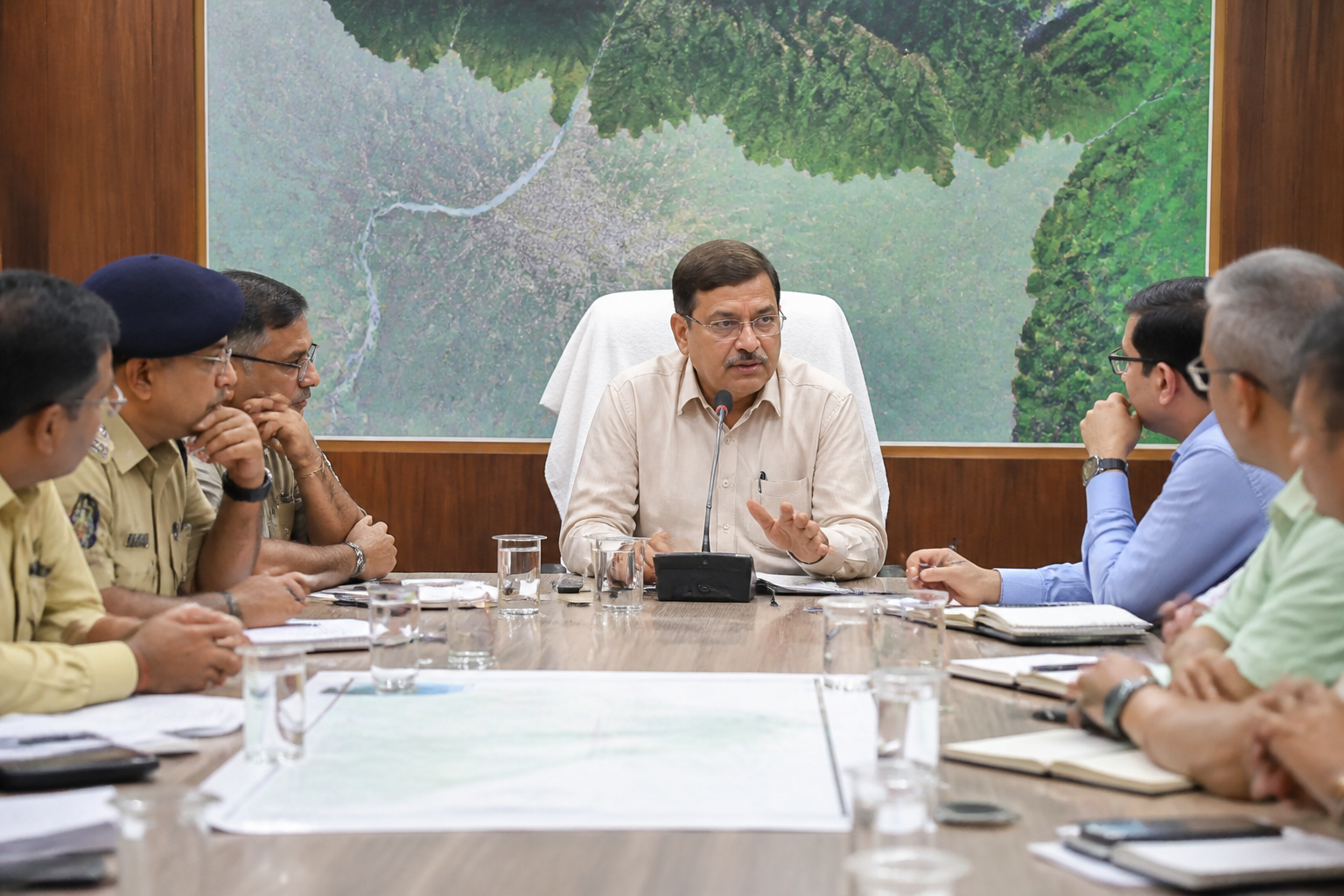
The direction was issued by chief minister Suvendu Adhikari during an administrative review meeting at Uttarkanya, the state government’s branch secretariat in Siliguri, on Tuesday. The meeting reviewed disaster preparedness and the progress of government schemes across districts from Malda to Cooch Behar.
State tourism minister Shankar Ghosh said after the meeting that the chief minister had asked the three forces to coordinate and deploy personnel at locations from where they could respond quickly. Senior officials from state departments and district administrations attended the meeting in person and through video conferencing.
“The chief minister reviewed the progress of various ongoing state government projects at the meeting and took stock of disaster preparedness of the departments concerned. Keeping in view the recent disaster in Nepal, he has asked the NDRF, the SDRF and the Arjun Bahini to be deployed at all strategic locations so that they can respond quickly in the event of any such situation,” Ghosh told reporters at Uttarkanya.
The preparedness review follows two recent landslides, one in north Sikkim and another in Darjeeling’s Mirik. The incidents blocked the natural flow of the Teesta and Rangbhang rivers, raising concerns about possible flash floods in parts of Kalimpong, Jalpaiguri and the Mirik subdivision.
In Mirik, residents living in catchment areas of the Rangbhang river were evacuated after debris from the landslide blocked the river’s flow. The district administration deployed NDRF and SDRF personnel along with the Arjun Bahini in the affected areas, and more than 100 residents were moved to a relief camp.
Residents along the Teesta river in Jalpaiguri and Kalimpong districts were also placed on alert after the landslide in north Sikkim disrupted the river’s normal flow. A source cited in the report said the situation had improved after the Teesta’s flow was restored.
The meeting also examined the functioning of the Gorkhaland Territorial Administration and disaster-management preparations by district administrations. Officials reviewed the situation in Bhutni islet of Malda, where riverbank erosion has contributed to flooding, and the chief minister instructed the administration to take necessary steps.
An official said there were indications that the chief minister might visit Malda to inspect the situation. The government’s instructions on deployment and coordination are intended to strengthen the immediate response to flooding, landslides and other major disasters across north Bengal.
