


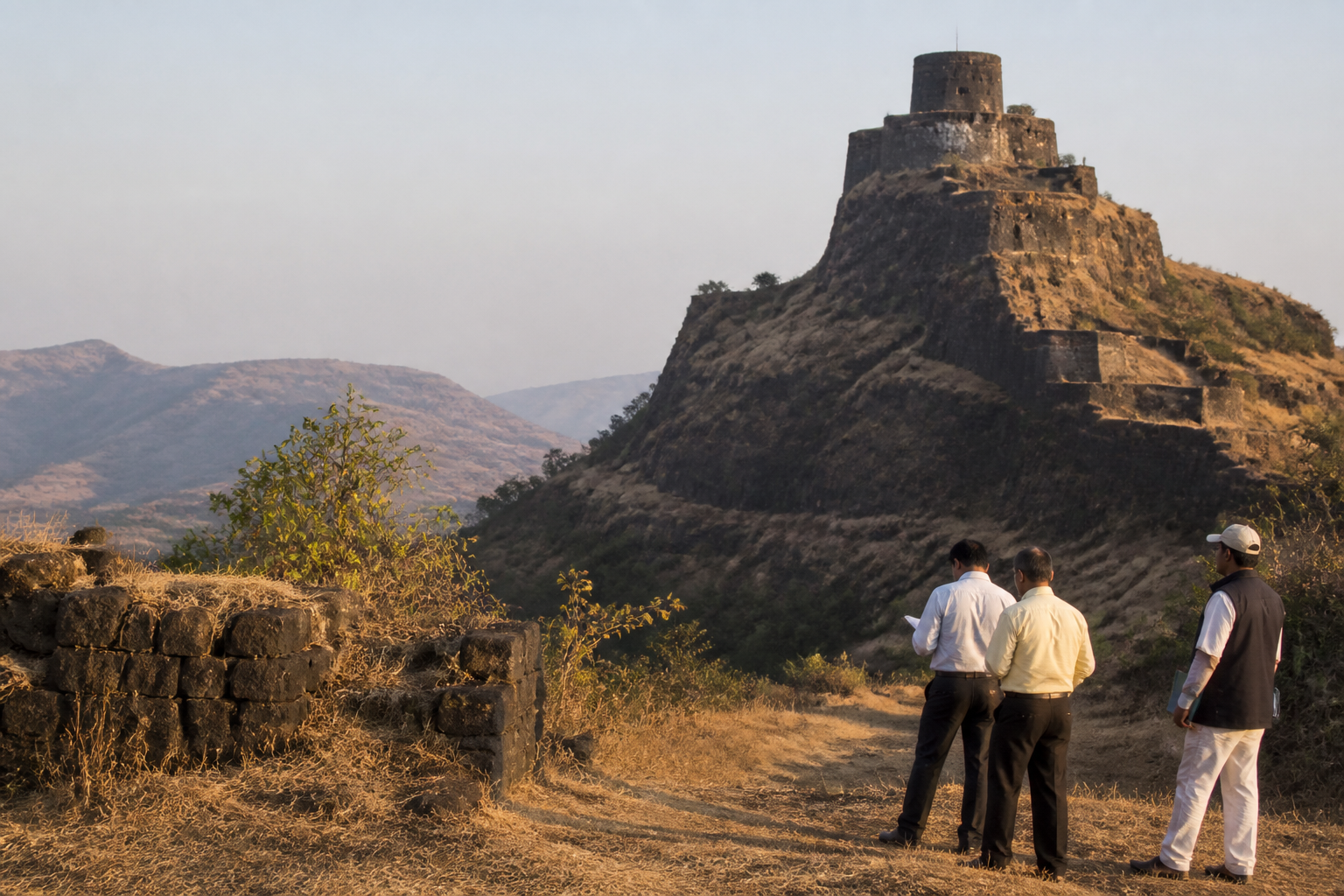
The Maharashtra government has ordered an objective verification of tombs, shrines and other structures around Shivneri Fort, including an assessment of whether any construction in the fort’s protected buffer zone is unauthorised. Cultural Affairs Minister Ashish Shelar issued the directions on Tuesday after a review meeting with district, police and archaeology officials.
The verification will examine when the structures were built and whether they existed historically or were added in recent years. Officials will use revenue records, available historical documents and modern technology to prepare a factual report, according to the details reported after the meeting.
Representatives of the Archaeological Survey of India, the state archaeology department, the district administration and the police attended the review. The ASI has been directed to conduct an on-site inspection of the Shivneri area and report whether the structures violate regulations applicable to the protected zone around the fort.
The review will include tombs, dargahs and other structures located in the vicinity of the fort. Officials have been asked to establish their chronology rather than determine their status solely on the basis of current appearances or local claims. The process is expected to draw on official land and revenue records as well as historical material available with the authorities.
The government has also directed officials to use the Centre’s Netram app for the inspection. Satellite imagery available through the application is expected to help identify how long a structure has existed. The state’s MahaSTAT system will be used in coordination with the relevant departments to support the chronological assessment, according to the report.
Shivneri Fort is associated with the early life and history of Chhatrapati Shivaji Maharaj and is regarded by the state as an important archaeological and heritage site. The minister said all concerned agencies had a collective responsibility to protect the fort’s historical and heritage value and that unauthorised construction would not be ignored.
The directions also establish a timeline for action where violations are confirmed. Structures found to be unauthorised are to receive notices under the applicable rules. Officials have been instructed to review those cases and take further action within seven days of issuing the notices.
The immediate outcome will depend on the findings of the field inspection, the documentary review and the assessment of the protected-zone regulations. The ASI, district administration, police and archaeology officials are expected to coordinate the verification and submit their reports to the state authorities.
