


Sterlite Technologies’ Lakshya growth plan sets out a four-year ambition that is larger than a corporate revenue target. The company wants to increase revenue from ₹4,745 crore in financial year 2025-26 to ₹20,000 crore by FY29, while positioning itself as one of the largest global players in digital connectivity. The plan comes as India’s data-centre capacity, submarine cable network and demand for optical connectivity are all expected to expand.
STL Managing Director Ankit Agarwal announced the plan at an investor meet held on September 3. According to the transcript shared by the company, he described Lakshya as a roadmap to transform the scale and position of STL by building on its existing business, improving economics, deepening customer relationships and taking a larger role in digital infrastructure.
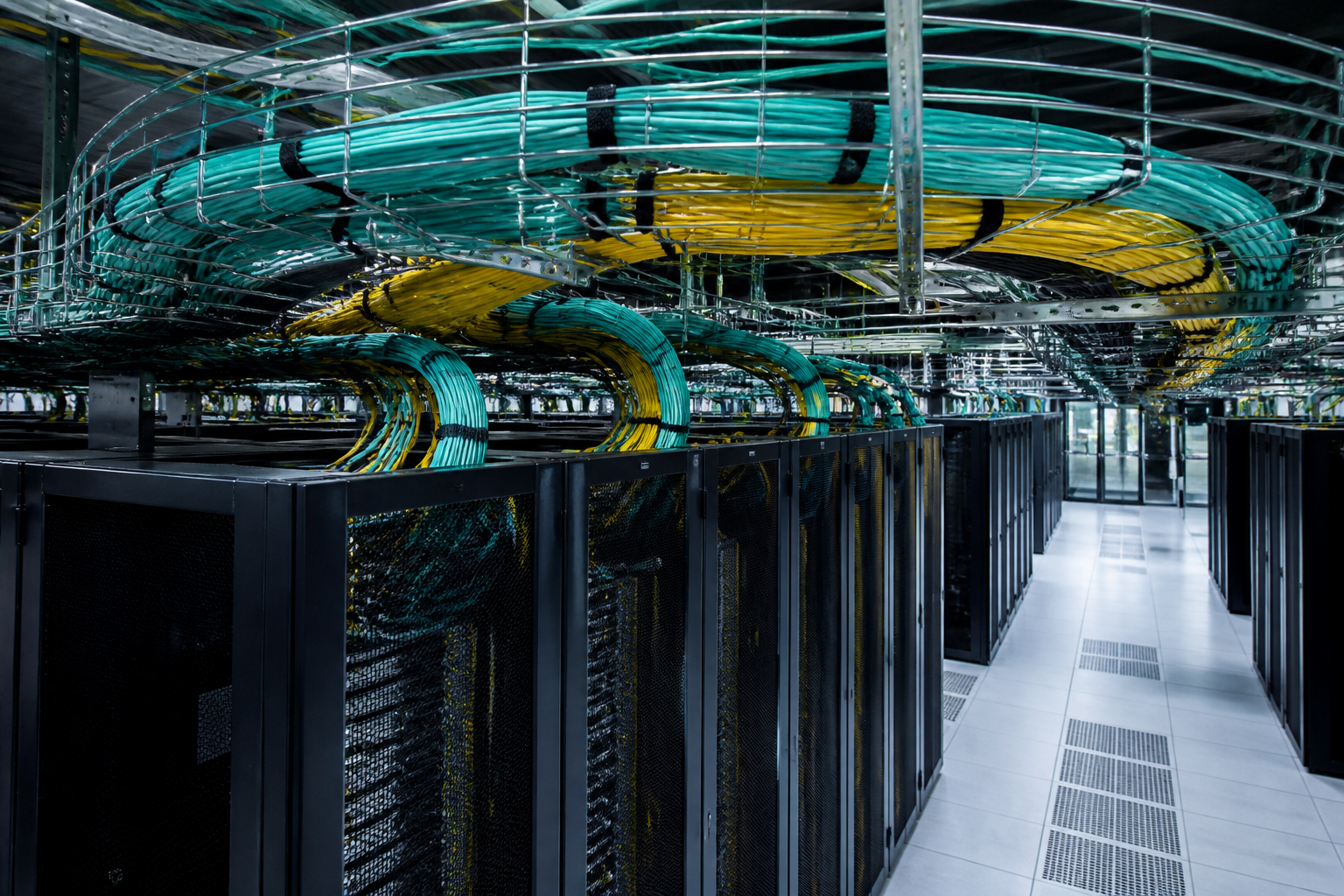
The announcement is significant because it links the company’s growth directly to changes in the physical requirements of digital systems. Connectivity is often discussed through the language of cloud services, artificial intelligence and data centres. STL’s presentation instead highlights the fibre, cable and manufacturing capacity required underneath those services. Its argument is that the amount of optical connectivity needed in each location is rising alongside the growth of computing infrastructure.
Agarwal cited the changing fibre requirements of artificial-intelligence infrastructure as an illustration. He said Hopper systems involved roughly 4,000 fibres per AC, while Blackwell increased that figure to around 16,000 fibres per AC. For the latest VERA Rubin systems, he cited approximately 64,000 fibres per rack. On that comparison, the fibre content per rack has increased 64 times across several generations of infrastructure.
These figures were presented by STL as evidence of a structural increase in optical demand rather than a short-term change in telecom deployment. The company said there are now more locations where optical connectivity is required and more optical content within each location. The underlying issue for the built digital environment is therefore not only how many data centres are built, but also how much connectivity each facility requires and whether suppliers can expand at the same pace.
India is central to the company’s case. Agarwal said the country currently has approximately 1.5 gigawatts of data-centre capacity, which is expected to increase to 10 gigawatts by 2030. If that projection is achieved, the stated capacity would be nearly 6.7 times the current level. STL attributed the expected growth to a favourable policy environment, including a tax holiday extending to 2047, as well as power availability across multiple sites.
The company also referred to India’s international connectivity pipeline. Four submarine cables are under commissioning and another three are under planning, according to Agarwal’s remarks. Submarine cables connect national networks to global internet infrastructure, while fibre systems within cities and data-centre clusters distribute that connectivity across the domestic network. The announcement places these elements within one expanding infrastructure chain.
STL said leading hyperscalers are making multi-billion-dollar investments in India across cloud, artificial intelligence and data-centre infrastructure. The company described this as particularly relevant to its own growth opportunity. However, the material supplied does not identify the hyperscalers, the value of individual projects or the locations and commissioning schedules of the facilities involved. Those details remain important for assessing how quickly demand may translate into orders.
The company currently claims approximately 9 per cent of the global optical-fibre market outside China. It also says it has a technology portfolio of more than 785 patents and over 10 advanced manufacturing facilities across key markets. These figures describe STL’s existing position, but the Lakshya target would require a substantial increase in scale. Revenue of ₹20,000 crore would be more than four times the ₹4,745 crore reported for FY26, based on the figures cited in the announcement.
That gap makes manufacturing expansion a central part of the plan. STL Group Chief Financial Officer Ajay Jhanjhari said the company intends to invest approximately ₹1,000 crore annually over the next three financial years. The planned investment is expected to expand fibre and cable capacities by 50 per cent. The company said this would allow it to scale with demand visibility.
The investment commitment also shows the distinction between demand forecasts and physical delivery. A rise in data-centre capacity does not automatically create equivalent revenue for every supplier. Orders must be secured, manufacturing capacity must be added, projects must be executed and customers must continue deploying infrastructure. STL’s stated plan addresses part of that challenge through planned capital expenditure, but the supplied announcement does not provide a detailed project-wise breakdown, funding structure or expected revenue contribution from each business segment.
The policy landscape described by the company combines several layers of infrastructure. Tax treatment is presented as one factor supporting data-centre investment. Power availability is another, because data centres require large and reliable electricity supplies. Submarine cable projects form the international connection, while optical fibre and cable manufacturing support the networks linking facilities and users. The company’s plan depends on these layers developing together, even though they are shaped by different institutions, investment decisions and implementation schedules.
The numbers in the announcement also show how quickly the physical scale of digital infrastructure is changing. India’s projected increase from 1.5 GW to 10 GW of data-centre capacity is the broadest indicator. The fibre estimates associated with successive AI systems provide a more granular measure: roughly 4,000 fibres per AC for Hopper, 16,000 for Blackwell and 64,000 per rack for VERA Rubin. Together, the figures suggest that demand can grow through both the construction of new facilities and the increasing connectivity intensity of each facility.
For cities and regions seeking data-centre investment, this creates an infrastructure question beyond attracting a building or a technology company. The announcement points to the network requirements that must accompany digital facilities: optical connectivity, cable manufacturing, international links and power. It does not, however, establish how these requirements will be distributed across locations or how much additional urban infrastructure will be needed around individual data-centre clusters.
Lakshya therefore represents both a corporate expansion plan and a reading of where digital infrastructure demand may be heading. STL is betting that India’s data-centre growth, AI deployment and broader requirements for optical connectivity will create enough demand to support a more than fourfold increase in revenue by FY29. Its response is to combine planned capital investment with existing manufacturing assets, patents and market presence.
What the announcement confirms is the scale of STL’s stated ambition, the company’s proposed investment pace and the infrastructure trends it considers most important. What remains uncertain is the conversion of those trends into contracted orders, the timing of the expected data-centre expansion and the financial performance of the investment programme. The next developments to monitor are the company’s annual capital deployment, the reported expansion of fibre and cable capacity, and evidence that India’s projected data-centre and submarine-cable growth is moving from announced capacity to operational infrastructure.
