


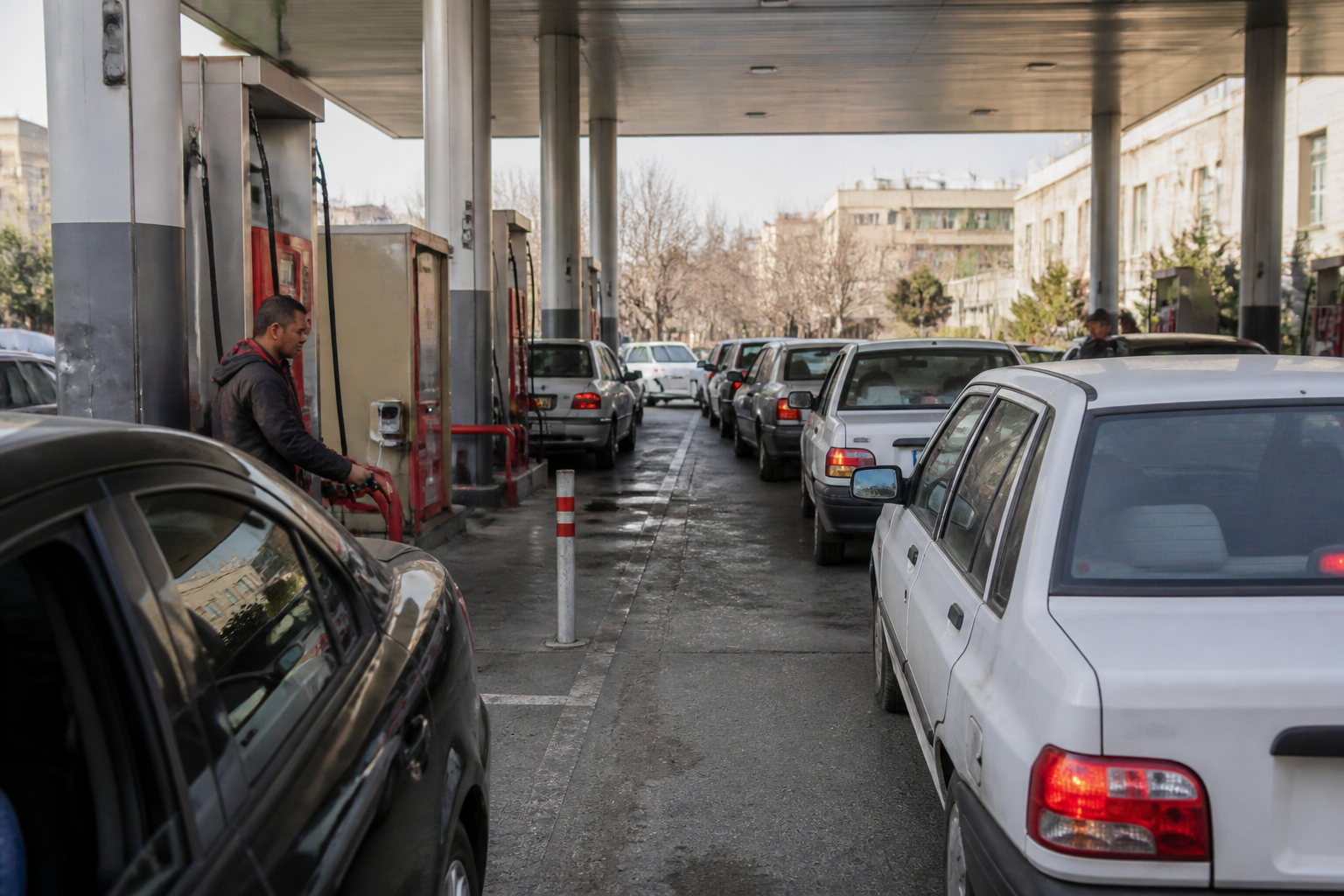
Iran has doubled the price of petrol purchased above a monthly quota of 110 litres, adding to pressure on households as the country’s currency falls to a record low and inflation remains elevated.
The revised rate took effect early Tuesday and applies to fuel purchases exceeding the monthly limit. Consumers crossing the threshold will now pay 100,000 rials, or about 7 cents, per litre. The rate was introduced in December, according to the report.
The Iranian government said the additional revenue from the increase would be distributed to households. Its announcement referred to the “current situation” but did not specifically mention the war with the United States as a reason for the change.
This is the second increase in petrol prices since December. Fuel pricing is politically sensitive in Iran, where subsidised petrol has long been treated as a basic entitlement. A price increase in 2019 triggered nationwide protests followed by a government crackdown that reportedly killed more than 300 people.
The latest measure comes as the Iranian rial has weakened sharply. The US dollar was trading at 2.22 million rials on Monday, while purchasing power has declined amid soaring consumer prices. Iran still has some of the lowest petrol prices in the world, but the higher rate for heavy users creates an additional cost for a population of more than 90 million.
Keramat Veis Karami, chief executive of Iran’s state oil distribution company, said the revised rate would affect 15% of consumers, according to the official IRNA news agency. The measure is intended to limit fuel consumption, which has reached levels above the country’s domestic production capacity.
Karami said Iran consumed 145 million litres of petrol per day in August, compared with domestic production capacity of 122 million litres per day. The shortfall is covered through imports. The government is seeking to reduce demand as consumption continues to exceed local output.
Fuel use has been linked by experts to Iran’s ageing vehicle fleet, difficulties obtaining spare parts and insufficient public transportation. These factors have increased dependence on private vehicles and contributed to demand for subsidised petrol.
The pricing change is also taking place against a severe inflation backdrop. Iran’s annual inflation rate is about 67%, according to the country’s statistics centre, a government agency. Experts have warned that a higher petrol price could add to wider living costs because fuel prices affect transport and the movement of goods.
Iran has faced political sensitivity over petrol prices for decades. A price increase in 1964 triggered mass demonstrations and led the shah to deploy military vehicles after taxi drivers went on strike. The current measure applies only to fuel purchased above the 110-litre monthly quota, with the government saying the additional funds will be distributed to households.
