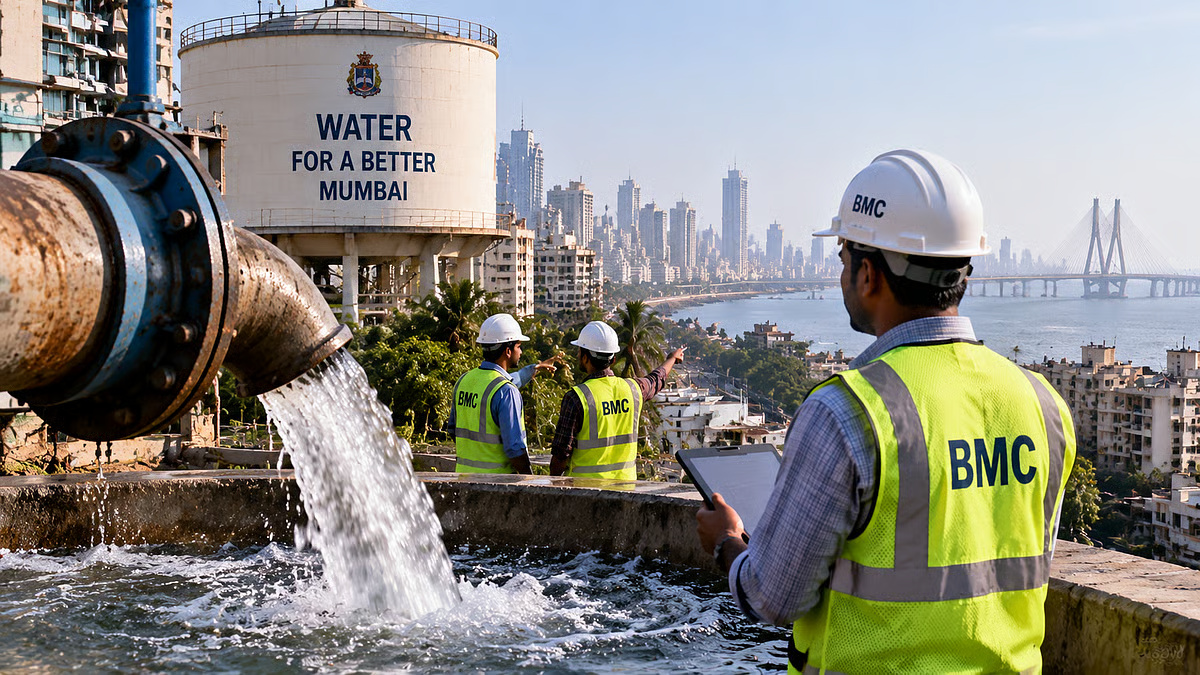
Mumbai Water Shortages Trigger Fresh Civic Field Checks
Mumbai’s persistent water shortages have prompted the civic administration to intensify ground-level inspections across affected neighbourhoods, with engineers being asked to identify why some households continue to receive weak or inadequate supply. The move comes while the city’s 10% water reduction remains in force, putting renewed attention on the ageing distribution network and the uneven way limited water stocks reach different parts of Mumbai. The review focuses on a problem that cannot be explained by reservoir levels alone. While the seven lakes supplying Mumbai were around 95% full on September 4, residents in several localities continued to report low pressure and irregular supply. Tail-end areas, elevated neighbourhoods and sections served by older pipelines can be particularly vulnerable when pressure across the network falls.
Civic engineers have been asked to examine supply schedules in different zones and assess whether at least one scheduled supply period can be maintained at full pressure where network conditions allow. The approach is intended to improve delivery without immediately increasing the volume of water available to the city. The administration is also examining possible causes such as pipeline leakages, pressure variations and operational problems. For residents, these technical failures can translate into a very basic problem: water may be available in the system but fail to reach homes with sufficient pressure. That distinction becomes more important when conservation measures are already restricting overall supply. Complaints from parts of Dadar and Parel illustrate the uneven impact. Residents in some pockets have reported prolonged periods of weak pressure, including during the festive season when household demand can rise.
Civic officials have been told to conduct direct inspections and coordinate across departments instead of allowing local complaints to remain unresolved at higher administrative levels. The continuing Mumbai water shortages also carry implications for the city’s infrastructure planning. Replacing deteriorating pipelines can reduce physical losses and improve hydraulic performance, while better pressure management can help distribute available supplies more efficiently. Such upgrades may require capital spending, but they can also reduce recurring operational problems and improve the reliability of essential services. The water situation remains constrained by weather uncertainty. Mumbai experienced below-average rainfall in August, while forecasts point to another weaker-than-normal month in September. The civic administration has therefore retained the 10% reduction while monitoring whether reservoir storage reaches the level considered necessary for year-round security.
For a dense city with rising residential, commercial and infrastructure demand, the immediate challenge is to distribute existing stocks more equitably. The latest field inspections could provide a clearer picture of where network weaknesses are driving the Mumbai water shortages. Longer term, reducing leakage, upgrading ageing pipelines and improving pressure control will be critical to making the city’s water system more resilient to increasingly variable rainfall.