Bengaluru Electric Buses Set For Major Fleet Expansion
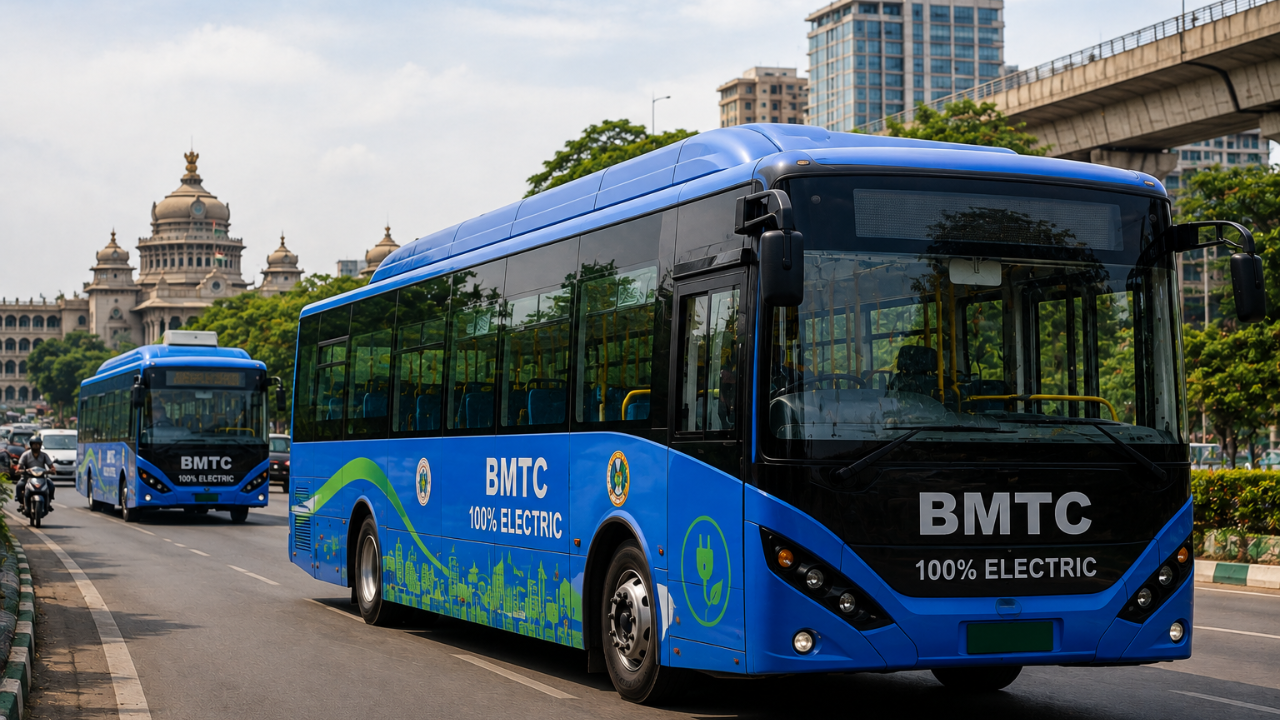
Bengaluru is set for one of its biggest public transport fleet expansions after the Karnataka Cabinet approved 4,500 electric buses under the Centre’s PM E-DRIVE scheme. The addition could take the city’s Metropolitan Transport Corporation fleet beyond 10,000 buses and strengthen cleaner mass transit at a time when Bengaluru is dealing with congestion, rising travel demand and gaps in bus availability.
The allocation is part of a national programme supporting electric buses in major cities. Bengaluru has been assigned 4,500 e-buses, the largest city allocation under the scheme. The Centre has earmarked financial support for the programme, while the buses are being procured through an aggregation model involving Convergence Energy Services Limited and city transport undertakings. The scale of the planned addition is significant for BMTC. The corporation currently operates around 7,000 buses, meaning the new vehicles could substantially increase service capacity. Bengaluru’s Comprehensive Mobility Plan has also envisaged a much larger bus fleet, indicating that the new procurement could be an important step towards closing the gap between existing supply and long-term public transport requirements. However, the Bengaluru electric buses programme has already faced delays. Although the Centre completed the tender process, the state government’s approval was pending for several months.
BMTC had prepared an operational plan covering dozens of locations and proposed converting existing depots into facilities capable of supporting electric buses. The delay matters because adding buses is not simply a procurement exercise. Electric fleets require charging infrastructure, upgraded depots, grid capacity, maintenance systems and trained technical personnel. Karnataka is separately planning 1,250 public EV charging stations under PM E-DRIVE, while 1,571 chargers have been approved for the state under the scheme, creating an opportunity to build a broader electric mobility ecosystem. For commuters, the biggest potential benefit is increased service frequency and network reach. More buses could improve connections between residential areas, employment centres, Metro stations and peripheral neighbourhoods. If deployed strategically, they could also reduce dependence on private vehicles for shorter and medium-distance journeys. The environmental case is equally important. Shifting a large share of urban bus operations towards electric vehicles can reduce tailpipe emissions along busy corridors and support Bengaluru’s transition towards lower-carbon mobility. But the climate benefits will depend on high utilisation, efficient charging and reliable operations rather than simply increasing the number of electric vehicles.
The Bengaluru electric buses expansion should therefore be treated as a network investment rather than a vehicle purchase.Coordinated depot upgrades, charging infrastructure, route planning and last-mile connections will determine whether the additional fleet meaningfully improves mobility. With Cabinet approval finally secured, the priority now is to convert the allocation into buses on Bengaluru’s roads as quickly and efficiently as possible.