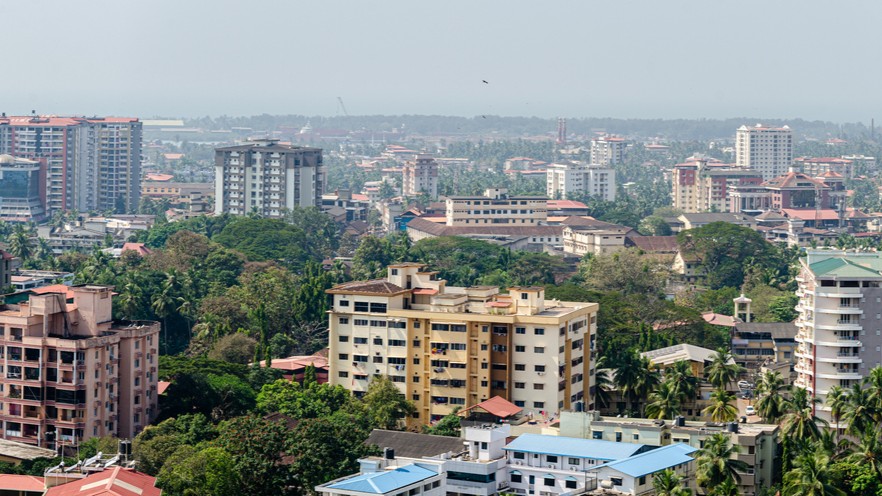
Karnataka’s push to reduce the economic concentration around Bengaluru is gaining momentum, with industry leaders calling for North Karnataka cities to be developed as alternative centres of employment, investment and urban growth. Hubballi-Dharwad, Belagavi, Haveri and Gadag have been identified as potential regional hubs, offering an opportunity to distribute infrastructure and economic activity more evenly across the state.
The proposal comes as Bengaluru faces mounting pressure from population growth, congestion and infrastructure demand. While the capital remains Karnataka’s dominant economic engine, the concentration of jobs and investment has also increased pressure on housing, transport, water supply and public infrastructure. Creating viable alternatives could help moderate that pressure over the longer term rather than continually expanding the capacity of one metropolitan region. The proposed North Karnataka growth centres would need distinct economic identities rather than simply attempting to reproduce Bengaluru’s technology-led model. Hubballi-Dharwad could strengthen its position as a commercial, industrial and logistics gateway, while Belagavi has potential in manufacturing and border trade. Haveri could build around agriculture and food processing, with Gadag combining industrial, agricultural and tourism opportunities. This approach is already beginning to influence investment decisions. Karnataka recently approved 83 industrial projects worth more than ₹6,200 crore, with 69 projects planned outside Bengaluru Urban and Bengaluru Rural districts. The expansion indicates that decentralisation is moving beyond policy statements towards the distribution of industrial investment and employment.
The state’s wider Beyond Bengaluru strategy is also targeting technology and innovation ecosystems in regional cities. The Hubballi-Dharwad-Belagavi region, for example, is being positioned around technology, manufacturing, aerospace, precision engineering and startups, with the aim of creating higher-value employment outside the capital. However, attracting companies will require more than industrial land and incentives. Reliable power, water, healthcare, education, digital connectivity, housing and public transport will determine whether skilled workers are willing to build long-term careers in these cities. Better links between airports, highways, railways and industrial clusters will also be essential for logistics-intensive sectors. There is a broader urban-planning advantage. If employment growth is distributed across multiple cities, workers can increasingly live closer to their workplaces, reducing the need for large-scale migration towards Bengaluru. This could also create stronger local markets for housing, education, healthcare, retail and services. For Karnataka, the North Karnataka growth centres strategy should therefore be treated as a long-term regional development programme rather than a Bengaluru decongestion measure alone. Building economically self-sustaining cities would spread opportunity, strengthen local economies and make the state’s overall growth model more resilient.
The immediate priority should be city-specific investment plans, stronger regional connectivity and predictable infrastructure funding. If these foundations are established, North Karnataka’s cities can develop complementary economic identities while Bengaluru continues to grow without carrying the entire state’s development burden.