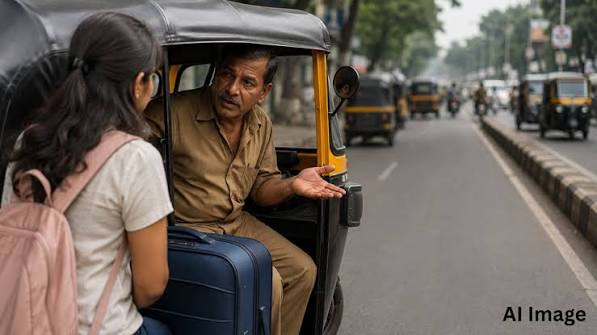
Pune Auto Fare Changes Put Night Travel Under Strain
Pune: Autorickshaw travel in Pune and Pimpri-Chinchwad has become costlier under a revised fare structure that took effect on September 1, with the sharpest impact falling on late-night passengers. The new system raises the minimum fare to ₹30 for the first 1.5 km and permits a 25% night surcharge, adding pressure on workers, patients and other residents who have fewer transport choices after midnight.
The standard fare for every kilometre after the initial 1.5 km has also increased to ₹20, from ₹17 previously. The revision follows approval by the Regional Transport Authority and is intended to account for rising operating costs faced by auto-rickshaw operators. The night charge creates a separate affordability issue. Within Pune and Pimpri-Chinchwad municipal limits, operators can add 25% between midnight and 5am. In rural parts of Pune district, the permitted additional charge is 40% between 11pm and 5am. That distinction makes late-night journeys particularly expensive for people travelling between the city and peripheral settlements. Passengers travelling with larger baggage will also face a new ₹3 charge for luggage measuring at least 60 cm by 40 cm. While modest for an individual trip, the additional fee matters for passengers carrying work equipment, airport luggage or other bulky items, especially when combined with the higher base fare.
The timing is significant because autorickshaws remain an important part of Pune’s last-mile transport network. Metro and bus services do not provide continuous coverage across every neighbourhood or operate at all hours. For hospital workers, shift employees, students and passengers travelling to railway stations, the availability of an affordable door-to-door option can determine whether public transport remains practical. There is also a transition problem. Auto meters have until February 28, 2027, to be recalibrated. Until then, temporary tariff cards are being used to reflect the revised charges. The RTO has established inspection and calibration facilities in Karvenagar, Kharadi and Dive.
This six-month adjustment period makes enforcement particularly important. Earlier fare revisions have already generated disputes over incorrect calculations and passengers being asked to pay amounts above meter readings. Clear display of tariff information and consistent meter checks will be essential if the new system is to avoid further confusion. The immediate challenge is to balance driver economics with passenger affordability. A sustainable urban transport system needs operators to remain financially viable, but it also needs late-night mobility to remain accessible to people who cannot choose when they travel. Pune auto fare policy will therefore need to be judged not only by revenue recovery, but by how reliably and fairly it connects the city’s workforce and neighbourhoods.