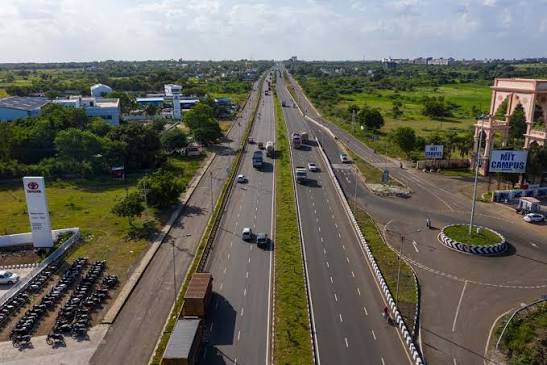
Pune: Maharashtra has approved a ₹1,020.50 crore elevated road project in Solapur that could strengthen the wider Pune–Solapur transport connection and ease pressure on a busy urban highway corridor. The 9.66-km, four-lane structure between Old Pune Naka and Boramani Naka will run along National Highway 65, with implications for freight, regional travel and Solapur’s expanding economic activity.
The project is being taken up as an urgent public infrastructure work following an assessment of traffic requirements and related issues. It will include six ramps, three small bridges and service or access roads at locations where they are considered necessary. For the wider Pune–Solapur corridor, the investment is significant because highway traffic increasingly overlaps with local urban movement. Solapur sits on an important regional route linking Maharashtra with Karnataka, while connections towards Pune support the movement of people, goods and agricultural produce. The immediate impact, however, will be felt within Solapur. The elevated section is intended to move a greater share of through traffic above existing urban roads, potentially reducing delays at congested stretches. Its effectiveness will depend on how ramps connect with local streets and whether traffic simply shifts congestion towards the corridor’s approaches.
That distinction matters for residents. Elevated roads can increase vehicle capacity, but poorly integrated junctions can leave pedestrians, cyclists, buses and local traffic dealing with difficult crossings and fragmented streets. Urban planners therefore typically assess such projects not only by vehicle speeds but also by how safely and efficiently people can access homes, workplaces and public services. The infrastructure could also support Solapur’s industrial and commercial economy. The city’s textile sector, agricultural activity and regional trade depend heavily on predictable road movement. Faster freight access can reduce delays and operating costs, although the economic benefits will ultimately depend on reliable last-mile connections beyond the elevated section. Land availability could help the project move forward. A substantial portion of the required land is already under various state government departments, potentially limiting some acquisition-related delays. Construction will nevertheless require careful traffic management, particularly where existing businesses, pedestrians and local roads meet the highway.
There is also a broader environmental consideration. If the Pune–Solapur corridor becomes less prone to prolonged idling and stop-start traffic, the project could reduce fuel wastage and transport emissions. That benefit will depend on efficient traffic management and integration with public transport rather than road expansion alone. The next phase will therefore be as important as the approval itself. Construction timelines, pedestrian safety, drainage, local access and junction design will determine whether the investment delivers a more efficient regional corridor while maintaining a liveable urban environment in Solapur.