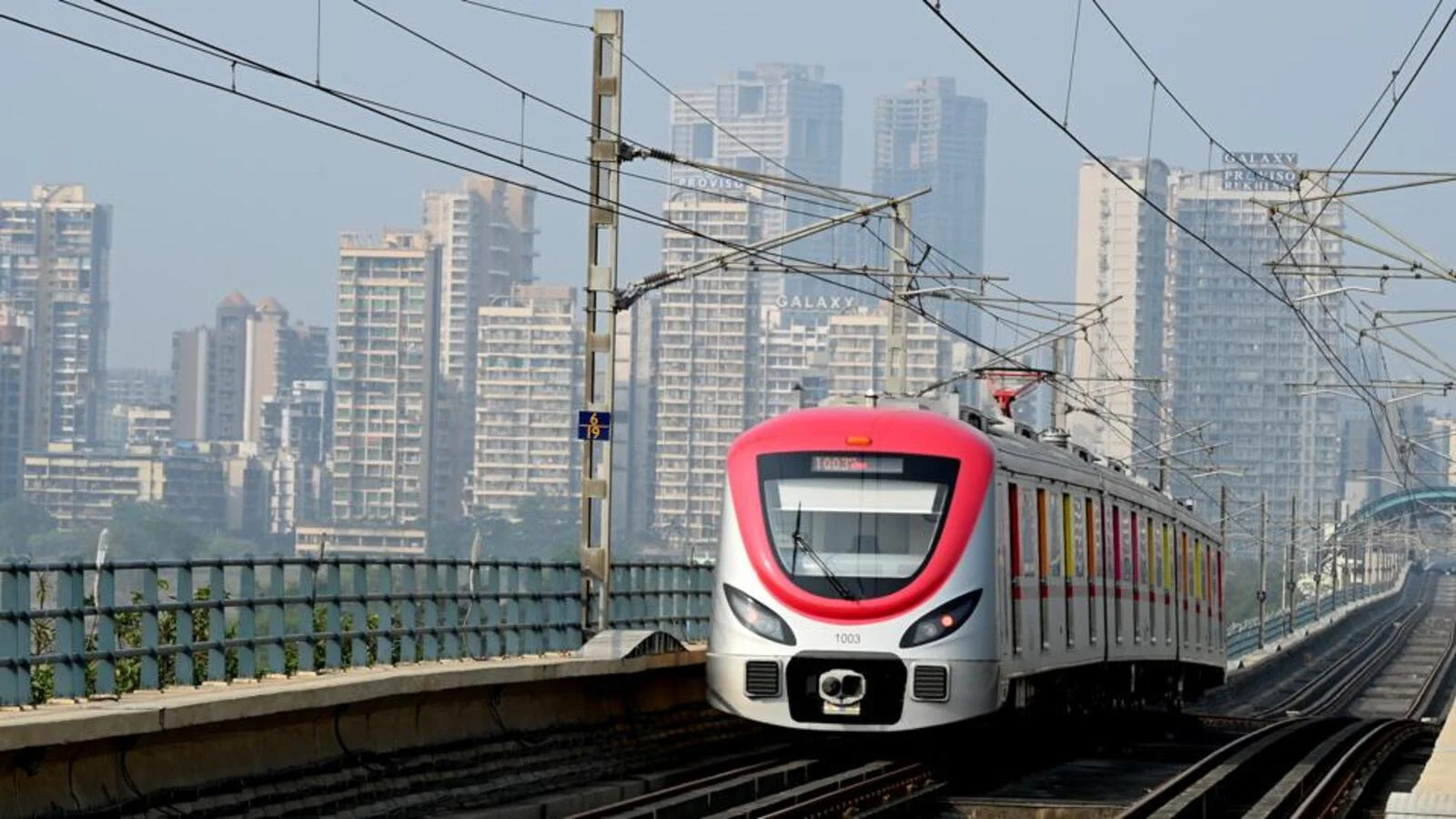
Mumbai’s eastern metropolitan belt has moved closer to a wider metro connection after the Centre formally approved the revised alignment of Metro Line 5 and its Line 5A extension towards Kalyan and Ulhasnagar. The 28 August notification clears a key regulatory hurdle for the expanded corridor, potentially allowing the Mumbai Metropolitan Region Development Authority to advance construction tendering for sections that have faced alignment and infrastructure constraints. The approved network is structured differently from the earlier conception of a single Thane–Bhiwandi–Kalyan line. Metro Line 5 now covers the Kapurbawdi–Dhamankar Naka–Durgadi side, while Line 5A continues from Durgadi through Khadakpada and Bhoirwadi towards Kalyan, with a spur reaching Ulhasnagar. The official notification lists the revised stations and confirms Kasheli as the operational control centre and depot location.
The expanded corridor is being built in stages. MMRDA’s project plan puts the first 11.9-kilometre Thane–Dhamankar Naka section at six stations and an estimated ₹6,741 crore. The next 10.48-kilometre Dhamankar Naka–Durgadi section includes an underground Bhiwandi station, while the 11.83-kilometre Line 5A section towards Ulhasnagar has seven stations and an estimated cost of ₹4,063 crore. That underground component reflects a wider challenge in building mass transit through an already developed urban corridor. Avoiding conflicts with existing structures and road infrastructure can reduce displacement and disruption, but it also raises construction complexity and project costs. For Bhiwandi, where warehousing and logistics activity has expanded rapidly, dependable public transport could also improve access to employment without adding more pressure to already busy roads.
For commuters, the bigger gain will come from network integration rather than the metro line in isolation. MMRDA plans interchange connectivity with Metro Line 4 at Balkum and Metro Line 12 at Kalyan, alongside access to suburban railway stations at Thane, Kalyan, Vitthalwadi and Ulhasnagar. Feeder buses are also envisaged to support last-mile travel. The Line 5A extension could therefore influence how growth spreads across the northern Mumbai Metropolitan Region. Better links between residential areas, industrial districts and employment centres can reduce the need for long road journeys and make peripheral locations more accessible. At the same time, planners will need to manage development around stations so that improved connectivity does not simply accelerate unplanned construction or increase pressure on existing civic infrastructure. The Centre’s clearance is an important project milestone, but it is not the same as completion. MMRDA has already pursued financing for Line 5A, while remaining construction packages still have to move through procurement and execution.
For residents, the test will ultimately be whether the expanded Mumbai Metro Line 5 delivers reliable, affordable and well-connected journeys. The corridor’s value will depend as much on integration with buses, rail and walkable station areas as on the kilometres of metro track eventually built.