


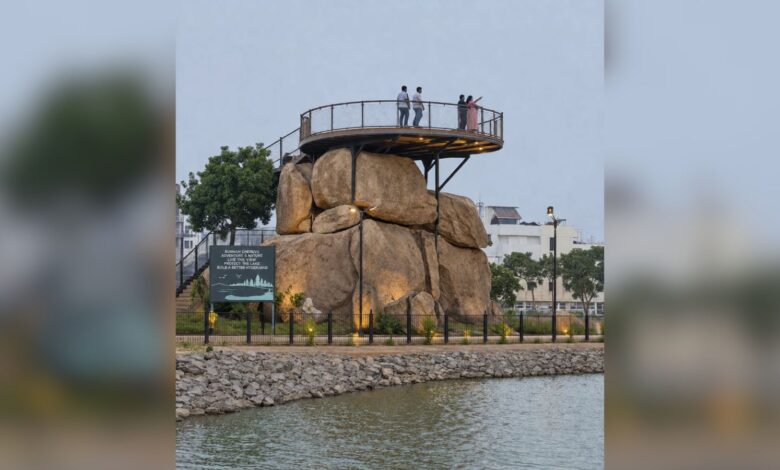
HYDERABAD: Sunnam Cheruvu at Guttala Begumpet near Ayyappa Society is expected to be inaugurated by the end of September following a major rejuvenation effort by HYDRAA. A former sewage and garbage dump spread across about 13 acres has been transformed into a freshwater lake covering nearly 30 acres. The project highlights the potential of restoring degraded urban water bodies as public environmental assets.
The restoration is significant for an area that has undergone rapid residential and commercial development. The lake is surrounded by a mixed neighbourhood of affluent communities, middle-class colonies and informal settlements, creating a need for accessible public open spaces. According to HYDRAA officials, the site was previously affected by sewage, waste accumulation and encroachments. Restoration work followed the removal of encroachments from the lake bed in September 2024. The process was not without resistance. HYDRAA personnel reportedly faced opposition from some residents during the encroachment removal exercise. The agency also encountered legal challenges while carrying out the restoration. Water quality was another major concern associated with the site. Samples collected during the process and tested through the Telangana Pollution Control Board reportedly showed elevated levels of certain contaminants. Lead was reported at 12 times the permissible limit, while nickel was recorded at seven times the permissible level.
These findings underline the environmental risks that can emerge when urban water bodies become dumping grounds or are exposed to untreated pollution. Lake restoration therefore requires more than clearing waste and improving the surrounding landscape. Long-term protection of water quality and prevention of fresh contamination are equally important. The transformation of Sunnam Cheruvu also has implications for Hyderabad’s climate resilience. Urban lakes can help retain stormwater and contribute to local ecological balance when they are properly maintained. Protecting such water bodies becomes increasingly relevant as the city expands and faces pressure on natural drainage systems. The lake has already started attracting residents, including women and children, for walking and recreational activities. This early public use indicates demand for accessible outdoor spaces within densely developing neighbourhoods.
The project also demonstrates how restoration of degraded land can create multiple urban benefits. A polluted site that previously posed environmental concerns has been converted into a public space with potential recreational and ecological value. However, maintaining the restored lake will be as important as completing the rejuvenation itself. Regular monitoring of water quality, protection against encroachment, proper waste management and control of pollution sources will determine whether the improvements remain sustainable. For Hyderabad, Sunnam Cheruvu represents a broader urban planning question: how can existing lakes be protected while the city continues to grow? Restoring individual water bodies can provide immediate benefits, but stronger long-term lake management is needed to preserve the wider network of natural assets. The planned inauguration marks the next stage of the project. Its lasting value will ultimately depend on continued protection, responsible public use and effective monitoring of the lake and its surroundings.
Read more: Hyderabad Kothagudem Airport Gets Fresh Site Assessment
Hyderabad Sunnam Cheruvu Set For Inauguration After Major Revival
