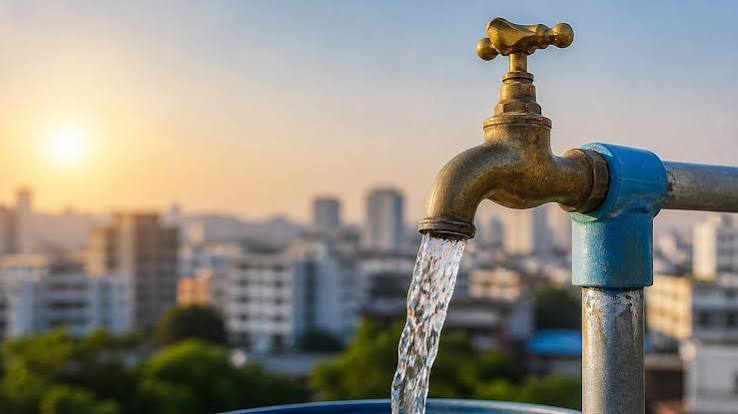
Pune Water Security Comes Under Fresh Weather Pressure
Pune: Pune is entering September with a sharply uneven monsoon picture: record-breaking rainfall in July has been followed by a much drier August, while the India Meteorological Department expects subdued rainfall over much of peninsular India in the coming week. The shift matters for the city’s water security because its current seasonal surplus is largely the result of July’s exceptional rains, making reservoir management and demand planning increasingly important.
At Shivajinagar, Pune’s main weather observatory, August rainfall stood at about 84.5 mm, among the lowest August totals of the past decade. Pune district recorded a 28% rainfall deficit during the month. Yet the cumulative monsoon position remained strong, with the district entering September with a 31% surplus, largely because of the exceptional rainfall recorded in July. That contrast exposes a growing challenge for cities dependent on seasonal rainfall. A strong month cannot automatically compensate for a prolonged dry spell later in the monsoon. Pune’s reservoirs received substantial inflows during July, but weaker rainfall in September could reduce fresh inflows and gradually draw down stored water. The pattern also highlights the importance of looking beyond seasonal rainfall totals. For urban water systems, Pune rain is valuable not simply because of how much falls, but because of when, where and how quickly it reaches reservoirs and groundwater systems. Heavy bursts can create flooding and runoff, while longer dry periods increase evaporation and water demand.
The national outlook adds another layer of uncertainty. IMD expects September rainfall across India to remain below 91% of its long-period average of 167.9 mm. At the same time, maximum and minimum temperatures are expected to remain above normal across large parts of the country. Strong El Niño conditions are currently present over the equatorial Pacific and are forecast to strengthen further, while the Indian Ocean Dipole is presently neutral. For Pune, warmer conditions could increase pressure on stored water through higher evaporation and household demand. The risk is not necessarily an immediate shortage, but a narrower margin for managing water through the end of the monsoon and into the next dry season. The city’s experience also points to a wider planning requirement.
Rainwater harvesting, protection of natural drainage channels, groundwater recharge and efficient distribution can help reduce dependence on unpredictable rainfall. Infrastructure designed only for extreme rainfall or only for water scarcity leaves cities vulnerable when both conditions occur within the same season. With Pune rain expected to remain subdued in the near term, the priority now shifts from celebrating seasonal surplus to managing it carefully. The coming weeks will show whether July’s exceptional gains can provide enough resilience through a warmer and potentially drier end to the monsoon.