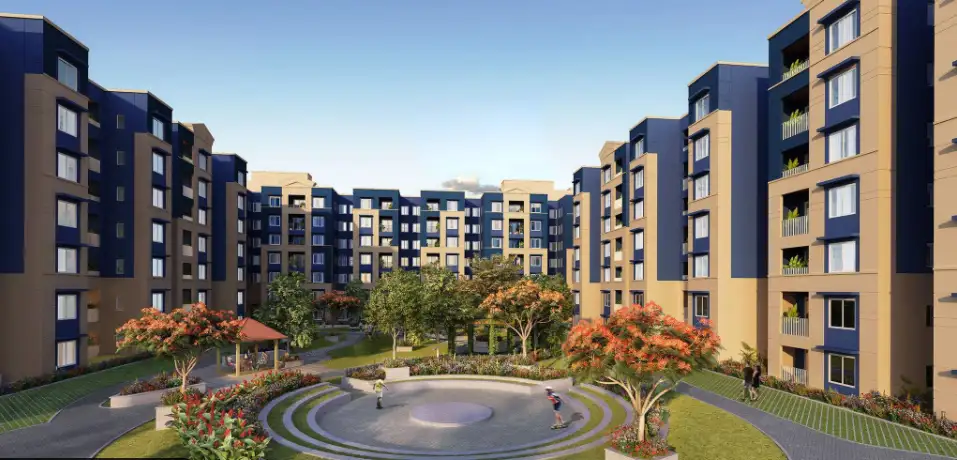
Hyderabad Kokapet Sees Rapid Residential Expansion
HYDERABAD: Kokapet’s Neopolis is moving towards becoming one of Hyderabad’s major high-density residential districts, with 14 listed developments covering 123.44 acres and accounting for 11,485 apartments. The scale of construction points to a shift in western Hyderabad’s growth pattern, but it also places greater importance on transport, utilities, public spaces and climate resilience as occupancy increases.
Neopolis has attracted a concentration of large residential developments within a planned precinct. The projects listed in the available project summary include My Home Nishada, Sattva LakeRidge, Rajapushpa Casa Luxura, Prestige Clairemont, Brigade Gateway, One by MSN, The Cascades, Rajapushpa Skyra, Sattva Lago, NEO by Yula, Rise With 9 – Trilight Residences, My Home Grava, My Home 99 and Brigade Barcelona. Together, the developments represent a substantial addition to Hyderabad’s housing stock. They also indicate how quickly the western corridor is moving from a development zone towards a populated urban neighbourhood. For the real estate market, such concentration can create a stronger residential ecosystem. It can support retail, services and employment around the new housing supply. But it can also increase demand for basic civic infrastructure.
The arrival of thousands of households will add daily trips to an already rapidly developing part of the city. Roads and junctions will have to accommodate residents, service vehicles, deliveries and visitors. Urban planners often view transport capacity as more than road width. Public transport, walking routes and last-mile connectivity also influence how efficiently a dense district functions. For Neopolis, the quality of these connections could affect both resident experience and the wider performance of western Hyderabad’s business and residential corridors. Population growth also increases demand for water supply, sewage networks and waste management. These systems need to expand alongside housing rather than after occupancy reaches a high level. Drainage is particularly important for rapidly urbanising areas. As construction replaces open land with buildings and paved surfaces, rainfall has fewer natural pathways to infiltrate the ground. Good stormwater planning can therefore reduce local flooding risks during intense rainfall.
High-density housing does not automatically create a well-functioning neighbourhood. Residents also need access to greenery, pedestrian-friendly streets and usable public spaces. Planning these elements early can help reduce dependence on private vehicles and improve everyday liveability. It can also support a healthier urban environment as the population grows. The challenge for Neopolis is therefore broader than delivering apartments. The district will need infrastructure and public amenities capable of supporting a large resident population. Neopolis’ urban growth reflects Hyderabad’s continuing westward expansion and the demand for large-scale housing. Yet its success will ultimately depend on how well residential development is integrated with transport, utilities, open spaces and environmental safeguards. As more projects move towards completion and occupation, Neopolis’ urban growth will provide a useful test of whether planned residential expansion can translate into a resilient, connected and people-focused district. For Hyderabad, the priority now is to ensure that civic capacity grows at the same pace as the skyline.