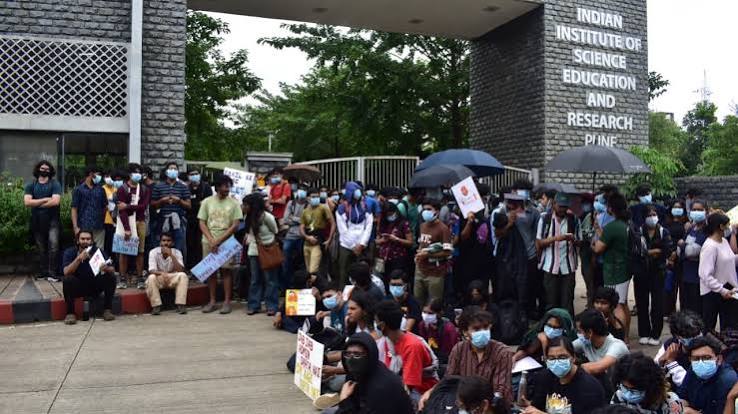
Pune IISER Protest Puts Student Welfare Under Scrutiny
Students at the Indian Institute of Science Education and Research (IISER) Pune have begun an indefinite sit-in, bringing mental-health support, academic stress and campus administration into sharper focus. The protest, which started on August 27, also centres on disciplinary action against a student representative and restrictions on campus activities. The developments are placing renewed attention on how institutions balance academic demands, student participation and duty of care.
Mental-health support has emerged as one of the central concerns. The agitation follows the death of a BS-MS student, an event that has heightened student anxiety about whether existing welfare mechanisms are sufficient to respond to serious distress. The institute has since expanded counselling support, with additional assistance made available to students as well as faculty and staff. However, the continuing sit-in indicates that students are seeking broader institutional changes rather than relying only on individual counselling services. Students have also questioned aspects of academic pressure and campus life. At a research-intensive institution, demanding coursework, examinations and long study hours can create significant pressure. Urban planners and education-sector experts increasingly view access to safe, supportive institutional environments as part of the wider infrastructure required for healthy communities.
The dispute over student governance has added another layer to the protest. The suspension of the Student Council General Secretary has become a major point of contention, with students seeking a review of the action and greater clarity around disciplinary procedures. For universities, disciplinary systems can have consequences beyond individual cases. Transparent procedures, opportunities to respond to allegations and clear communication can help maintain trust between students and administrators. Student councils also provide a formal channel for raising concerns, making their role relevant to the functioning of campus communities. The protest is therefore not limited to a single administrative decision. It raises questions about how much participation students should have in decisions affecting everyday campus life, and how institutions can maintain rules without weakening legitimate channels for representation.
The immediate challenge for IISER Pune is to address the concerns without allowing the dispute to further disrupt academic life. A structured dialogue involving students, faculty and administrators could help separate individual disciplinary questions from wider welfare concerns. The IISER Pune protest also highlights a broader issue for higher education: mental-health services, academic workload, grievance mechanisms and student representation need to function together. For students, a genuinely supportive campus depends not only on academic facilities, but also on systems that allow concerns to be heard, assessed and resolved fairly. The IISER Pune protest will ultimately test how effectively those systems can respond under pressure.