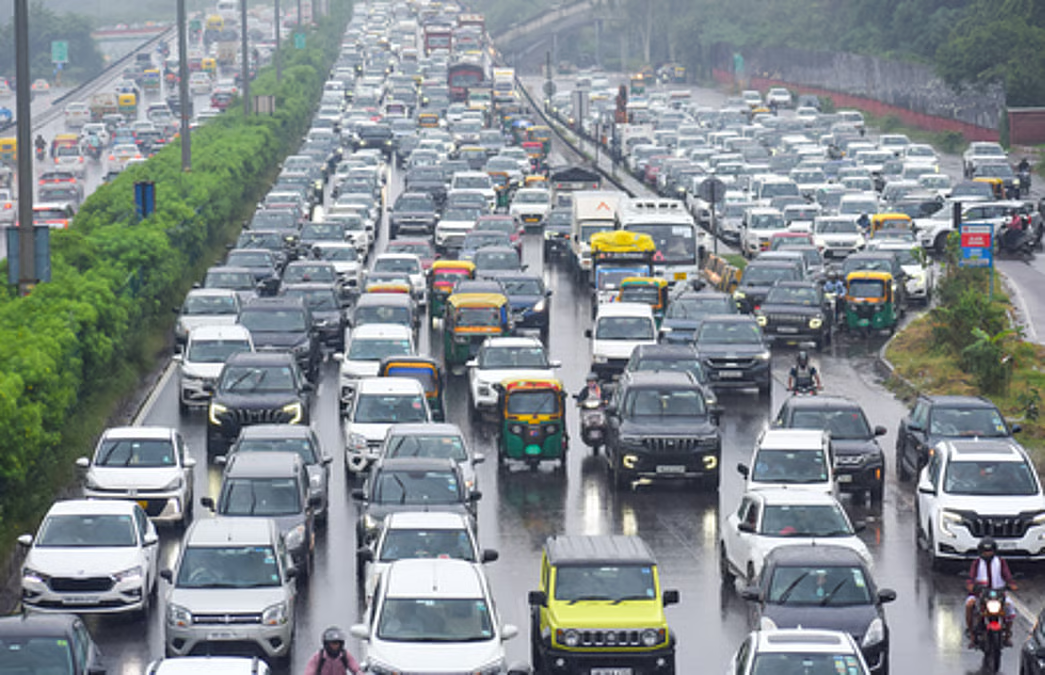
HYDERABAD, August 31: A surge in vehicles returning to Hyderabad after the Rakhi holiday and weekend created slow-moving traffic on key highway corridors on Sunday. The Hyderabad–Warangal and Hyderabad–Vijayawada routes recorded heavier movement than usual, highlighting the pressure placed on the city’s road network when large numbers of commuters return at the same time.
Traffic personnel were deployed at busy stretches to regulate vehicle movement and prevent congestion from turning into prolonged gridlock. Law and order police also assisted traffic teams in guiding motorists and managing bottlenecks. The Hyderabad–Vijayawada highway saw particularly high traffic volumes near Hayathnagar, according to local police. Officers were positioned along the route to keep vehicles moving and reduce delays. The timing of the rush was linked to the end of the extended holiday period. Many residents had travelled to their hometowns for Rakhi before the weekend. With schools, colleges and offices scheduled to reopen on Monday, a large number of travellers returned to the city on Sunday. Such periodic traffic surges expose the vulnerability of major urban entry corridors. Highways connecting Hyderabad with surrounding districts carry passenger vehicles, buses, commercial traffic and goods vehicles throughout the year. A sudden increase in private vehicle movement can quickly reduce available road capacity.
The effects extend beyond travel delays. Longer journeys can increase fuel consumption and vehicle emissions. For workers and students, unpredictable travel times can also affect attendance and productivity. The weekend rush also demonstrates the importance of managing transport demand alongside expanding road capacity. Traffic monitoring, staggered travel patterns and reliable public transport connections can help reduce pressure during predictable peak periods. The Hyderabad–Warangal and Hyderabad–Vijayawada corridors are particularly important for regional mobility. They connect the metropolitan area with major towns, employment centres and commercial markets across Telangana and neighbouring regions.
For commuters, police deployment can provide immediate relief during exceptional traffic volumes. However, recurring congestion requires longer-term planning. Better integration between highways, city roads and public transport can make the wider network more resilient. As schools, colleges and offices resume, traffic volumes are likely to remain elevated during the next peak periods. Monitoring key entry points and managing bottlenecks will remain important for maintaining steady movement. The latest congestion is a reminder that Hyderabad’s mobility challenge is not confined to its inner roads. The city’s growth is increasingly tied to movement across its metropolitan edge, making efficient and lower-emission transport connections essential for sustainable urban expansion.