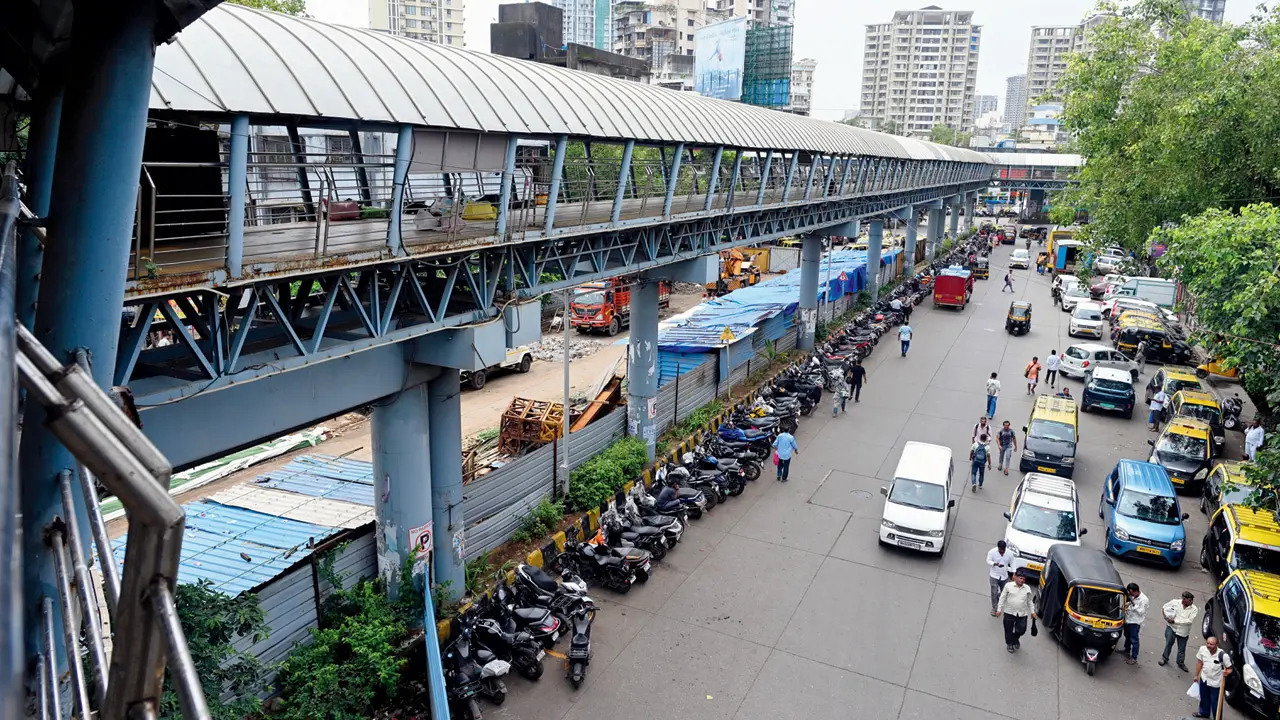
Mumbai Skywalks Struggle To Attract Daily Pedestrians
Mumbai’s network of 26 skywalks is facing a fresh test of whether pedestrian infrastructure is delivering value on the ground. BMC data puts daily usage at about 3.98 lakh people, while the civic body has spent ₹286.58 crore on the structures under its own jurisdiction. The figures have renewed questions over accessibility, maintenance and whether elevated crossings are being designed around how people actually move through the city. The concern is not simply about footfall. A pedestrian facility can have limited use for several reasons, including poor connections to surrounding streets, difficult access or inadequate maintenance. In Mumbai, commuters have raised concerns about long staircases, non-operational escalators, limited lift access, lighting and the physical conditions inside some skywalks. These issues can make a structure intended to simplify a journey feel like an additional barrier.
The scale of public spending makes that distinction important. The ₹286.58 crore figure covers skywalks constructed by the Brihanmumbai Municipal Corporation and does not represent the total investment across Mumbai. The Mumbai Metropolitan Region Development Authority has also developed a substantial network of skywalks, meaning the wider public cost is higher. However, a consolidated citywide figure is difficult to establish from currently available public information. The accessibility question is particularly significant in a dense city where walking is often the first and last part of a public transport journey. Older people, passengers carrying luggage, people with mobility limitations and those travelling with children can be disproportionately affected when vertical access depends heavily on stairs. Urban planners increasingly assess pedestrian infrastructure not only by whether it separates people from traffic, but also by whether the entire journey remains convenient and inclusive.
Climate and comfort also matter. Enclosed or poorly ventilated walkways can become uncomfortable during Mumbai’s hot and humid periods, potentially discouraging use. Maintenance failures can compound that problem by affecting lighting, cleanliness and mechanical access. Infrastructure that requires substantial energy, maintenance and public expenditure therefore needs to generate consistent public benefit over its operating life. At the same time, skywalks remain useful where they connect major transport nodes and busy commercial areas efficiently. Mumbai’s newer projects are beginning to emphasise multimodal connections, including links between railway, metro and monorail stations. One such multimodal skywalk at Mahalaxmi is designed to integrate three transport systems and includes a travellator.
The immediate challenge is therefore less about counting structures and more about measuring outcomes. Regular audits of footfall, accessibility, equipment uptime, cleanliness and pedestrian safety could help determine where retrofitting is justified. For Mumbai, the next phase of pedestrian investment will need to demonstrate that public infrastructure works at street level as well as on paper.