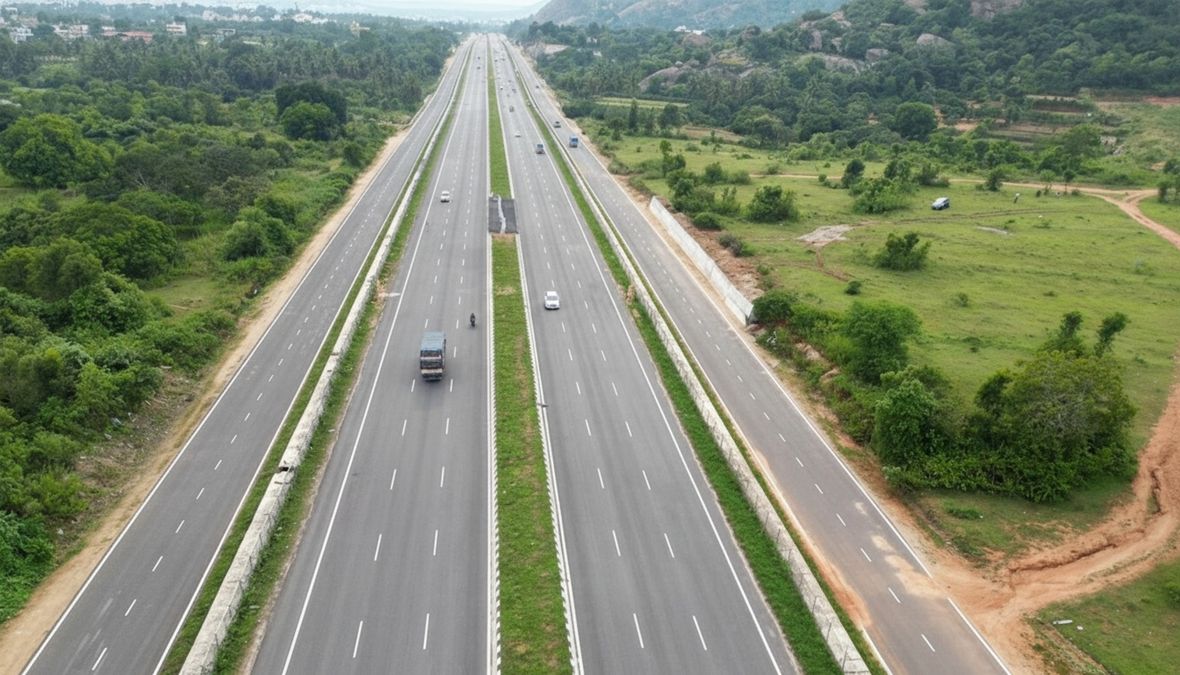
Kolkata’s position in eastern India’s road network could strengthen as the Varanasi–Kolkata greenfield expressway moves through a series of alignment and land-acquisition decisions. A fresh tunnel proposal in Bihar could shorten the western section, while progress on the West Bengal stretch will determine how effectively the corridor connects Kolkata with Bihar, Jharkhand and Uttar Pradesh.
The six-lane access-controlled corridor is being developed as a major east-west road link across four states. In West Bengal, the approved alignment covers the Jharkhand border towards Bagnan, with a proposed connection towards Kolkata. Government records show that the revised West Bengal alignment was approved in 2024 after consultations with the state government.For Kolkata, the significance is less about shaving kilometres from the overall journey and more about how the new road integrates with the metropolitan region. A faster connection to production centres in Jharkhand and northern and central India could alter freight routes, reduce dependence on congested existing highways and improve access to markets around Kolkata, Howrah and the wider industrial belt.However, the western alignment remains relevant to Kolkata because every additional kilometre, interchange and construction decision affects the efficiency of the complete corridor.
The Bihar government has proposed reviving a tunnel through the Sasaram hills, which could remove roughly 15 kilometres added by an earlier alignment around the terrain. The proposal still requires approval from the Centre.West Bengal presents a different challenge. Government data shows that land-acquisition notifications have progressed in Purulia, Bankura and Hooghly, while the Detailed Project Report for the state section has remained central to decisions on construction. The government has indicated that construction will depend on the DPR, connectivity requirements, project priorities and coordination under the PM Gati Shakti framework.The environmental footprint will also matter. A draft environmental assessment for the West Bengal package identified around 32,000 trees, 535 affected structures and 535 families within the assessed project impact, alongside wildlife underpasses and other mitigation structures. These figures underline why corridor planning cannot be judged only by travel-time savings or construction speed.
For Kolkata, the next stage is therefore about integration rather than simply completion. Efficient interchanges, local access, freight planning, ecological safeguards and fair land-acquisition processes will determine whether the expressway becomes a productive regional link without adding new pressures to communities and landscapes along its route.